
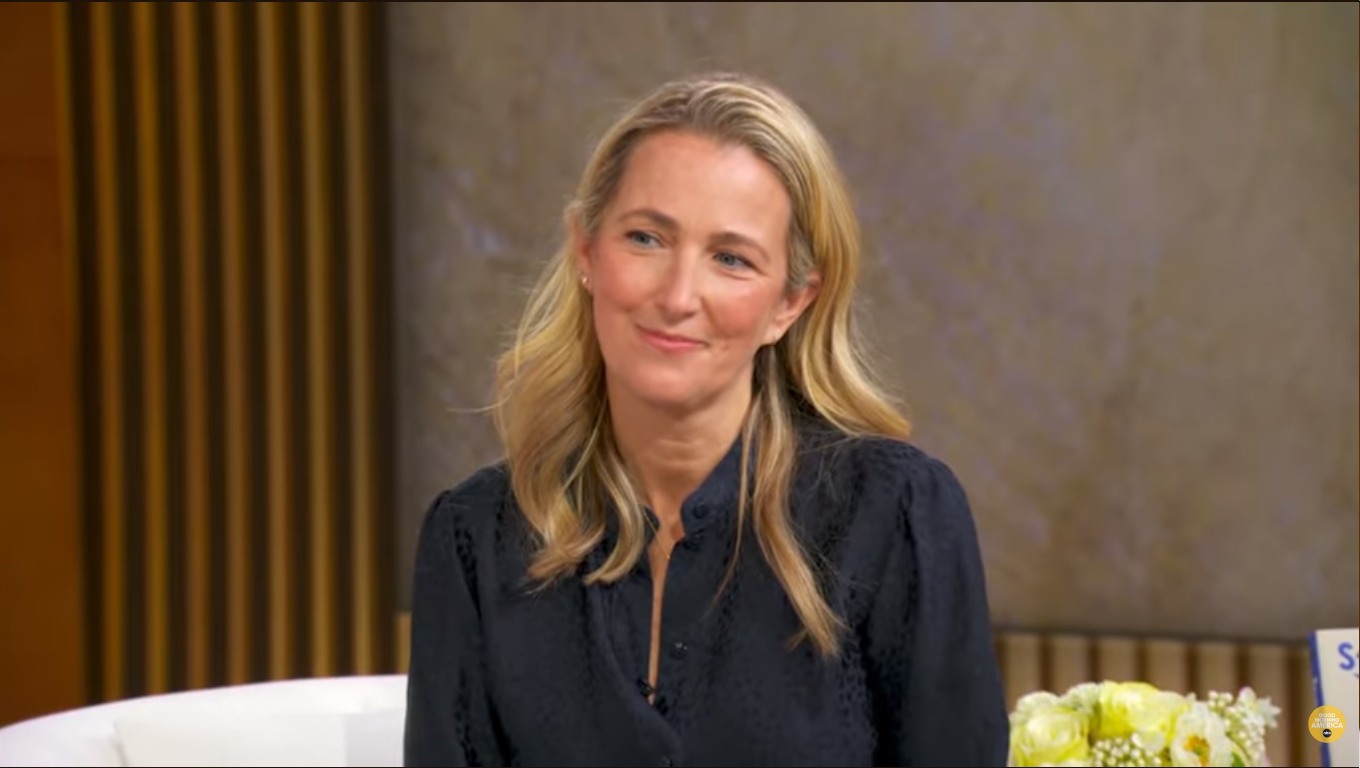
A few months ago, I read Belle Burden’s Strangers: A Memoir of Marriage, which has become a huge bestseller since its publication earlier this year. I read the book over a weekend, and it’s a simple-yet-devastating story about a very privileged white woman whose husband of 21 years left her abruptly at the start of the pandemic. One morning, she learns that her husband has been having an affair with a much-younger woman, and when she confronts him about it, he announces that he’s leaving. It was like a switch flipped inside of him – at various points over the next year, he’s incredibly cruel and mocking towards Belle, and he seems to not care about their three children whatsoever. He buys a new apartment for himself and turns the spare bedroom into an office. The kids have nowhere to stay if they even wanted to stay with their father.
Throughout the memoir, we also learn a lot about Belle’s finances and how her husband basically asked her to sign away (via a prenup) any claim to any of the money he made during their marriage. Through Belle’s trusts, she paid for their New York apartment and their Martha’s Vineyard home, and Belle and her famous and wealthy relations were the ones paying for the children’s private schools, all while Belle’s husband stockpiled tens of millions of dollars from his job, money which he never contributed to their real estate or their children’s education. All of this while simultaneously demanding that Belle be a stay-at-home mother too. It was sort of mindblowing to see how Belle – a woman from a famous and elite New York family, with access, education, money and privilege – was being financially abused for years without really understanding what was happening. When her ex left her, he fought for their homes as well, even though they were purchased solely with Belle’s trusts.
Well, I’ve been recommending Burden’s memoir to everyone, and I think it should be a must-read for younger women who are marriage-minded. What I didn’t realize until now is that there’s some kind of backlash against Belle for telling her story. There are men and women who believe that a rich white lady can never be sympathetic, or that Belle must be lying about this or that. Well, the New Yorker published what they thought was going to be some kind of “gotcha” story about Belle’s finances. It’s… bizarre. Some highlights:
The prenup: After Davis filed for divorce, Burden writes, she was shocked to discover that he had kept millions of dollars of his income in separate accounts. With much trepidation, she writes, she filed a counterclaim; the claim was dismissed by a judge. Elizabeth Carter, a matrimonial-law professor at Louisiana State University, told me that the couple’s arrangement, in which they kept income separate and shared expenses, is not uncommon. The terms of the prenup might appear more questionable, she said, if one spouse leaves the workforce and loses their only source of income—but this scenario didn’t apply to Burden, who had inherited wealth. “It could be unfair to him if everything she brings in is separate, but he has to give her half of everything he earns,” Carter said.
After 21 years of marriage, did Belle have any right to her husband’s money? Margaret Ryznar, a visiting professor at Brooklyn Law School who specializes in trusts and estates, had a somewhat different view on the prenup. “Our modern idea of marriage is that it’s a partnership, and that would be reflected by dividing his earnings in the divorce,” Ryznar told me. “Presumably she enabled him to make those earnings by taking care of the home, taking care of the children, putting his career first,” whereas Davis had no role in generating Burden’s inheritance.
Burden used her two main trusts to purchase their homes: Burden returns to the matter of the two trusts often in interviews, usually stressing that they had held most of her assets and that she had drained them to buy the two properties. “I had emptied my trusts to purchase our homes,” she writes in the book. Despite the terms of the prenup, Burden decided to place Davis’s name alongside hers on both deeds. (“I thought that was what you did when you were married—share everything,” she writes.) As a result, when Burden and Davis split up, Davis had a fifty-per-cent stake in both homes, and, for a time in their divorce proceedings, he appeared ready to lay claim to his half of each.
Belle’s actual income: It’s evident from the book, however, that Burden did have her own income, because she affirms that she and Davis shared expenses, as agreed to in their prenup. She also maintained a separate American Express account for purchases that she did not want Davis—whom she portrays as controlling and selectively thrifty—to see. Documents filed in the divorce show that, in 2019, Burden reported an income of a little over eight hundred thousand dollars, including a hundred and ninety thousand dollars from the sale of her mother’s house in the Catskills. (A spokesperson for Burden said that her income that year was atypically high. Davis made well into the seven figures in 2019.)
Belle’s multiple trusts: An examination of the prenup may also undercut the sense that Burden’s long-term financial situation was precarious. Davis’s financial disclosure, as of 1999, listed a little more than two hundred thousand dollars in base salary, plus slightly less than that in “marketable securities/cash,” and noted that he was “entitled to profits” in a seven-figure investment fund. Burden’s disclosure, by contrast, tallied her “Total Financial Assets and Interests in Trusts” at approximately sixty-three million dollars. These monies included the two trusts that she eventually tapped to buy property. The majority of it was a forty-five-million-dollar share in a trust created from her late father’s estate, which was, and remains, inaccessible to Burden. (The trust is structured to provide resources for Burden’s stepmother until her death, at which point the remainder of its assets, minus any estate taxes, will go to Burden and her brother, its two beneficiaries.)
Belle’s other incomes: Additionally, Burden had an eight-million-dollar share in a charitable trust and a four-million-dollar interest in wambco, her family’s limited partnership; she had also received a three-hundred-thousand-dollar commission for serving as a trustee of this estate, which included a Hamptons property that sold to the billionaire Stephen Schwarzman for thirty-four million dollars, in 2006, and an eleven-room co-op at 1020 Fifth Avenue, across the street from the Metropolitan Museum of Art, that sold for twenty-two million dollars, in 2012. Burden’s statement closes by noting that “Belle has additional potential, contingent, remote or minor interests in a number of other trusts.” The over-all picture is of a person whose long-term financial security appeared guaranteed. In the eventual divorce settlement, Burden is listed as a beneficiary of no fewer than five trusts. Apart from those trusts, Burden’s net-worth statement, filed in December, 2020, showed that she had her own Vanguard account and a six-per-cent stake in wambco; the combined value of the two exceeded ten million dollars. All of these resources would remain Burden’s alone in the divorce.
The actual divorce settlement: In the settlement, in addition to letting go of his half of the properties, Davis gave his ex-wife three million dollars out of an investment he had made in wambco. Burden kept the key to the private Black Point Beach, on Martha’s Vineyard, which Davis purchased for her birthday in 2016, and which was most recently valued at more than four hundred thousand dollars. He also agreed to pay Burden fifty thousand dollars per month in baseline child support until their youngest child—now eighteen—turns twenty-two. This six-hundred-thousand-dollar annual tally does not include a raft of additional itemized expenses for each child until he or she reaches age twenty-two, including private-school tuition and associated school fees, tutoring and test prep, summer camps, extracurricular activities, transportation costs, health insurance, and medical, dental, and orthodontic expenses.
Burden’s statement to the New Yorker: “When I wrote Strangers, I shared my heartache, my mistakes, and my shame. I owned my privilege as plainly as I could, and I respected the privacy of sealed court records. I stand by everything I wrote, including the fear I felt from my ex-husband’s threats, the contributions I made and could make to my family, and what happened to me financially and emotionally in my marriage and divorce. While I didn’t intend it, I am glad that women have taken my story as motivation for insisting on financial transparency in their marriages.”
I don’t get the tone of this New Yorker piece at all, where they’re calling Belle a liar over and over again. She wasn’t lying, it was clear in the book that she and her children were always going to be “okay” financially, but what her ex put her through was traumatic across the board, especially when he began fighting for their real estate. I believe she genuinely thought that she would have to sell her homes, which she paid for. I believe she genuinely thought that the courts would enforce her boneheaded prenup to the point where her ex would not contribute financially to her upkeep or their children’s upkeep after 21 years of marriage. The extent of this “gotcha” seems to be “she had other trusts, which she didn’t have access to!” And “she’s getting tons of money in child support!” Did the New Yorker miss the part where her ex completely blanked on their children and wanted to move on without any of them?
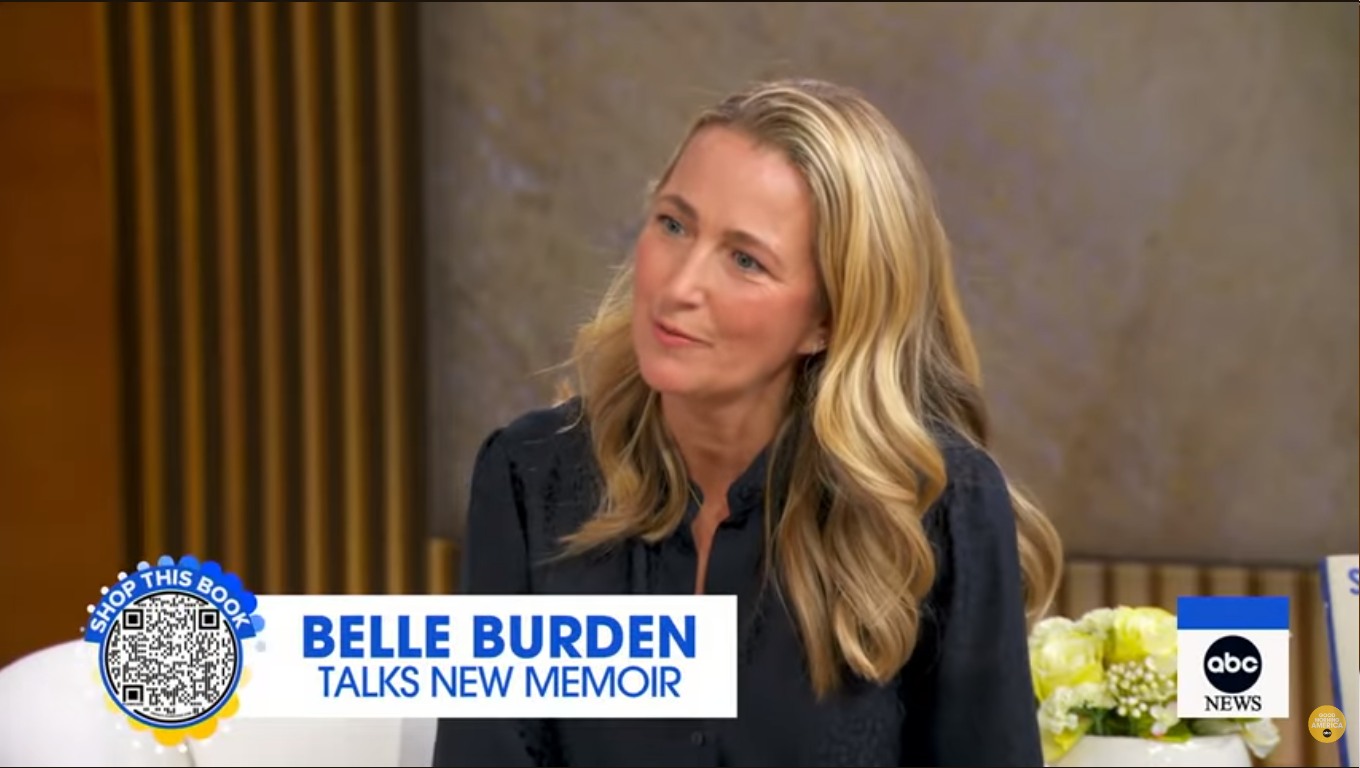
Screencaps courtesy of ABC/GMA.











I’ve only been following the headlines for this story/memoir, but you can be rich and still be financially abused. It just means you have more of a safety net than other people, and she seems very aware of that and her privilege. I can also imagine how enraging and upsetting it was to think she might lose the apartments that she bought (but why weren’t things like that covered in the prenup?)
It’s explained in the excerpt how the prenup worked – it was not good for her – and she signed it against her family lawyers advice.
So he was basically abusing her financially before the marriage even started.
No one who truly loves their partner would ask them to sign a terrible prenup.
In the book she goes into more detail — her family attorney provided a standard prenup that did have those protections, and her husband-to-be demanded that it be rewritten, to the point that he had her call her attorney and put him on speakerphone so he could listen in on her privileged conversation with her legal representative, only announcing his presence toward the end of the call.
In the book it is very, very clear that this dude was shady as hell from jump, but due to the way her privileged upbringing influenced the way she thought happy relationships should work, she was blind until it was too late.
Okay thanks that sheds light onto it – the excerpt seemed kind of vague. So it seems like he went into this with a clear agenda.
“In the book it is very, very clear that this dude was shady as hell from jump”
I am sure I will get this slightly wrong, but it also sounded like in the book when he asked her to change the pre-nup, he wanted anything in BOTH their names to be split, and anythign in jsut ONE name to NOT be split.
She then paid entirely for both homes yet put BOTH names on the property.
Then HE started putting TONS of his salary into an acct in just HIS name. It was not clear to me if she knew he was doing that all along and just wasn’t concerned, or if that was in secret.
But it is diabolical.
And it really seems like a set up from the start.
Oprah interviewed her on her podcast for her book. Very interesting. She seemed like a very nice and sweet person. I didnt think the story was about the money, it was a facet of the whole situation.
I dont see why they’re going after her because she is financially privileged. We should not silence her because she’s wealthy.
I read both the book and the article and I’m curious that the article doesn’t mention the part where there’s financial distress when her dad dies? She made it sound like he died after spending all the money. Either way – it’s a great read, and if it helps women think about their financial future- no matter if there’s trusts involved or not- it’s a good thing.
Her father died while she was in her thirties and he was married to a Much younger woman. Her step mom is still alive and she wouldn’t have access to that money until the step mom dies. Yes there were other trusts but she put the houses in both their names and wanted to keep them. Even if she had written this as fiction (and since she had to change her ex’s name maybe she should have) it still would have been a good read because of the writing and a cautionary tale of when someone decides he (or she) doesn’t want to be married to you anymore they can turn into someone you’ve never met before. She was blindsided and he didn’t want to have anything to do with their kids anymore because they’re, as he said, almost grown (they were teenagers and a preteen). That was what I took away. She is always saying could have been so much worse if she wasn’t monetarily privileged.
“She is always saying could have been so much worse if she wasn’t monetarily privileged.”
This is so spot on. She would be “ok” bc she is rich. But I think losing both her homes, where her kids grew up, that were paid for with ALL HER money is an awful thing to face. Niot as bad as say, becoming a single mom of three with NO money and NO degree. But it’s all relative and she absolutely acknowledged that.
I think it is a good lesson for people to learn. And in her case, she came REALLY close to losing the homes, HE at some point jsut dropped his claim to them, which is bizarre because every other move he made was awful, no idea why suddenly he did the right thing.
The writer Bess Bell had the perfect retort to this article saying that its narrative nonfiction and not a deposition and reminding that Thoreau lived at the cabin at Walden but his mother brought him his meals every day and it’s still held up as the definitive example of isolation and introspection. If we get nothing else from her story, it’s a cautionary tale that women have to safeguard their money even in marriage.
It sounds like the New Yorker is trying to concoct another Salt Path controversy, but without much in the way of actual substance.
Whatever it takes to get those precious clicks, I guess…
This was a hit piece. Writers are “ordered” to write stories like this for whatever reason — aside from personal relationships and loyalties, this feels like the out-of-touch out-of-date New Yorker appealing to male divorcé POV. Burden’s ex has behaved like an absolute monster, but he has attempted to defend himself and suggest, against all hard evidence, that Burden was not telling the entire truth in her memoir.
This article was for the a-hole at the dinner party Burden attended who told her that he had helped Burden’s husband get a lawyer that was going to doing everything possible to make sure she got nothing.
“he a-hole at the dinner party Burden attended who told her that he had helped Burden’s husband get a lawyer that was going to doing everything possible to make sure she got nothing.”
Wasn’t that INSANE? If I recall correctly he was the HOST of the dinner party. HE invied her, then casually said something like “I gave him the name of the lawyer who all the “X guys” use. He will keep you in court for years. (can’t remember if they were all from the same college, or golf buddies, there was some common ground) hence my using “x guys”)
I couldn’t understand why anyone, let alone someone who chose to invite her to their home would say that so casually.
This post made me glad I’m not wealthy 🤑. I could never keep track of all these trusts and assets even with lawyers and accountants. I know that’s not the point but that’s what I took from it.
Sure you could, if keeping track of that (ie reading paperwork and meeting with lawyers and financial advisors) was your full time job.
I haven’t read the book, and I will now. Thank you for the rec. What I get from Kaiser is that her story is not about her struggling financially because of a divorce. It’s about the husband wanting to claim money and assets she brought into the marriage, while not wanting to share what he earned through the marriage. He felt entitled to everything he had access to when they were together. At the same time, she had to handle her and her kids being brutally abandoned. If they want to read about women being financially destroyed by a divorce, I’m sure there are a ton of books about that too. This is just not one of those and doesn’t claim to be either. Maybe there are people out there who want to read stories about privileged white women too, among many other things. The article just proves the point that women demanding money they are owed or being ambitious about their finances are still frowned upon and people, even other women, try to put them in their places.
Well said! Couldn’t agree more with all your points 👍
Yes, to all of this.
The book was also very much about how he turned into a different person seemigly overnight. That man got cauught having an affair, left the house, and NEVER came back. He barely sees his kids and hasn’t ever even had space for them in his homes. And the guy is loaded, he could afford as many bedrooms as needed. He just doesn’t CARE to do it. A lot of the book is the author jsut being flabbergasted by how unlike him all this seemed. Yet..there they were, dealing with him acting out in all the awful ways.
I thought she did a great job of delicately threading the needle of it *feeling* out of character for him at first, and then sort of piecing together that perhaps it wasn’t and maybe she wasn’t always seeing reality. And, even more delicately, then acknowledging that she is not him – that this is now her perception based on the current reality – and giving both of them some grace to bel
I read the book, and was impressed with how she handled reflecting on the change or lack thereof. She very clearly acknowledges her shock as it occurred, and her later reflections that made her wonder if the newer behavior was actually out of character or if it had always been there and she didn’t want to see it. She left room for a lot of grace for herself and for him in their past. As a recently divorced woman who is dealing with the continuation of abuse post divorce, this very much resonated. She took accountability, and recognized that she didn’t want to be a person who completely distrusted people. It was delicately handled, and balanced.
It’s intriguing and very salient how people say women need to look out for their money and their future finances and retirement and children “even” in marriages…. When we know, sadly, that women are taking a massive hit across the board precisely attributable *to* marriage as a general rule. It’s just… the principle of marriage was always about property, the wife becoming property in a sense, the children being property in a sense, and those patriarchal fixed concepts are very difficult to budge. I give her a huge amount of credit for telling her story. Just putting it out there, knowing some kind of “gotcha” squad will pick it apart, she’s retained her dignity and humanity.
It’s like they want to prove that she is a bad person, a liar.
Yet the ex husband had an affair, deserted his kids and tried to take all the assets.
But sure, let’s twist her words into pretzels until something looks fishy on her end. It is ridiculous.
The best take I saw on Twitter was this, that as a woman you’re hunted: might not be for millions like the author, but as long as you’re working and producing, you might be in the crosshairs for a man looking for a target and that you have to protect yourself accordingly. Be it protecting your pensions, your own property whatever you’re bringing into the marriage – all of it.
Her ex didn’t really make any public comments throughout all this leading up to the book’s release and press but now that Gwyneth Paltrow is attached to play her in the film adaptation he thinks people are actually going to see on the big screen exactly what he did.
Wait. Wait. There’s going to be a movie?! I want to see it!
https://variety.com/2026/film/news/gwyneth-paltrow-strangers-movie-belle-burden-netflix-1236698531/
I haven’t read the book but this feels like such an obvious example of astroturfing from the ex husband. The NYer journalist is the only one who got got here.
I read this the minute it came out. I actually bought it because I’ve always been low-key fascinated with her mother, Babe Paley ( famously Truman Campote’s muse),
It’s a very thoughtful account of how even a very privileged white women can be financially and emotionally abused by a predatory man. What struck me most was her husband’s complete abandonment of his children, he had zero interest in maintaining any relationship. That, even more than the financial aspect, painted a very ugly picture of her now ex husband.
Oh, wow. This book was not on my radar, but I’m reserving a library copy now. There is SO much overlap w/ Belle’s story & the Katharine Graham’s memoir “Personal History”. To summarize, Katharine’s father, Eugene Meyer purchased the Washington Post at auction. It was the family business when she was growing up. When her older brother Bill decided to attend medical school, her father did encourage Katharine’s interest in journalism –but– when she married Phil Graham, Eugene paved the way for her husband to advance in the family business, including purchasing WaPo stock in Phil’s name because “no man should work for his wife”. By the late 50s, early 60s, Phil became mentally unstable, embarked on an affair w/ a younger journalist & threatening to divorce Katharine, cutting her out of WaPo ownership in full. She truly had to scramble to retain her birthright & take over WaPo when Phil died by suicide. Truman Capote arranged his famous Black & White Ball -where Babe Paley & all his Swans in attendance- placing Katharine as guest of honor to cheer her up after Phil’s death.
The memoir covers her parent’s background, her interesting childhood, raised in a wealthy DC household w/ a Jewish father & a stingy Lutheran mother who grew up in NYC’s Hell’s Kitchen. Mrs Graham would write that there were 3 things never spoken in the family home: Money, Sex, & Religion
The Meyer family summer home was Mount Kisco, in upstate NY, which Donald Trump would go on to purchase. I have to step out for some errands, but will add more later when I return.
Was Babe Paley her mother or her grandmother???
Babe Paley was her grandmother. Her mother is Amanda.
Whoops, so sorry. Before coffee comment!
This book is so good and the New Yorker article is so dumb. I love how it doesn’t even acknowledge that you can be a beneficiary to trusts and not have access to large amounts of liquid cash. I always thought that the issue with the homes was that she had cleared out her trusts she had full access to to buy them, put his name on them (which with their prenup she didn’t have to) and because of that would have to buy him out to keep them if he tried to enforce their prenup. And that if she had to do that she’d probably have to sell one to have the money to buy him out of the other. No one ever thought she’d be homeless and destitute post divorce. She clearly wanted to be able to keep both homes.
Also the real point of the whole book was the financial abuse and how he flipped a switch – that’s what is a lesson to all women, no matter how privileged.
100% agree, and just adding the book is very well written.
And that her work for the family wasn’t valued by him.
Is this the story/movie that’s gonna star Gwyneth Paltrow?
Or is that with another Bergdorf Blonde?😉😉😉😉
Had forgotten about the movie deal. Maybe this was his crisis PR firm trying to dirty up Belle’s story so the movie doesn’t happen. The real tell is making a big deal about money she will eventually inherit, but has no access to currently, while keeping quiet about how much money he was earning without sharing with his wife (or paying his kids private school tuition- her family did).
Hope Gwyneth sees through it.
I agree, @Bitsycs, I think they don’t entirely grasp the principle of trusts, pardon the pun, which is that you never get access to the principal, only the income it generates. Which is another reason — in an unrelated thread — why William selling of hocks of the Duchy of Cornwall is so staggering.
Since I’ve read so much about Belle Burden’s grandmother (Babe Paley) and Babe’s two Cushing Sisters & know ALL about her grandmother’s & grandaunt’s connections along with Buden’s parents…I knew reading Burden’s book this wasn’t an issue about financial desperation…it was about abandonment
I loved “Strangers” so much that I read it a second time to absorb it all! “Make me a sandwich” indeed. It’s true though – there are people that want women to just sit down and shut up. I think her book was written with incredible grace and no bitterness at all. And what her female doctor said to her was positively shocking. Read it!
Never heard of her or the book. Yeah, I don’t know why either. However it sounds like a tough read.
Just yesterday I was giving some emotional support and advice to a friend who split from her husband who was very controlling – he’d force her into long psych hospital stays, controlling friends, controlled the money, she didn’t know how anything worked. They’d been together since 16 and she’s 42. Anyway, she won’t get a solicitor and is agreeing to whatever he says, no checks and balances. She has no access to their money and doesn’t even know what superannuation is. I tried and tried to talk sense but she got really defensive. I hate to think about her future. No education, no job. She’ll get money and probably can buy something small somewhere – maybe – but not what she’s entitled to. This is what happens when you’re beaten down. I really hate these men.
I’ve never felt sorry for the “poor little rich girl” but darn. I read this book and it’s obvious that she was completely in love with her horrible ex and willing to completely trust him and their marriage 110%, to the extent that she made some bad decisions regarding the prenup and putting his name on the deeds to the homes. My husband and I have always been completely financially co-mingled. The way he just flat dumped her and his children was so cold, and the fact that he pre-meditated safeguarding his own assets from her from the very onset of the marriage shows that he always had one foot out the door.
It seems pretty clear he was only after her for her money.
I feel like she was desperate to convince herself that he really loved her and that it was all genuine. She may have a different view on this as the years go by. This is not the part of society I’d want to be in. The men at that cape cod club looked her straight in the eye when they cheered her ex on for playing hard ball with her and their children!
The article has no financial info for him beyond 1999? That seems cagey. Considering he’s paying 50k and expenses for one child, he’s doing more than alright.
Also, Belle wanted to work, but when she was offered a job post marriage, her husband said no. She was using some of her money from her trusts to pay for things because he didn’t want her to have income.
I find the “poor rich girl” stories kind of fascinating, to be honest. I feel it does make for interesting material for a book because what happens to these women is rather unexpected. From a storytelling point of view, I think the shocking twist of being tricked by a man despite being rich does make for interesting reading material.
This is one of the most hyped books that I’ve ever read and it wasn’t anything special. She was foolish for ignoring her lawyer’s advice about the prenup, the ex was an utter ar*e when it came to his abandonment of their children but it’s a story lived by millions of women.
I split with my ex back in 2000 and we had 3 children, twin boys aged 15 and our 9 year old daughter, he moved into a one bedroom apartment in Toronto and just wanted to live a single life. He was furious when told he had to pay spousal support for 10 years because we had been in a 20 year marriage and I know he hid money. C’est la vie. At 66, my friend was unexpectedly informed by her husband that he no longer loved her and wasn’t interested in living a lie. Like Belle Burden, she ignored her lawyer’s advice when signing the prenup 10 years ago which relinquished her rights to spousal support and isn’t entitled to a cent (the house was his but under Ontario law she would have had a claim to a portion of the property value increase); she now lives in her 93 year old father’s spare room and over a year later is still shell shocked.
💩 happens 🫤
I agree. Lots of women make mistakes when marrying and many are ledt in terrible financial shape when they end. I cant bring myself to care much about a woman who is basically a 1% -er and her divorce problems.
That’s probably why this book is relatable for a lot of people. It’s not so much that one has to care, but I think she was in a situation with a man that most people can probably find common ground with, regardless of social class.
Maybe you don’t care about any poor little rich girl, but I’m not down with any man abusing a woman or getting away with not supporting his children. If you can say “I don’t care if he abused her, she’s rich,” or “I don’t care if he abandoned his kids, their mother is rich,” then I side eye you, not them.
She completely acknowledges she is privileged, the book is about how men betray women at every level, and the world expects women to take it over and over and over again. “Make me a sandwich”
I read the book. It took me a while because I kind of knew what he did so I had to keep putting it down because I kept thinking No Belle, Don’t Do That!!! And Watch out!!! Her vulnerability broke my heart. Sigh.
It’s asymmetric warfare.
This book raised problems with me for multiple reasons, some personal and some writerly. On the personal side: Walked away from my marriage in which he was the money-maker, I was the stay-at-home mom (the kids were 2, 4 & 7; I was 30, married straight out of college), and hadn’t come into the marriage with a trust fund. When the divorce was over, I walked away with $17,000 (paid over time), no child support, and an ex who never let a conversation end without one or both of two statements: “You’d better learn to say ‘Do you want fries with that order'” and/or “I’m going to need a big house because because you’re going to end up on the street and I’ll have the kids full-time.” The struggle to figure out how I was going to support myself was real (yes, one day my memoir will touch on this).
Personally: I grew up with Belle’s former sister-in-law, who is now in the advanced stages of early-onset Alzheimer’s. Her sons are the same ages as Belle’s children (they were 11 & 13 when s-i-l was diagnosed). If she’d shown even a 1/4 teaspoon of the empathy and compassion for them that she has for herself, I might have a different feeling about her book. (Gonna add here that her former brother-in-law very much got the “in sickness and in health” part of the marriage vows memo. And you don’t have to take my word for it. Here’s his Modern Love column: https://www.nytimes.com/2024/02/23/style/modern-love-alzheimers-family-dinner-with-my-wife-and-girlfriend.html)
On the writing side: it felt as if she were reporting rather than directly experiencing too much of what she describes, part of the reason I felt like parts of the book were a slog. The most engaging parts were when she talked about her generation-up family – her mother, father, stepmother, grandmother. When you’re inviting someone into your life, there’s got to be a measure of hospitality in the writing, and that is very much missing in Belle’s book. The New Yorker article helps explain why some of that is the case.
I mean, is it possible Belle was busy raising her own kids and not able to be as present for her extended family as you think she should have been? Sometimes we are wrapped up in our lives and just not as involved in caregiving outside the home as others would like, despite good intentions and care.
Is it also possible Belle was not fully cognizant of the situation due to the husband’s family and/or husband icing her out early on and/or not giving her all the information? Who knows but they certainly seem capable of gatekeeping information (to say the least).
Finally your note that her memoir doesn’t have “a measure of hospitality” is a strange comment; is she not a good enough hostess for you? Maybe that’s why her husband left her!
I don’t get the point of referencing the brother-in-law. What difference does that make? She didn’t marry that guy, but married a weirdo instead and I want to know why that guy is such a weirdo.
Or is the brother-in-law a weirdo too? I can’t get past the paywall. I can only see the headline, and immediately got confused.
@Alo & Thinking:
Her brother-in-law is a lovely, lovely man. Sorry about the paywall – here’s a paywall-free link: https://www.nytimes.com/2024/02/23/style/modern-love-alzheimers-family-dinner-with-my-wife-and-girlfriend.html?unlocked_article_code=1.lVA.2WfX.rCH1Hdfe0xOu&smid=url-share
RE: hospitality – as a writer, you want to make room for your reader to enter comfortably into whatever world you’re creating, and for that reader to feel like they get a genuine and consistent sense of who you are. Belle’s Modern Love essay did that really well. Her book did not. As a lot of people here have expressed, she did a good job of describing the depth of the ways in which betrayal can shred someone’s identity, regardless of how much money and status they may have. But describing isn’t the same as writing in a way that makes a reader feel fully inside of where that writer claims they’re taking you, and the thing she needed to do in the book that she didn’t in the essay – and doesn’t – is to connect to something bigger, more profound, and more universal. If the big, profound universal is that rich people’s lives can get up-ended when their spouse abandons them, the book is worth all the hype and hoopla. But when I read a memoir (and am aiming for this goal in the one I’m attempting), especially one that has gotten as much attention as this one, the magic is in journeying along with someone as they struggle to grow beyond themselves as they face down their particular challenge or set of them. This book, for all its hype, doesn’t achieve that.
@ Amy T so did Henry show up and help take care of his sister in law and nephews the way he later did not for his own children?
Neither of them did, as far as I know.
I had to stop reading this because it was making me so angry. This woman put up with BS behavior because she didn’t want to end up divorced like her mom. Of course he could walk away from his kids, he was a visitor in their lives. He refused to participate in their care and spent his time doing whatever the heck he wanted except on Sundays when he would deign to remember he had a family. All of his shenanigans should have had her side-eyeing him but she wanted to keep him so she shut her mouth.
As a poor divorced person, I loved this book. Yeah, she had one less thing to worry about during her divorce but it didn’t spare her from the isolation, fear, anger, confusion and loneliness that come with divorce. You can be sad and miserable, even if you’re living in a gorgeous $7M house on Martha’s Vineyard. And it is for sure a cautionary tale about making financial decisions based on emotion. She felt guilty about her (substantial, generational) wealth compared to his.
I totally agree with this take. In the book, she acknowledges her privilege – that she and her children were better off than most, and focuses on how naïve she was to sign away her rights and blindy trust her husband.
I’m puzzled as to why The New Yorker doesn’t think it’s possible for a man to trick a woman. It sure does happen a lot in life.
Truly a puzzling decision by the NYer to authorize this story, when there’s, oh, I don’t know, a billion other more relevant stories to be written about duplicitous, angry men right now.
While I didn’t like and finished this memoir mainly because how depressing it was and that was heavily set during Covid times and that period of years triggers me I don’t understand what the article implies by “she lied”. She literally tells in a chapter about how wealthy her ancestors were and how she’s very well off. That doesn’t take away the fact that the d-bag ex took advantage of her and sucker punched the family with the divorce saga.
The fact that she IS wealthy does make her story compelling and possibly much more so. I’d expect a much less wealthy (or middle class or poor) person without lawyers to be blindsided, but that a very, rich person could be duped emotionally despite having lawyers give you advice makes the story more interesting narrative-wise, but what do I know. I would always sit through those Lifetime movies about rich women getting betrayed despite getting warnings from everyone, and those stories were fascinating to me.
This article is horrifying. The bro bias is so obvious. We have to start pushing back on bro culture and realize the bros have completely taken over the narratives around feminism, child rearing, and maleness because they control media/social media. Bros expect to claim all a woman’s property/labor while not sharing their own property or household/child rearing responsibilities. Men are responsible for children being born. It should not be acceptable for a man to walk away from his children and dump all the responsibility (including financial) on his partner. Her book is one of the best memoirs I have read in the last few years. Us “poors” think money insulates those who have it from all forms of ab#se. It doesn’t and women need to understand that they have to be financially independent regardless of how their relationship status may seem. “If” she hadn’t still had money/access to proper legal assistance, he would have gleefully stripped her of her assets and expected her to use what was left to support their kids while he ab#sed the legal system to dodge child support. The writer is biased because a bro was thwarted from living the ultimate bro dream and it shows.
@ tn democrat — 👏🏼👏🏼👏🏼 — telling the truth!
Had a friend who signed a prenup before marrying her ultra wealthy husband. She was 25 and he was 55. Seemed like she was living the life totally above the fray. But come to find out, he financially abused and controlled her from the beginning and after fifteen years, they divorced. She ended up with nothing, even lost custody of the kids due to the conditions of the prenup which stated that in order for her to share custody, she had to live within a quarter mile radius of him post divorce and she couldn’t afford to live in this upscale neighborhood with no money. Ladies, wise up and think carefully before you sign prenups because in the end when things go south, it’s an awfully rude awakening…all her best years wasted in a marriage to this absolute cad. He quickly moved on with a younger model and she continues to struggle financially.
The husband was willing to abandon his children, which I think is shocking, regardless of how privileged she is. I’ve heard of men using women for money and finding a way to spin it (ew), but discarding your kids is not something he can argue his way out of, even if he tries to smear her and paint her as living in an elitist bubble.