
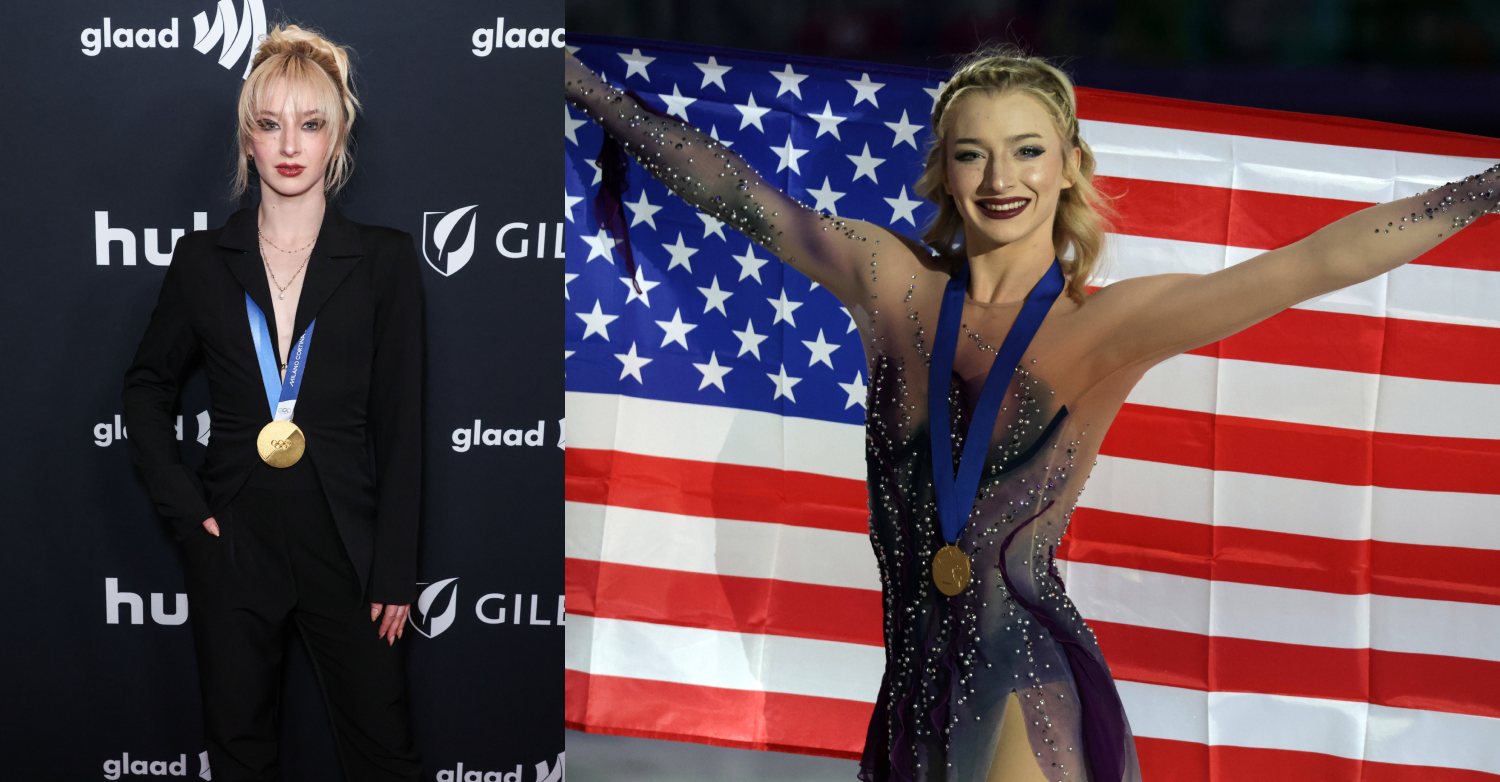
I was so impressed by the figure skaters who competed on Team USA in this year’s Cortina Milano Winter Olympics. Although I hadn’t paid a lot of attention to the press before it started, I was quickly charmed by Amber Glenn, who is one of the only openly queer US figure skaters. I found her to be vivacious and talented. Although Amber struggled through her programs to ultimately finish in fifth place, her personality shown through. After her Olympics performance, she explained that she was feeling more emotional because she was on her period. She was also pretty open about what it’s like to perform at the Olympics while you’re menstruating. As a result, Amber is doing an ambassadorship with Kotex. In an interview with People, she spoke out about what it’s like for female athletes to compete while they’re on their periods.
“I am on my period right now,” Glenn, 26, told a reporter from France TV Sports. “So it’s always really hard. Especially when you’re wearing something like this and you have to perform in front of the world. That’s hard and we don’t talk about it.”
Her willingness to be so open about a subject that can be seen as taboo —dealing with periods as professional athletes — earned a flood of positive responses from fans. She’s shared more about the topic on social media, and has now partnered with Kotex (whose new line of GravityCore products addresses many period concerns from active women) to continue to raise awareness.
“I’m so happy to be partnering with Kotex because they’re designed to give the athletes the protection and confidence that we need when we’re trying to focus on doing something really important,” Glenn tells PEOPLE. When sharing the news of her Kotex partnership on Instagram, Glenn wrote in part, “Competing on your period is part of the reality for many athletes. We analyze every jump, every score—so we should be just as open about this too.”
Glenn tells PEOPLE that the lack of conversation around periods in professional sports may partly be because “there’s no informed go-to” when it comes to treatment. Unlike with ACL tears or ankle sprains, where there’s a definitive plan of action on how to get better, there’s nothing like that when it comes to period symptoms.
“There’s always, like, a guide to, how do we get back to feeling our best and feeling confident enough to tackle the next goal?” explains Glenn. “And, you know, periods, they’re not really included in that.”
That’s why she believes open conversation about the topic among athletes and their support teams can change that. One example she shares with PEOPLE took place at the Olympics several weeks ago. “One of my teammates also had to compete on their period, and they were just struggling,” Glenn says. “And I had this heating pad thing that’s meant for your back, but she just flipped it around and used it, and she said it was a lifesaver for her when trying to warm up and compete.”
Another trick that helps Glenn get through her period pain is to get moving. Typically, the intensity of a competition or performance distracts her from the pain, allowing her to perform to the best of her ability. When the adrenaline subsides and the pain returns, she tries her best to “take a nice, long, hot shower and really try and stretch and get everything feeling relaxed.”
In addition to the obvious concerns about cramps and leaking, some athletes in Glenn’s field might also have concerns about bloating, a common side effect, while needing to wear tight leotards in competition. But after having her period for 13 or 14 years, the athlete has thoughts about how to deal with body image on the ice.
“Everyone else, they are more than likely so much more focused on their own lives and how they look and how they’re being perceived, they’re not even gonna notice,” she shares. “Just remember all the hard work you’ve put in to being where you are as an athlete, and this is the body that has gotten you to that point, and it’s gonna continue to keep pushing you to the next level to do the best you can, and that’s what you have right now.”
I love that Amber is focusing on what it is like to get your period as an athlete. I hope that her being so open will help other young female athletes feel more comfortable acknowledging that what they’re going through is perfectly normal. Hopefully this campaign will help young women who are going through puberty and beyond. I ran cross country when I was in high school, and vividly remember how uncomfortable I felt when I had to do races while I had my period. Some of the older girls would talk about needing tampons, but talking about how our periods affected our performances still wasn’t a thing. I really appreciate the women who are trying to normalize this. It’s something we have to deal with, and it’s crazy to me just how taboo it still is to talk about it. Good on Amber for speaking out about it.
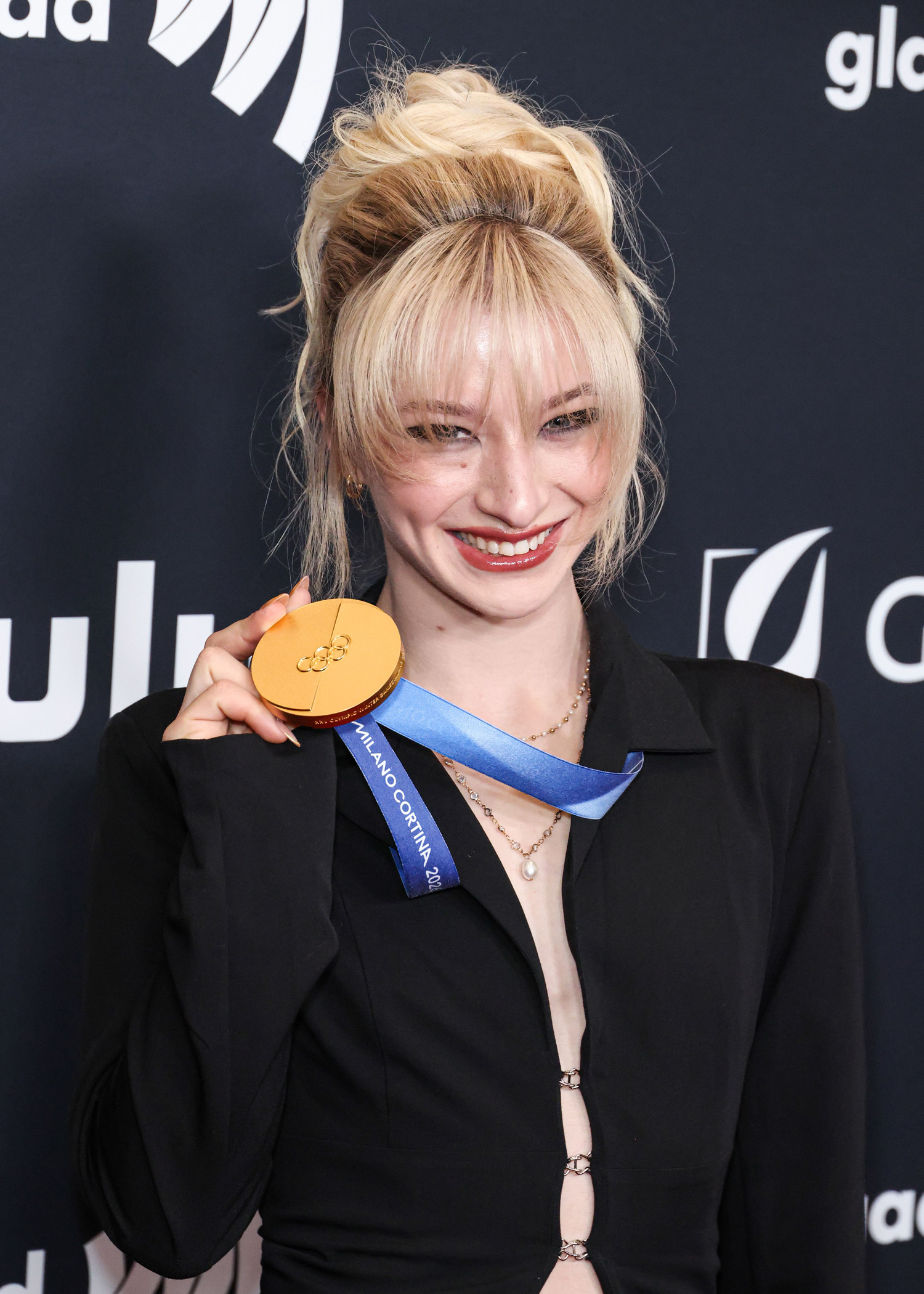





Photos credit: Xavier Collin/Image Press Agency/Avalon, IMAGO/Avalon







FYI Amber finished in 5th place. She was 13th in the short program only. As for her partnering with Kotex, I think it’s great. Periods are rough even without having to perform on the world stage.
Thanks we’ll fix that!
If men menstruated, the Olympic teams would all have special coaches and up to date research.
Some men do menstruate
I just love Amber and I love that she’s trying to normalize this conversation. I have danced my whole life and remember as a teenager having to pull my ballet teacher aside ahead of class to explain why I was wearing shorts over my leotard when I was on my period.
Oh, good for her! The more we can do to normalize all the processes of a woman’s body that are specific to us, the better for women’s health overall.
I was playing tennis at the weekend when all of a sudden some pretty gnarly cramps hit and I was struggling to focus/have the physical freedom to hit my shots properly. I was playing with three men at the time and thought at the time that they’d have no idea that I was playing impaired but would definitely have noticed my standard suddenly nosedive. Seemed very unfair.
It’s continually impressive how much professional women athlete achieve despite inevitably dealing with menstruation and its foibles, and should definitely get more recognition. Particularly back when female tennis players used to have to play in all white regardless of their cycle, just thinking of the unnecessary stress that must have caused.
I always wonderd about this,and I assumed that certain pills or medication were taken to temporarily stop it. Especially sports like gymnastics and tennis with their outfits. Good to have some clarity.
Taking birth control pills (no off week to menstruate, just 3 weeks of hormones on repeat) stops bleeding – I did it for years when I took the Pill. But I was lucky and never had any negative side effects – I know that’s not an option for everyone. But I’m certain many athletes do it (pretty sure I’ve heard tennis players talking about it)
I love Amber and how outspoken she is about these issues. Wish her success at Worlds this week!