
In 2023, Scarlett Johansson sued the Lisa AI app for using her likeness in advertisements without her permission. She put OpenAI on notice the following year for illegally using her voice for a ChatGPT voice assistant after she’d already turned them down. In 2024, Tom Hanks issued a PSA warning people not to be “fooled” by ads using his likeness. Hundreds of authors – both known and unknown – have taken legal action at AI companies for using their work to train AI programs. There are many more examples. It’s all just a huge mess.
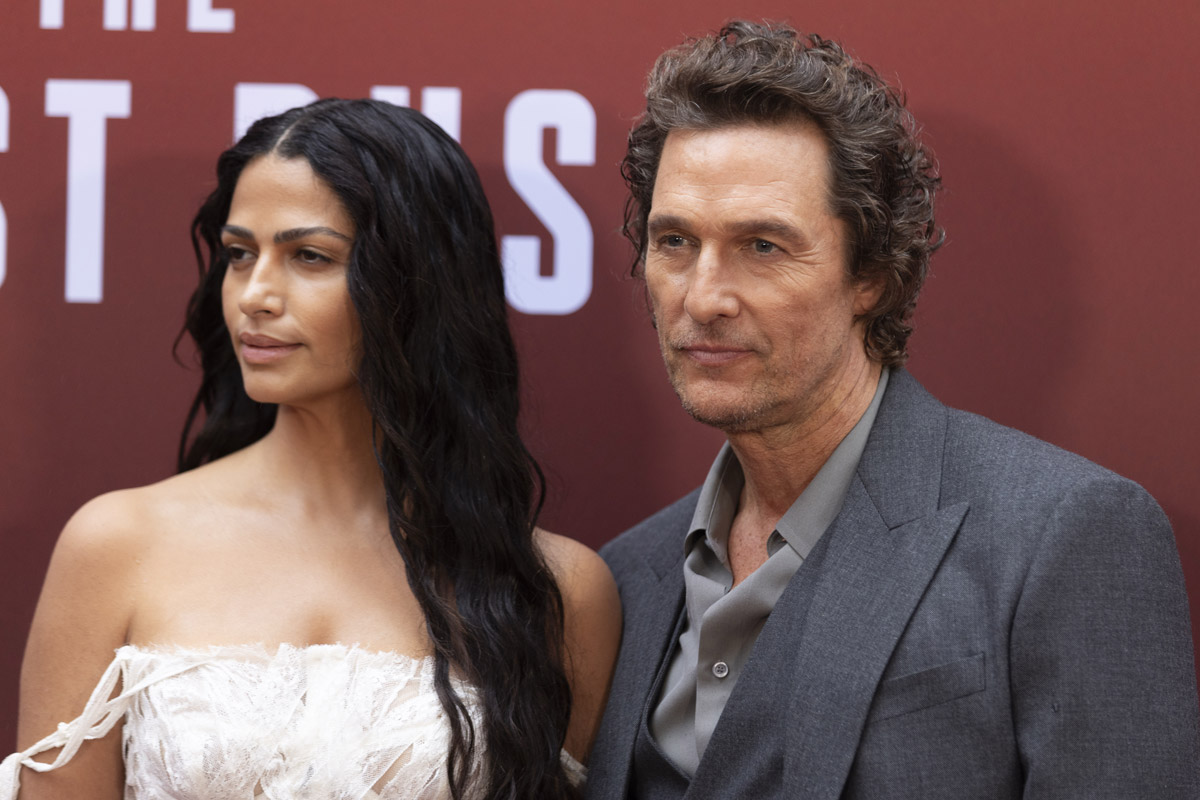
Matthew McConaughey has had to deal with AI-users taking advantage of his likeness without his permission. Two years ago, in December 2023, he filed an application to trademark one of his most famous catchphrases, ”Alright, alright, alright.” That application was finally approved last month.
Matthew McConaughey is trademarking his famous catchphrase “Alright, alright, alright” in a bid to stop unauthorized artificial intelligence (AI) use.
It’s been over 30 years since McConaughey, 56, first uttered the iconic phrase on screen as David Wooderson in 1993’s cult classic Dazed and Confused. The three words have followed him ever since, and he’s now doing everything he can to stop those wanting to use AI to replicate the phrase.
McConaughey has had eight trademark applications approved by the U.S. Patent and Trademark Office (USPTO) over the past several months in an attempt to stop AI apps or users from simulating the Magic Mike actor’s voice or likeness without his permission, the Wall Street Journal reported, citing his attorneys.
According to a document filed by the USPTO seen by PEOPLE, an application to trademark “Alright, alright, alright” was filed in December 2023, and it was granted approval in December 2025.
The trademarks include a seven-second clip of McConaughey standing on a porch, as well as a three-second clip of the actor sitting in front of a Christmas tree, the WSJ reported, citing the approved applications.
There’s also audio of McConaughey saying “Alright, alright, alright,” as well as audio of him saying, “Just keep livin’, right?” before he paused and said, “I mean,” pausing again, before adding, “What are are we gonna do?” according to Variety.
The Oscar winner told the WSJ in an email, “My team and I want to know that when my voice or likeness is ever used, it’s because I approved and signed off on it. We want to create a clear perimeter around ownership with consent and attribution the norm in an AI world.”
Jonathan Pollack, one of McConaughey’s attorneys at law firm Yorn Levine, said, “In a world where we’re watching everybody scramble to figure out what to do about AI misuse, we have a tool now to stop someone in their tracks or take them to federal court,” per the WSJ.
State rights-of-publicity laws are already in place to protect celebrities from having their image or likeness stolen to sell products, the outlet noted. McConaughey’s lawyers are hoping that by taking this step, the actor will help stop AI misuse, given that there’s a threat of a lawsuit in federal courts.
Kevin Yorn, Founder and Managing Partner of Yorn Levine, said in a statement obtained by PEOPLE, “What we’re trying to accomplish here is two fold. First we want to make sure that our clients have the same kind of protections that other businesses have to protect consumers from fakes or knockoffs, which is what trademark was initially designed for, and the second part is to make sure that our clients are able to capture some of the value that is being created with this new technology using their voice and likeness.”
“I don’t know what a court will say in the end. But we have to at least test this,” Yorn added, per the WSJ.
It sucks that he had to do it under these circumstances, but Matthew was smart to trademark this phrase. Anyone could have applied it to anything that Matthew was giving his approval to. ”Alright, alright, alright!” We currently have copyright laws in which an actor’s likeness cannot be used without their permission. While AI may seem like the wild wild west, I think that without any real, clear guidelines on how to handle the general public using actors’ likenesses, more celebrities are going to go the trademark route.
A recent interview with Ben Affleck went viral this weekend for his comments on AI. I am a member of my area’s local “Liberal Moms” group on Facebook. On New Year’s Day, someone made a post asking women for a pledge to stop using AI. It was met with a lot of resistance from women who said they work in AI-heavy industries. Their point was that it’s here to stay and that we have a responsibility to help shape it in positive ways. There was also a side-thread that kept insisting the exact same things that Ben does – while it’s absolutely being abused, AI is not nearly as powerful as big tech companies are making it out to be.

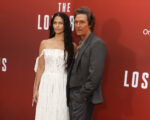

Photos credit: James Shaw/Avalon, Wenn/Avalon, Getty





Alright I can see his point in that protection is needed with/from AI. When the internet was started there were those that said it should be regulated so it could protect. History is repeating itself here with this technology. The internet and social media can be a nightmare for some. I guess AI is following in the footsteps of all of that.
How ironic, and even let’s say more than a bit hypocritical. Matthew McConaughey is being paid MILLIONS to shill AI for Salesforce, I’m sure you’ve seen the ads. So it’s fine for him to profit while pitching AI to a company that is happy to capture all of your data and use it and sell it (all the while kowtowing to Dear Leader), but of course he doesn’t want AI to affect HIM. Matthew can go take a seat and spend some time thinking about his own actions in all of this rush to push AI as hard and as fast as possible on all of us while he profits handsomely. What a wanker.
I’m surprised one can copyright words they spoke but didn’t write. Lots of actors have “catchphrases” that not only are from scripts written by others but also from books or plays prior to being made into movies. Heeeeeere’s Johnny! Say hello to my little friend. As if! Life is like a box of chocolates.
I remember several years ago hearing about that NBA coach Pat Riley trademarked the phrase “three-peat”, so if it is used on merch promoting sports teams championships, he gets a percentage of the profits. Seemed odd when he first got the trademark, but wow, what a smart move it was. I’m kind of surprised MM hasn’t done this before now, TBH. His line has been around 30 years now and used all over the place. Something you cannot copyright is a recipe. Once it’s been printed, it’s public domain. That’s why companies have “secret formulas” they keep locked up, so they can continue making money.
@Busybody, I was wondering about that too.
Unless he ad-libbed, it is actually the writer’s catchphrase for a character they created.
That said, I think it can get tricky: clearly, it’s MM’s delivery of the phrase that helped (or entirely) made it so iconic, and it’s his voice & delivery in our heads when we think/say/read that line. If he’d said it faster, or without the drawl, etc., would it have been memorable enough that people still reference it 30+ years later?
Of course, I have no idea whether the legal process for trademarking took any of that into consideration. Given what @Chickiebaby said, it seems like anyone can trademark any phrase coined by another, as long as the one seeking the trademark is famous. Boo.