
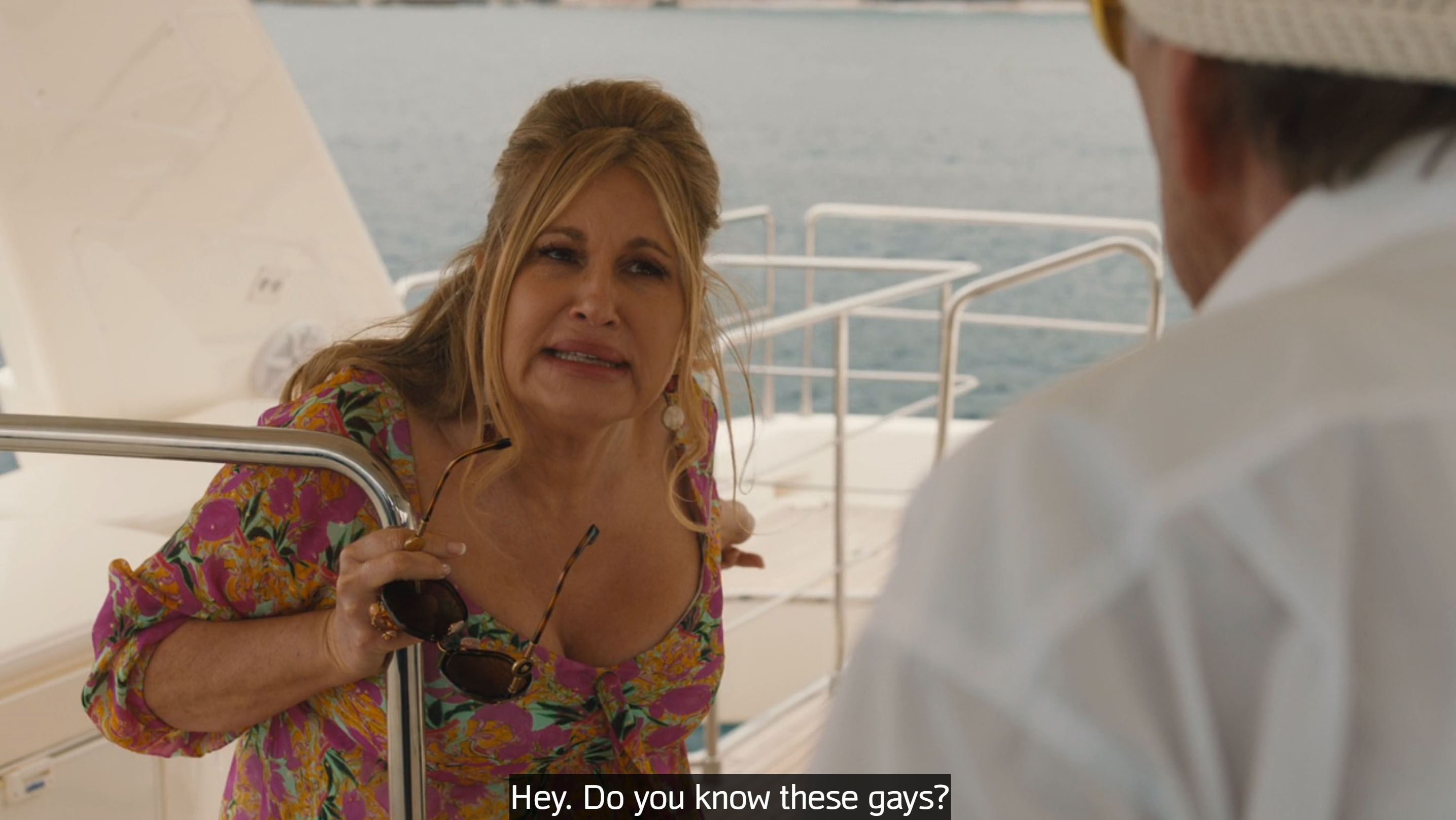
According to a 2022 Preply survey, 50% of Americans watch TV with subtitles “most of the time.” 78% of respondents said that they have trouble hearing dialogue due to loud background music. 62% also said they were more likely to turn on closed captioning when watching a streaming service than while watching live TV. I fall into all of these categories. Mr. Rosie and I started using subtitles for almost everything after we cut cable 12 years ago. I have to actively adjust my brain to focus on dialogue whenever I’m not using them. We always joke that it’s a sign of age.
As it turns out, it’s not our hearing that’s going bad. According to a Vox interview with dialogue editor Austin Olivia Kendrick, modern-day technological improvements on microphones and TVs are the real culprits. There’s also a silver lining to using subtitles. They can help children learn to read. Here’s more from Upworthy:
Why modern mics actually made things worse:
They first explained that way back when movies were first moving from silent film to spoken dialogue, actors had to enunciate and project loudly while speaking directly into a large microphone. If they spoke and moved like actors do today, it would sound almost as if someone were giving a drive-by soliloquy while circling the block. You’d only hear every other sentence or two. But with today’s technology, microphones are so small they can be strapped just about anywhere on an actor. This allows the actor to move about the set freely and speak at a normal volume without worrying that their words won’t be picked up.“A lot of people will ask, ‘Why don’t you just turn the dialogue up?’ Like, ‘Just turn it up.’ And…if only it were that simple,” Kendrick said before explaining, “If you have your dialogue that’s going to be at the same volume as an explosion that immediately follows it, the explosion is not going to feel as big. You need that contrast in volume in order to give your ear a sense of scale.”
So why does the music drown everything out?
Sure, you may be thinking, well that kinda explains it, but why do the music and other cinematic noises sound like they’re beating on your eardrum while the dialogue sounds like the actors are whispering every line? That doesn’t seem very balanced. There’s more to it, and again, it falls back onto technology.In the video, they explain how our televisions are too thin to hold large speakers facing in the correct direction, and until this video, it didn’t dawn on me that the speakers to my television are indeed in the back. No wonder we can’t hear. The actors are quite literally talking to our walls.
Subtitles might actually be good for your kids:
[S]ome experts like the World Literacy Foundation note that watching television and movies with subtitles is especially beneficial for children. Research has suggested that putting on subtitles can help improve literacy for kids, and many actors support the practice. This is good news for those worried about the literacy crisis in America.
While the speaker placement thing makes sense, I’ve never considered newer microphones being a problem. I always assumed that someone didn’t properly mix the dialogue and music. You would think that technology would keep up in that regard. Mr. Rosie bought a soundbar during a Prime Day sale several years ago. It helps, but it sucks that we needed new speakers just to hear the television. At least closed captioning technology has improved over the years. Companies like Netflix and Disney+ let viewers customize subtitle size and color. Upworthy also linked to a video with tips to help viewers hear dialogue better.
I love the hidden benefit of subtitles helping kids learn to read, though. My mom is a teacher, and when I was younger, she’d tape index cards to items with their names written on them. Subtitles are a life hack for the digital era.
Here’s the interview that Upworthy reported on:











I wear headphones when I watch television because I can’t hear squat. It’s all mumble, mumble, mumble, crash.
I started with the headphones because my bedroom is next to my neighbor’s baby’s room. Love it and wear it in the living room too. Really helps my ADHD self concentrate.
I also have tinnitus and need the subtitles anyway. I do sometimes have them set to replay only if they are distracting from the show.
My daughter has turned on the subtitles on all of our media because of a brain injury. She presents fine, but struggles with reading and attention, so the subtitles really help her. I don’t like the way they obscure the visuals, but I love having them when I miss something if they are tracking with the audio. Sometimes the subtitles can be a bit delayed.
My hearing hasn’t been the same since I’ve been dealing with my chronic autoimmune disorder & it’s gotten even WORSE since I’ve been dealing with Long Covid…my Mama is dealing with the same…so subtitles help keep me sane…
Sorry about the long Covid. That’s a bummer. I have autoimmune stuff, but can’t complain because I get to take care of myself now. My friends who are still working and have to endure, and like you also have long Covid, suffer. Wishing you the best.
But do kids look at the subtitles? Or are they looking down at, oh I don’t know, a phone maybe, and kinda listening to the TV?
Older kids and teens probably are, but they should hopefully already know how to read by then. For little kids, watching TV is their screen entertainment.
My 14 year old uses subtitles. not all the time, but for some movies (Greyhound on Apple TV for example) he always turns them on. So he’s still listening but with the subtitles. he says it helps him to understand what’s happening.
Your 14 year is me! I actively listen, but if I miss something, I will go back and read the subtitles.
My 12 year old grandson has used subtitles for years, so he can read what they’re saying because he said it’s hard to hear the voices. My only criticism is sometimes the words don’t match up to what they actually said, it’s not a true text of the dialog.
I watch a lot of stuff on my phone with headphones and while they certainly help with ambient noise I do believe they’re making me go deaf. I use subtitles with everything including sports much to my husband’s chagrin.
I got used to subtitles 30+ years ago watching undubbed animae. We use them all the time now. They are very useful when our dogs hear a leaf rustle and start a howl lol! Btw I also do not watch anything dubbed and use subtitles so I can hear the actors’ voices.
I thought the point of talkies was so we wouldn’t need subtitles. ¯\_(ツ)_/¯
Well, we are headed back to the early 20th century with the robber barons, few minority rights and loosening of workers’ protections. Apparently we all entered a time machine in November 2024…
I love the idea of subtitles benefitting literacy, but on some shows, CC subtitles can be wildly inaccurate. A good example is the Drag Race franchise.
Also, I have read that on Netflix, the higher the subscription fee, the better the audio.
Oddly, in end-stage capitalism, it makes sense that they would make it easier to hear once you pay more.
The 2020s in a nutshell: f you want to enjoy anything in life, you better pony up that cash,
They cue up music, sound effects and commercials (WHY??!?) to ear-splittingly loud levels on literally everything. I spend my time moving the volume level back and forth no matter what I’m watching or listening to if there’s any speech involved. I’m not sure about the TV speaker theory as this happens at the cinema too – EAR-SPLITTING music, sound effects and commercials and then (too often) having to strain to hear the mumbly whispering of actors in the film.
It drives me crazy with my true crime podcasts. Murder-y stuff helps me sleep for some reason and there is nothing more jarring than a fucking Chumba Casino ad or something equally annoying and obnoxious interrupting what would otherwise be a soothing true crime pod. Not shocking that advertisers don’t GAF about me getting a decent night’s sleep but still….
This is my major pet peeve too!
I started using subtitles when I watched the British drama Line of Duty. Even though they were speaking English it was hard to understand the dialects of some the characters. I haven’t turned back since. Plus I watch a lot of Kdramas and foreign language shows so it’s just easier to leave the subtitles on regardless of what I’m watching. I find it harder now to watch movies and TV in general that don’t have subtitles.
Does anyone else have the problem with closed captions sometimes it comes out in a big black box and blots out most of the screen? Most of the time closed captions come out in a size that is big enough for the words other times it is much bigger the captions themselves. Then I have to turn them off in order to see the visuals. It is very frustrating.
I’m the same with watching a lot of foreign shows & movies plus I suffer from tinnitus so I have the subtitles on ALL the time! I also have a 5 channel surround sound system with a small(ish) sub woofer and that helps with the “experience” of watching TV.
I also think something is going on with all of the sound being on one track, I really noticed this while watching PALM ROYALE. It had a dubbed quality that British black and white films of the 1960’s had. I think streamers are doing this so they can more easily dub their projects into different languages. Just my theory.
I dont really like subtitles and dont use them unless I need to, but I hate how loud the soundtrack is and how quiet the dialogue is. So for some movies I have to use them bc of the sound difference.
We have surround sound on both our main TVs (living room and basement) and that doesnt especially help.
They help with my ADHD because it forces me to focus directly on the screen, but I do notice I sometimes miss subtle background details or character cues unless it’s something I rewatch. Kind of a toss up, honestly.
Can they please explain why, even with a ‘home theatre sound system’ I still need the CCs? Good grief.
The tv shows/movies are so quiet and then BAM here come the loud advertisements.
We have a full sound system in the basement and it only helps sometimes. We don’t watch our late night shows with the subtitles because the timing always ruins the jokes, but those shows oddly don’t seem as bad as sitcoms or movies.
This!
While I prefer to keep volume pretty low no matter what media I’m engaged with, if ads weren’t so loud I wouldn’t have to keep the tv volume as low as I do. The sounds on ads are purposely attention grabbing, emotion eliciting … my nervous system, cortisol levels get enough of a workout from life without tv-ad characters’ babies crying, car crashes, spill shrieking/distorted Ooh Nooing, car horns, talking mucus, and disease symptom woes
Plus, life among humans comes with a lot of ambient noise … there’s no telling when someones lawn mower, car bass line, traffic noise, vacuuming, someone talking loudly on the phone … I don’t want to fiddle with volume every time a noisy thing intrudes, i can
just ride it out with subtitles.
And also, yeah – the mismatch between sound mixing, common tv design is a part of it … especially the music vs dialogue thing.
Because it seems like so.much.mumbling!
Add in a foreign accent or some fast talking and forget about it1
I watch most things with subtitles because of an auditory processing disorder (sometimes I just cannot understand what someone is saying, even when heavy accent is not a factor), but when I was taking a year of college Spanish, throwing on Spanish subtitles really helped my learning! Sure, maybe all the vocab I picked up wasn’t exactly classroom friendly, but it was a lot of fun, and making learning fun helps it stick better in the ol’ brain.
I started to use closed captioning for shows I watch on Acorn and BritBox, because sometimes the accents are pretty thick. A side benefit is that you can always tell when an American closed captioning tech has zero experience with anything but an American accent or lingua franca — due to hilariously bad misinterpretations. It’s entertainment within entertainment.
Missing is the fact that corners are being cut on the labour side of movie making. Good sound can still easily be achieved if you employ a crew with sound folks on it who use boom mics when filming, and skilled sound engineers on the back end to properly mix the edit. Sound is terrible on TV speakers, sure, but subtitles are STILL required on my excellent third party sound system. The reason sound is worse on streaming shows versus movies (esp movies made before 2015) is that those shows were made with a lot less $$$…aka, not a full crew. Just like all other products made in the USA, quality has been hollowed out in pursuit of ever-growing shareholder returns, and everything winds up being less fun, less pleasurable, less human.
(Sorry to be such a downer)
I’ve watched the TV with subtitles on since I was in college. First, it was because my dad had profound hearing loss and always had them on, and it just became a habit that I kept. Then I married someone with bad hearing, and the habit never went away. After watching with them on for a while, watching without feels really weird.
We have lots of visitors to our home who are not native English speakers so the captions are pretty much on all the time.
I dunno, I think subtitles are a blessing. I’m not deaf, but at almost 60 years, my hearing is degrading. It gives me the opportunity to watch anything without blasting the volume. Frankly, what really makes me cranky is the volume boost during commercials. My dog, who is also aging, leaves the room because she can’t stand the volume at that point.
My husband ALWAYS needs the subtitles. I think they’re great for when we’re watching something British LOL but it kind of annoys me to have them on ALL THE TIME. Depending on what I’m watching, they become a distraction that kinda kills the immersive quality of a good series/movie.
I am not US American but I love subtitles since forever. It helped me learn English and also make my other languages better. Even in my own language, sometimes there are words I cannot understand.
This enrages me.
The speaker placement, the quiet dialogue and loud music. Hate it all.
I wear hearing aids, and just invested in a $200 tiny box that connects my hearing aids to the tv sound output.
GAME CHANGER,
And it’s independent of the regular sound, so if I’m alone I can watch it with no sound coming from the speakers, if I’m with the nice man I live with, he can listen at a volume that’s good for him.
I watch a lot of international tv and movies and prefer to listen to them in the native language with subtitles. I hate those english dubbings that they do – its very very distracting and sometimes downright bad.
Dubbing is the worst.
We watched the US version of the killing, a wonderful series, and when I saw prime had the original version, I was so excited.
It was dubbed. Badly.
We turned it off.
I’m still hoping to find a subtitled version somewhere.
I started using CC for Downton Abbey and then realized it was the perfect way to watch a scary movie (with sound low) because reading [creepy music] is a lot less scary than hearing actual creepy music.
I’ve used subtitles as long as it’s been available. We watch a lot of British series which is why I started using them 20+ years ago but in recent years my hearing is so bad I need subtitles all the time. Paramount programming particularly muffled.
I don’t have a TV, just stream on my laptop which has terrible speakers. I’ve hooked up external speakers and I can hear fine. (TBH, I find most things aren’t worth a lot of close attention anyway).
But I’ve heard this argument before, about the mics and sound differentials. It makes me wonder why that isn’t addressed when designing the hardware that delivers the content.
That’s the whole thing with this article.
They know it’s crappy but they just don’t want to fix it, so they can have their super loud explosions! Never mind that most people care a lot more about the dialogue.
I had a housemate who loved to have “true” crime shows on all night while she slept.
I eventually got used to the sirens, tire screeching, and gunshots. My brain knew it was just the tv.
The only thing I could not sleep through was one with a crying baby. How can you sleep through that?!
As mentioned up top, I like my television turned medium low. If I miss something they mumbled, I can read it.
For heavy accents, I love retro British comedies too.
Heck, if the movie/series is not in English, and it looks good, I’ll choose subtitles too.
I lived in London for nearly six years and my husband is English, but I have to admit that I always watch British shows like “Call the Midwife” with the captions on.
I love Jennifer Coolidge so much!
I went and bought a sound bar for this exact reason. If you get one, make sure it has a center channel. That tends to be where the dialogue comes out, so it’s separate from the background noise. The one I bought also has a setting for voice enhancement. It’s a game changer.
I call BS on the “technology” excuses. Everyone mumbles nowadays. It’s either marble mouths or loud distracting music. And while we’re at it, what’s with all the young women who speak like Minnie Mouse?
I help my friend teach art classes to kids aged six to twelve at a rec center. I have noticed over the years that kids seem to be getting harder and harder to understand, especially the girls. There is a lot of mumbling and slurring. Some of them talk in such a quiet voice that it seems that they are afraid to express themselves. I am wondering if this is some weird generational change. I certainly did not have that reticence when I was that age, so I am wondering what could be causing this phenom.
How can it be “our speakers” when everything but the dialog is LOUD?!! And I don’t have a TV: I watch on my large screen computer. We have an open-house plan, and across the main room is my husband’s side of the house; he uses ear plugs, and I don’t, so I always have subtitles, and I get annoyed if something DOESN’T have them.
But the loud music, the loud other noises, all of it, that negates their nonsense about it being speakers…it’s BAD MIXING, PEOPLE. GET YOUR SOUND PEOPLE TRAINED PROPERLY FFS!!!
Exactly. It’s bad mixing. And they DGAF.
That’s what the article really says.
I really only use sub-titles on long airplane rides if I am watching a movie or for a foreign language show or film at home. Dubbing is awful. I agree about the sound issues on newer programs, but I usually don’t have trouble understanding accents. Maybe that will start to change any day now, though. I am getting up there in years!