

Many parts of the globe right now are having a heatwave, a tropical heatwave. The temperature’s rising, it isn’t surprising… What is surprising, is a common phenomenon in modern day metropolis living: trudging through outside temps so hot and humid you become reacquainted with forgotten body parts thanks to excessive sweating, then being suddenly blasted with frigid AC upon entering a building. I swear, it didn’t used to be so pronounced. But these days you have to be prepared for polar opposite temps inside vs. outside (and yes, the trend flips during winter months wherein buildings are overzealously heated). In a recent article the NY Times seeks to solve the mystery of why office buildings are so freezing cold. They spoke with engineering and operations experts, and the answer to the problem appears to be that most systems work to set a blanket temperature for a broad area instead of allowing for personalized settings. And since temperature, like time, is relative, the result is most people feeling uncomfortable. So in short, it’s not the heat, it’s the efficiency.
Inefficiencies abound: Most of the time during summer, office buildings are set to a temperature of 71 to 73 degrees Fahernheit, said Jamie Hodari, chief executive of building operations and experience at Coldwell Banker Richard Ellis (CBRE), one of the largest real estate services firms. But if a building’s cooling system is inefficient, workers may feel colder depending on where they are sitting. … Maybe you sit by a window that doesn’t have good insulation, for example. Maybe a piece of office equipment is operating near a temperature sensor, making the area seem hotter than it is and forcing the system to work harder to cool it down.
Buildings aim for 80% of people being comfortable temp-wise: The temperature range for office buildings is sometimes included in a tenant’s lease, with set points for winter and summer. Those temperatures can be tweaked — within limits — with software called a “building management system,” typically accessible by facilities operators. The decision of what that temperature range should be is guided by recommendations by organizations like the American Society of Heating, Refrigerating and Air-Conditioning Engineers. ASHRAE sets standards using a highly complex calculation but suggests that temperatures should be comfortable for around 80 percent of occupants.
Maintenance issues: Standards set by organizations like ASHRAE are continually updated and consider factors including clothing, occupant activity level, humidity, air flow, and radiant heat or sunlight. Office buildings don’t maintain the same temperature for all 24 hours of the day. Between normal working hours, cooling systems relax and raise the base-line temperature to conserve energy — but that means cold air is blasted to bring temperatures back down in the mornings. Even if you hit a sweet spot temperature-wise, buildings have to continuously circulate air to maintain a certain quality, which is why vents continue to blow air.
Personalization is the key: Mr. [Cliff] Majersik from the Institute for Market Transformation said heating and cooling buildings with heat pumps — which don’t use fossil fuels — would be one way to improve energy efficiency. Buildings should also work toward more personalized temperature controls, he added. “Right now, a lot of these buildings are overcooked because you have to set one thermostat for either the whole building or maybe the whole floor,” Mr. Majersik said. “That means that if one person wants it to be 65 degrees, then another person wants it to be 80 degrees, they can’t both be happy because they have to be more or less the same temperature. More precise temperature controls, which allow individuals to control their own office or even their own cubicle, will not only increase comfort but also save energy, he said.
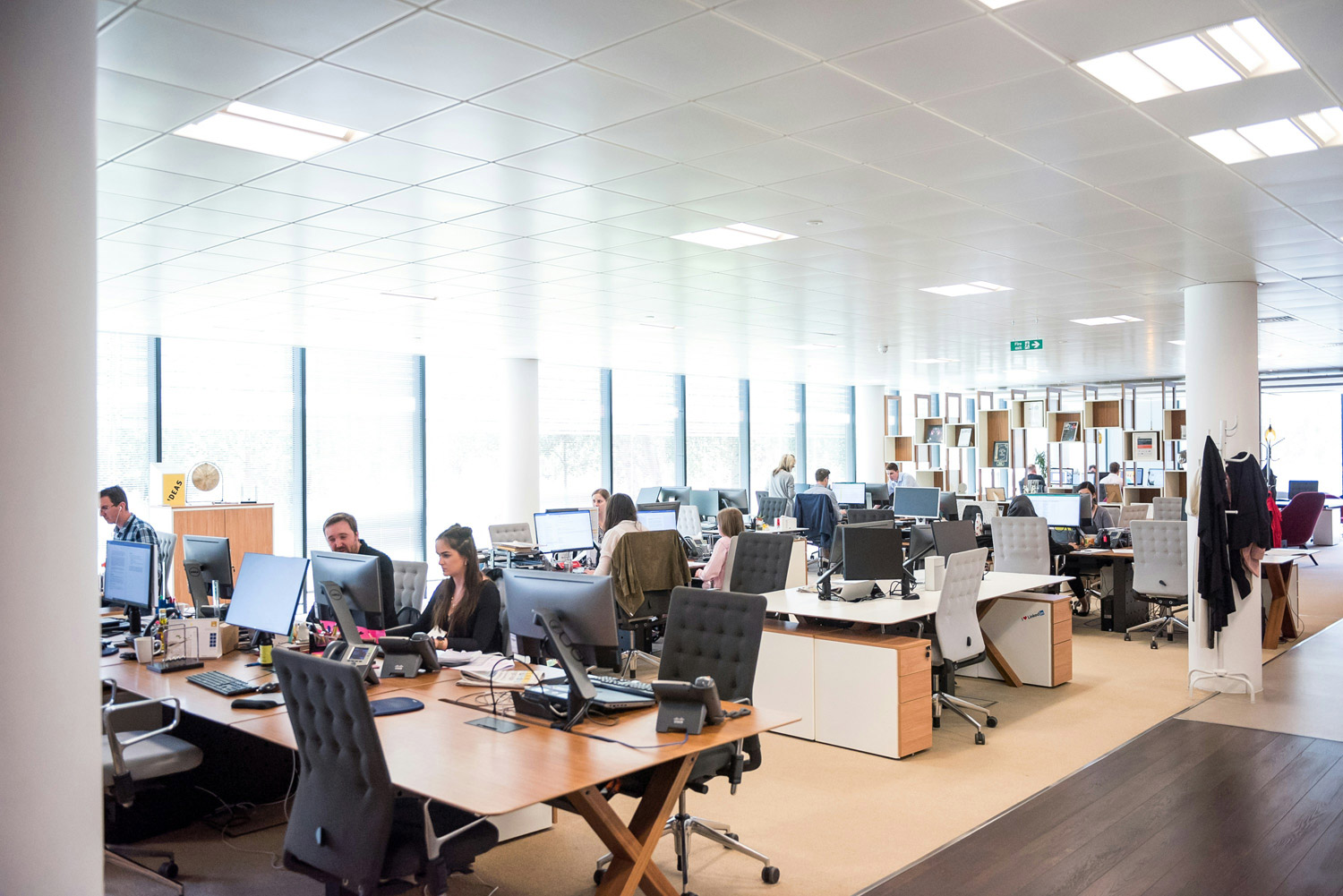
I wanted to talk about this because I work in an NYC office building and an inordinate amount of my life has been occupied by this problem. Not that the office is too cold — I will never, ever be the woman who complains about AC running during an East Coast summer — but the fact that everyone has a different temperature preference that cannot be satisfied with a one-size-fits-all approach to HVAC! The entire front half of our floor is now what we call the “tropical end of the office” because my coworkers there complained so much about it being FREEZING. Me, I adhere to my father’s philosophy that you can always throw on another layer of clothing, but there’s only so much you can take off. I keep a variety of cardigans in a drawer that I deploy as needed.
So like the experts in the article describe, most of the people where I work are always uncomfortable and unhappy with the temperature, and are constantly bemoaning, “Why can’t they balance the system right?” I’ve suggested what I thought was an ingenious solution: since we know the system isn’t balanced, why not redistribute each person to an office on the floor based on personal temperature preference? If you can’t fix the system, then work with it! To date my advice goes unheeded, mainly because the bosses are holding onto the silly idea that departments should be situated together. They say that now, but a mutiny is coming over the AC levels, I assure you.
Photos credit: Arlington Research and Ben Kolde on Unsplash. Polina Zimmerman on Pexels











My office thermostat is controlled solely by the men in management who seem to always run hot. So our AC is cranked year round to 68 and the women all freeze w space heaters.
This. Caroline Criado Perez talks about this in her book, Invisible Women. It’s just one of many ways that systems are set to men’s preferences/by men.
Men, again.
Yep, yep, yep. The coldest places I’ve worked always had the controls set by the men in the office. Last place I worked–IN HAWAII–I had to bring my wool sweaters & scarves & fingerless gloves to work. I couldn’t just wear them, because I’d sweat to death in my car & outside spaces, I had to bring them then change into them & out of them. My goodness, that was miserable.
I mostly still WFH but on the days where I do have to be in the office I will inevitably freeze unless I deliberately dress for the “inside temps” instead of the actual weather outside. (I don’t have anywhere to stash something like a cardigan, as my office hot-desks.)
It’s not too bad in the AM because I leave quite early, but in the afternoon I am almost always overdressed. Thankfully my work backpack is big enough that I can take off a layer and stash it in there on my way home so I don’t sweat to death.
I’ve often seen men in tshirts complaining about the heat whilst women have a cardigan on hand. One time I had a headache from the cold. This from someone who usually hates hot weather.
I used to travel a lot to the US for work and really noticed this in the summer months. Not to re-ignite the US/EU AC wars but I’ve never had the problem to the same extent in the UK/EU. The air con keeps offices nice and cool but rarely SO icy cold.
I live in Arizona, and I carry a lightweight hoodie around with me in the summer, to places like restaurants and movie theaters.
I not only had a substantial cardigan that I left at my office, but nine months of the year I wore fingerless gloves as well. That wasn’t my main purpose, but it did get management/maintenance attention.
This has been my experience with working in an office environment most of my life. Too cold and past jobs where some of us used space heaters in our offices. It’s ridiculous but a lot of offices have plastic covers over thermostats that lock and management controls the temp (usually men) so, it’s cold.
A friend of mine recently had to work in an LEED-certified office that was too cold winter & summer but they weren’t allowed to bring in space heaters, ’cause those weren’t energy-efficient dontcha know.
I just turned the temp up on the window unit in my office. I live in western New York where it’s cold 8 to 9 months out of the year. I don’t want to be cold in the summer.
I once had a corner office in an office building that was directly under the personnel director’s office. I was just a lowly regular employee, but my boss put me in this premium office to hold his place while he was temporarily assigned to another location for that hot summer. Nearly all the men in the building wore suits each day, while we women tended to dress more lightly for summer. There was no way the building managers would adjust the temp of my office because the personnel director got first preference, so I joined the ranks of the women who had electric heaters under our desks! Frankly, the whole thing was ridiculous.
Women’s winter is a thing! I work from home now so I no longer have to deal with it, but I used to keep a wool sweater, wool hat, and cashmere fingerless gloves in my office desk because I was so cold I often couldn’t function at work. And this is in Southern California where the weather is perfect almost every day of the year.