
Three paintings, all alike in artistry, in rural Parma, where we lay our scheme. From grand museum walls takes a group of thieves, great works by Renoir, Cézanne and Matisse. A fourth they tried, till stopped by an alarm, convincing these robbers to make pivots. Accounts suggest no person met with harm, thieves in and out in only three minutes. So now the police are out on the hunt, while the world sits stunned, gobsmacked, in a daze. Didn’t the Louvre just live through this same stunt, dating back 164 days? It did indeed, mayhaps the two share crews. For more we now turn to NBC News:
Thieves made off with three paintings by Renoir, Cézanne and Matisse worth millions of euros (dollars) from a museum near the city of Parma in northern Italy, police said on Monday.
The heist took place on the night of March 22-23, with thieves forcing open the entrance door, police said.
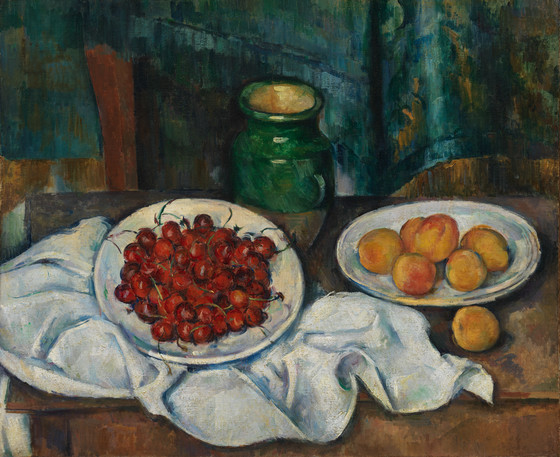
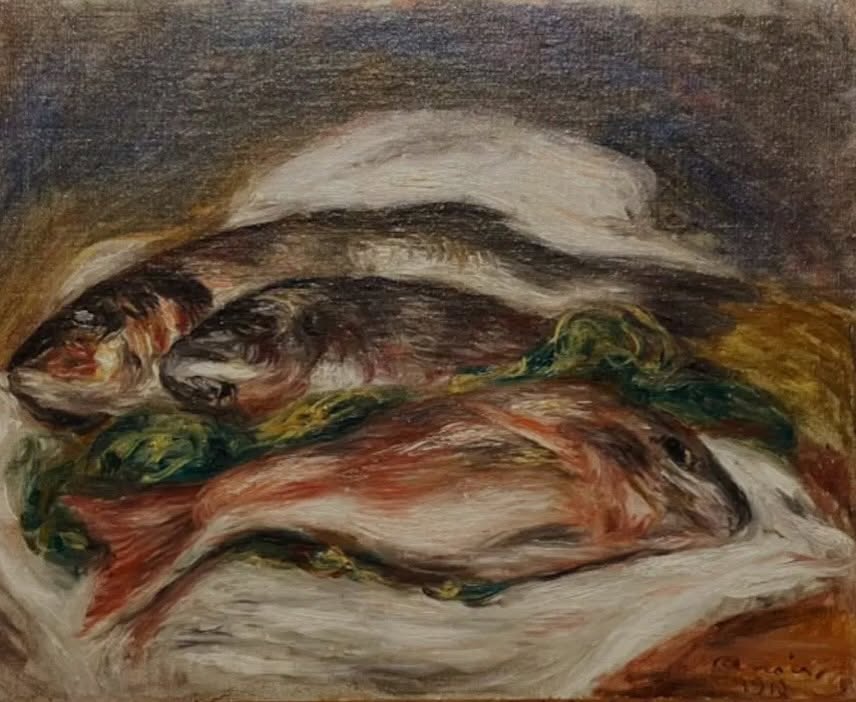
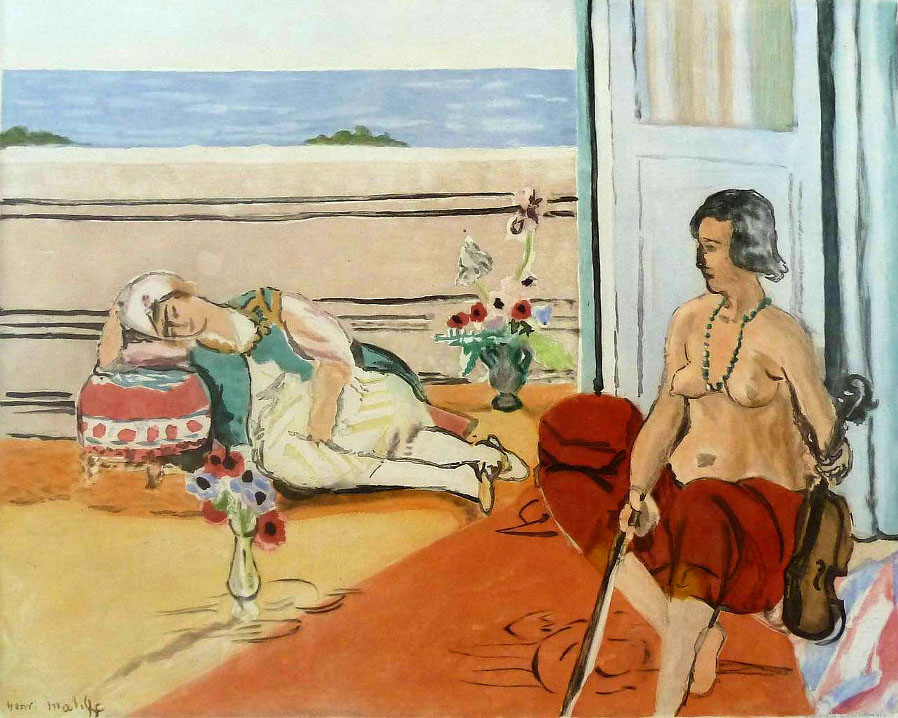
The three stolen paintings are “Fish” by Auguste Renoir, “Still Life with Cherries” by Paul Cézanne, and “Odalisque on the Terrace” by Henri Matisse.
The Magnani Rocca Foundation, a private museum, lies in the heart of the countryside 20 kilometers (12 miles) from Parma.
Local media reported that the thieves were able to nab the paintings in less than three minutes and escape across the museum gardens.
Established in 1977, the foundation hosts the collection of the art historian Luigi Magnani and also includes works by Dürer, Rubens, Van Dyck, Goya and Monet.
The museum believes a structured and organized gang was responsible for the theft, which was interrupted by the alarm, local media reported.
The museum didn’t post any statement about the theft on its website and wasn’t reachable for a comment, as it is closed on Monday.
The crime in Parma comes after a series of high-profile heists at major European museums, including a major incident in October where thieves stole jewels and other items worth 88 million euros ($101 million) from the Louvre in Paris.
Let’s clear something up right off the bat: though they are phonetically similar, don’t confuse the museum’s namesake/benefactor — Italian art collector Luigi Magnani — with US citizen/criminal Luigi Mangione. OK, moving right along… Since this NBC News’ reporting, the stolen artwork has been given an estimated worth of $10 million collectively, $7 million of which is for the Renoir oil painting alone. (Sidenote: every other article I’ve read refers to the Renoir as “Les Poissons,” which directly translates as “pisces” in English, which of course is the zodiac sign symbolized by fish. But still, I’m perplexed by the one outlet going with “Fish.” Unless someone can verify that the fish depicted are salmon, and the different word choice is NBC News very quietly making a nod to swimming upstream/against the tide. I realize this has turned into a rather long tangent but these unexplained anomalies really keep me up at night, people!)
And while we’re getting technical, the three pieces that were stolen are each paintings of a different feather. As I just mentioned, the Renoir is an oil. Cézanne’s “Still Life With Cherries” is pencil and watercolor (I loooove watercolor; so emotional and ethereal), while “Odalisque on the Terrace” (which, true story, I posed for) is an aquatint by Matisse, a process more akin to etching than traditional painting. Just because they may be lost forever doesn’t mean we can’t learn more about them! Not that I want them to be lost, of course, but it has been 164 days since the French crown jewels were last seen, just sayin’. Finally, because this art heist happened in Italy within the same timeframe as the big KitKat heist, I must ask: did police sniff out chocolate fingerprints at the scene?
PS — Yes, I really did write you guys a flipping sonnet, go ahead and count the syllables!
These artworks are in the public domain










Bravo, you really went above and beyond for this one, Kismet!
I’m interested because it was my understanding that art thieves usually specialize. This seems more of a grab and go.
This all reminds me so much of the robbery at the Isabella Stewart Gardner Museum in Boston, which happened the same year that we moved away, when I was 12/13. I have such vivid memories of going to the museum before the robbery and have never been able to bring myself to go back, afterwards. It’s like a desecration. They actually left the frames on the walls to mark the missing canvasses. I imagine it’s like seeing an old friend with a familiar face and a new scar.
I miss our lovely Vermeer and its shimmering silver light.
Ah, that’s a real shame. It’s not like this is something people can spin as theft to “repatriate” the art, this is just going to end up in some rich persons private hoard, rather than be enjoyed by everyone.
Probably given the recent spate of thefts, museums are going to have to beef up their security. They can’t possibly have a guard in every gallery, though, which is probably what it would take to be 100% sure. Unfortunate :/
Fantastic work on the sonnet!
You raise an excellent point, these thefts are to order. They are not freelance or spur of the moment. There is a buyer. They are calculated. I feel like we’re witnessing the death of civilisation, the public spaces are being gutted for private profit. There was a great article in the FT the other day about how UK museums wanted — in some cases — to charge admission to non-UK residents, as they are free to us, but they decided not to, because of a principled commitment to make the art accessible. I was astonished how expensive museums were when we went back to New York & Boston. The Met is a voluntary contribution, but the Boston Aquarium, where I spent like half my childhood, is inaccessible to people without affluent incomes. Sad sad sad. Really.
I remember being surprised when I first went to the Met. They called it a ‘voluntary fee’, but I didn’t get the feeling it was truly voluntary. I didn’t have the nerve to say OK, then, free, please. I think they’re counting on that.
Les Poissons directly translates to “The Fish”.
Yep, in the plural of Fish
correct. while “Les poissons” is the zodiacal name for “Pisces” in French, “poisson” is simply the French word for fish.
on that note, today, April 1, while known in English as “April Fools Day” in French it’s called “Poisson d’Avril.” the pranks are relatively mild.
?? Fish of April? What happens, do you smack people in the face with a fish?
I started reading it and was like, wait a minute, is this in verse of some sort?!?! Nice job @Kismet!
(Je parle français et les poissons would be translate as ‘the fish’. Salmon has it’s own word “saumon”.)
For all the tech/security we have in the world, the fact that we have had 2 major museum heists in less than a year is truly interesting. I think both the Louvre and this had to have someone on the inside who knew the systems and patterns.
I believe the Louvre’s password for the security system was something like ‘Louvre’. Not sure that would take inside knowledge….
Very impressed with the Rome and Juliet homage! Well done.
Not well done is this theft. I hate art theft, stealing from regular people so that wealthy fuckwits can hoard the paintings forever. My most Indiana Jones trait: “this belongs in a [culturally appropriate] museum!”
And few countries have the resources to investigate this effectively. I read a book by a retired FBI agent who worked art crimes like this and it was depressing how few resources anyone has for these crimes. The things we prioritize. The FBI only has one or two people (unless that’s changed lately) and the NY AG’s office has someone good (but again, small team). Scotland Yard doesn’t have many people. Italy, however, has the largest team in the world. They spend money on protecting their treasures so hopefully they can recover these.
Doesn’t Interpol have an entire unit devoted to art crime?
My suspicion is that most of these heists are ordered/financed by billionaires in places like Russia and Saudi Arabia, and that the looted artworks will never be seen by the public again.
Most likely they are stored in places like the Geneva Freeport and their “owners” come look at them from time to time.
These paintings-and the jewels stolen from the Louvre-cannot be sold on the open market so their value can’t be realized. the “collector” no doubt pays a huge sum to the thieves but once the pieces are gone, they won’t be found.
and I’m well aware that the gems stolen from the Louvre *could* be broken up and resold, but I think far more likely they can’t/won’t. International gem dealers would not be willing to put their reputations at risk be selling gemstones without provenance, particularly if they resemble the missing jewels.
Well, patting myself on the back for reaching way back to high school to be able to recognize the Shakespearean cadence of your writing! Well done, you!