
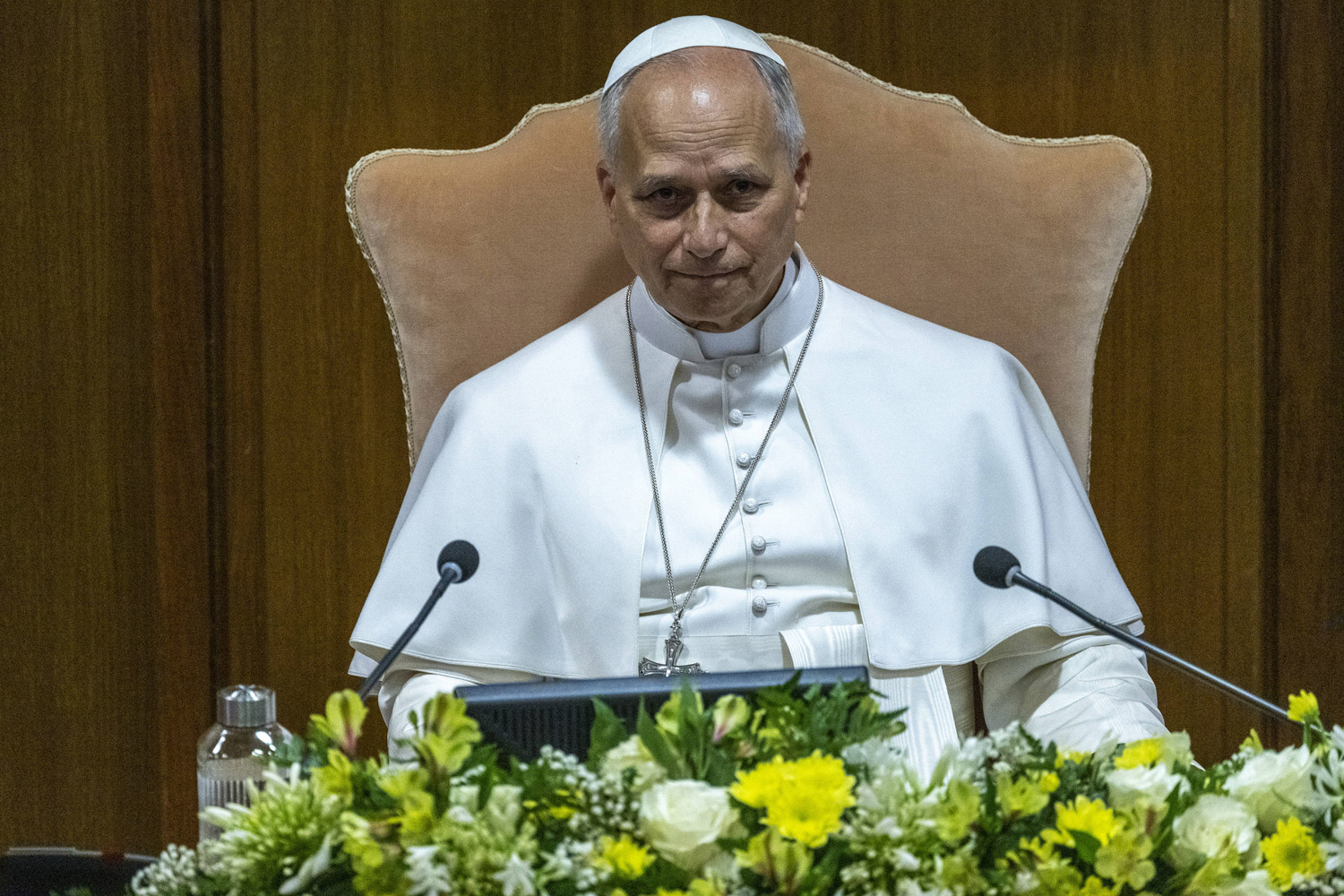
Allow me to paint a Sistine Chapel ceiling portrait of my spotty knowledge of the Vatican and popedom: I could tell you in a heartbeat about the rumor that Pope Benedict wore Prada loafers, but I was Monday-years-old when I learned that apparently popes write papers? Speeches, I knew. But written homework? Tis true! The latin-named essays are called “encyclicals,” and the themes typically reflect the pressing issues of that pope’s specific day and age. So, what did Chicago Pope Bob pontificate on for his first encyclical as pontiff? The dangers of AI, hallelujah! In a tight 42,300-word tome entitled “Magnifica Humanitas,” Pope Leo XIV drew a direct line to the previous Pope Leo, #XIII, whose 1891 encyclical “Rerum Novarum” is a landmark papal paper that spoke to the social ramifications of the Industrial Revolution. (Note: don’t confuse “Rerum” with “Redrum” like I did.) In “Magnifica Humanitas,” Pope Leo avows that “Calling for prudence, rigorous evaluation and even, at times, a slower pace in adopting AI does not mean opposing progress. Instead, it is an exercise of responsible care for the human family.” Amen to that.
Encyclical Vaticana: An encyclical is one of the most significant teaching documents a pope can issue. Traditionally written as letters to Catholic bishops and the wider church, encyclicals offer authoritative guidance on major moral, social, or political questions and often shape Catholic thought for generations, even influencing debates that reach far beyond the Vatican.
Invoking Leo XIII’s ‘Rerum Novarum’: Written during the Industrial Revolution, the landmark encyclical addressed workers’ rights, economic inequality, and the social consequences of rapid industrialization, advocating for labor protections while warning against both unregulated capitalism and socialism. … “With that document, my beloved predecessor gave impetus to the reflection on society, the economy and politics, which is now known as the ‘Social Doctrine of the Church,’” he wrote. “When some ojbected that the Church should not waste energy on worldly matters, but instead focus on communicating the message of eternal life, Leo XIII responded with realism and wisdom, saying that the proclamation of the Gospel cannot overlook the concrete lives of people.”
Blessed are the workers: Echoing the worker-centered concerns of “Rerum Novarum,” he warned that rapid automation could displace workers and reshape labor markets in ways that would risk leaving many in “forced inactivity,” undermining both human dignity and social stability. “The pursuit of greater profits cannot justify choices that systematically sacrifice jobs,” he wrote. He also raised concerns about AI-generative misinformation—and particularly its impact on children and young people—as well as the concentration of power in the developing technological field among a small number of companies.
A new weapon of warfare: He warned that artificial intelligence is making it easier to wage conflict and allowing it to be conducted with greater psychological distance. “The growing ease with which autonomous weapons systems can be deployed,” he wrote, “makes war more ‘feasible’ and less subject to human control.”
Oversight & accountability: To that end, he argued that governments cannot leave the future of AI to be shaped solely by private companies or “the ‘invisible hand’ of the market.” Instead, he called for “robust legal frameworks, independent oversight, informed users and a political system that does not abdicate its responsibility” to ensure that the technology serves the common good. … Arguing that “we cannot consider AI to be morally neutral,” he also wrote that “responsiblity must be clearly defined at every stage” so that it is possible to identify “who must ‘account’ for decisions, justify them, monitor them, and, when necessary, challenge them and remedy any harm caused.”
Let’s slow this thing down: Beyond regulatory safeguards, he called for what he described as “disarming” AI by “freeing” it from economic and military competition and “monopolistic control” and exposing it to wider discussion and debate. “What is needed,” he wrote, “is a more active political involvement that is capable of slowing things down when everything is accelerating, and of protecting the opportunities for communities still to be able to participate and ask questions.”
Pope Leo’s got game! When he presented his anti-AI thesis on Monday, he invited Anthropic cofounder Christopher Olah to be in the room for it! The official line is that it was “a symbolic gesture of dialogue between Church leadership and the AI industry,” but come on. It is fabulously shady! And one more style point for Leo: though “Magnifica Humanitas” was formally released on May 25, he signed the encyclical on May 15, the 135-year anniversary of the publishing of Pope Leo XIII’s “Rerum Novarum.” This isn’t my religion, and I’m not a religious person anyway, but I do love that this pope has elected to throw his considerable weight/influence behind the anti-AI crusade as one of his main causes. (Obviously he couldn’t take up crime or foreign policy, as he’s notoriously weak and terrible on those issues.) I’m remembering a scene from the scathingly brilliant movie The Trouble with Angels where Rosalind Russell plays Mother Superior and principal at a convent/school for girls. When a principal from another school challenges her that his school has the finest minds on its side, Russell’s eyes brighten as she coolly responds, “God is on ours.”
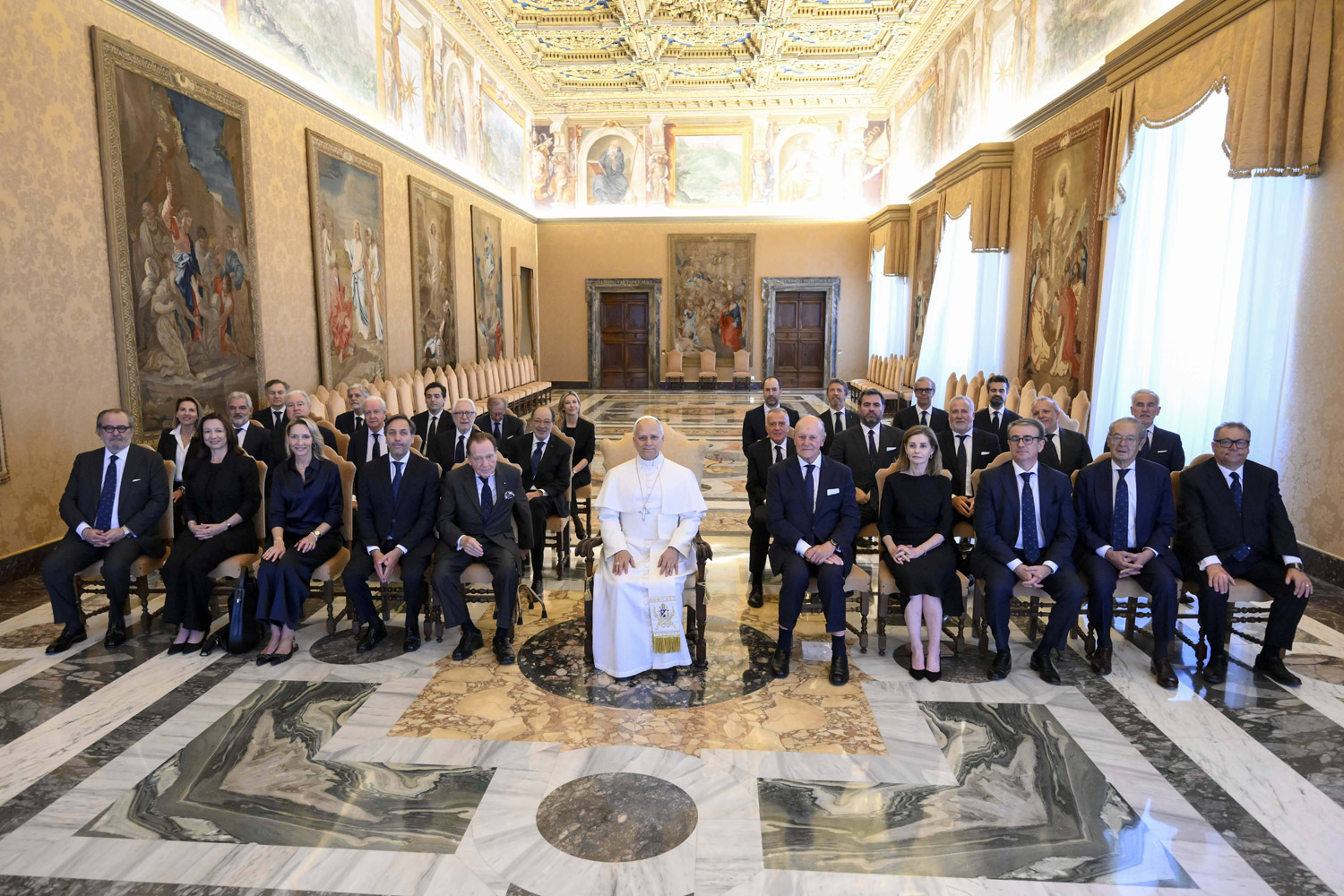
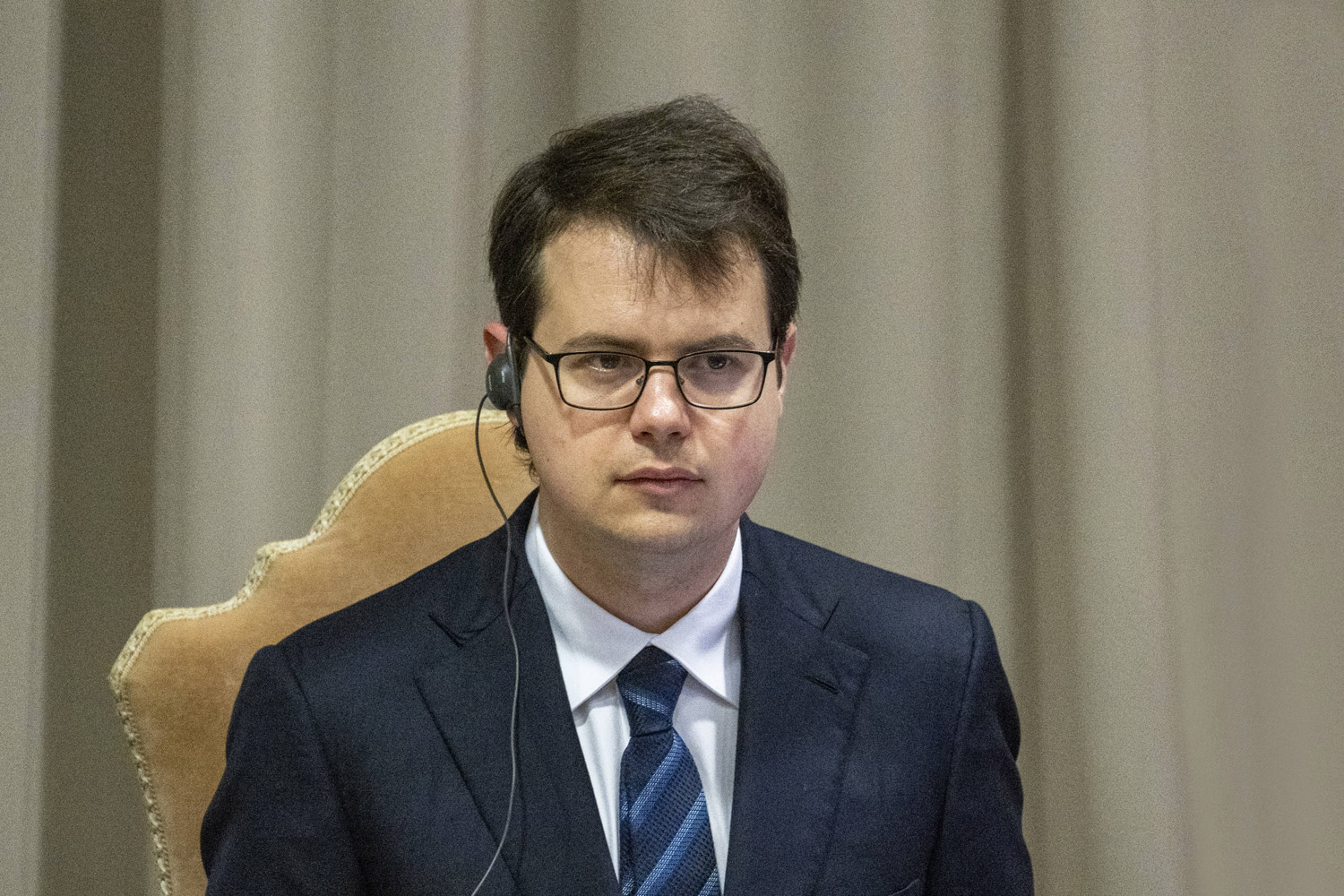
Photos credit: IMAGO/ALESSIA GIULIANI/Avalon, IMAGO/VATICAN MEDIA/Avalon










The Catholic Church is one of the few entities that is responsible for a level of destruction in world history that’s arguably on par with what AI threatens even if not the same form of damage. And there is a great deal of reform within it and its implementation and practice that could be done even now.
I don’t care what people believe or who they support but it’s disingenuous to ignore that. So I’m indifferent to all of this and I find it performative. Others can feel how they want though.
This is such a good comment. The Catholic Church is heavily responsible for overpopulation in a lower income countries which is associated with poverty, disease, and starvation. So much human suffering because of an ideological insistence that the uterus is not worthy of healthcare services.
Also, we object to AI because it consumes resources, destroys community economics, is harmful to the arts and sciences. The Catholic Church has done that for centuries. What has he done to counteract the real legacy of all of that which continues? I get tired. (I don’t speak of everyday Catholics, but of the entity of the Church itself speaking publicly through this Pope)
I don’t think it was meant to shade Olah to have him there. Shade other AI companies, perhaps, but Anthropic has taken a stand against their tech being used in autonomous weapons systems or domestic mass surveillance, so they’re aligned with the caution Bob is preaching.