
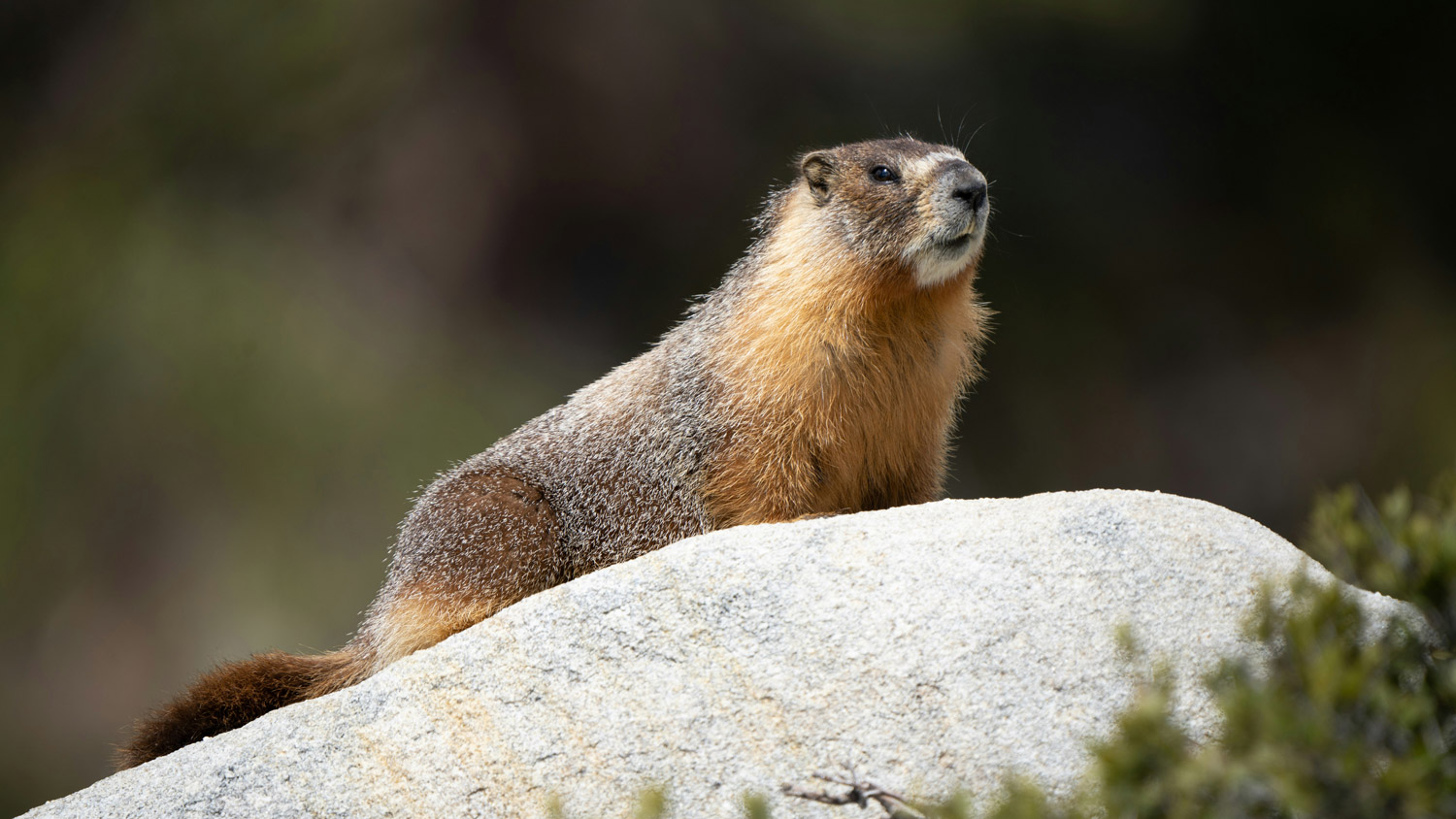
A marmot is a ground squirrel, and indeed they very much resemble their tree-dwelling cousins. Only bigger, fatter, and a less bushy tail that sticks out straight instead of curling into an “S” shape. Many varieties are found all over the world, but today we’re zeroing in on Marmota flaviventer, the yellow-bellied marmot of southwestern Canada and the western US. These rodents are terrorizing hikers in California! Humans visiting Sequoia National Park are reporting skirmishes in which marmots steal equipment, and then let out a piercing screech and chase people who try to get their stuff back. The marmots are also wreaking havoc on cars left in parking lots, chewing through the undersides, sometimes to the point of rendering a vehicle inoperable. Hikers are being advised to cover their cars with tarps; not that the marmots can’t chew their way through the material, they easily can. But the tarps work as a visual deterrent. The Wall Street Journal just published an article on the “criminal masterminds” instigating marmotgeddon:
Marmot Country: Andrew Reinhart was so tired after hiking up a mountain pass last month, he laid down for a nap—only to wake to a wet tongue on his ear. A marmot stared back. “It scared the s— out of me,” said the 28-year-old engineer from Livermore, Calif. “You don’t expect to get licked when you go to sleep in the woods.” Welcome to Sequoia National Park, also known as Marmot Country. Yellow-bellied marmots are stalking hikers and campers in a park more famous for its namesake giant trees. They snatch backpacks, swipe shoes and nibble on trekking poles. Some even chase humans. … Nitin Gupta, 31, watched a “quite big” marmot steal his hiking pole—then charge his girlfriend when she tried to retrieve it. “I heard this almost war cry,” the San Francisco founder recalled. They surrendered the pole.
Cars are their prey: But what has really put Sequoia on the marmot-shenanigans map is their all-out assault on the parking lots bordering trailheads in the Mineral King Valley—one of the wildest parts of the park. Here, marmots crawl inside vehicles to chew hoses and lap up fluid, sometimes disabling cars. One unlucky hiker paid more than $1,000 for a tow down the narrow, 23-mile mountain road after a marmot attack. Ironically, the underside of his Subaru had been covered with a tarp like a diaper—a relatively new line of defense against the cute but destructive rodents, which belong to the ground-squirrel family but are as big as small dogs. “There must have been a hole somewhere,” reckoned Joe McManus, the tow operator, of the tarp breach.
Beyond California: Marmot mayhem has also hit other parts of the West, including Colorado. Julie Jensen’s friend screamed when one bit his hand atop a peak. The marmot “would not move, no matter how loudly we yelled,” said Jensen, 56. “He gave serious honey badger vibes.” One Colorado marmot sneaked into a car and hitched a ride to Arizona, prompting a call to Dan Blumstein, a marmot expert from the University of California, Los Angeles who heads a research project on the critters in that state. “They say, ‘this is one of your marmots, it has an ear tag,’” recalled Blumstein. The creature, nicknamed “Fork,” for its fur mark, was flown home in a state plane. “We refer to it as Fork Kardashian,” he said.
Human stuff just tastes so good! Many marmot problems appear to revolve around their appetite for salt, which they find on sweat-stained hiking poles and backpack straps as well as radiator fluid, said Blumstein, an ecology and evolutionary biology professor. Sequoia’s Mineral King Valley has become such a hot spot for marmot car invasions that the National Park Service warns “You Are Entering Marmot Country.” Trail parking lots there sit next to a boulder-strewn meadow where marmot mothers nurse their young in burrows, making nearby cars irresistible targets, said park spokeswoman Holly Streit.
“You don’t expect to get licked when you go to sleep in the woods.” Really? You’re bunking for the night in the home of a whole ecosystem of species. I’d think it would be a rarer occurrence if you didn’t make contact with another critter! But what do I know, I’m a city mouse. Not being very educated in marmotology, I did a little research that proved quite fascinating. Hikers are encountering yellow-bellied marmots now because it’s summer, but these guys spend most of their lives in burrows. Their hibernation period lasts from September to May. And unlike their squirrel cousins storing nuts in trees, marmots don’t store any food for the winter (which, again, in their case includes fall and spring). Instead, marmots spend their active season (summer) eating to build up enough fat for the whole rest of the year. And what does this “active” season include, aside from eating and taunting humans? Grooming, sunning, and more burrowing. You guys… I am a marmot trapped in the body of a human!! It all adds up: a love of salt, burrowing at home most of the year, lounging in the sun and counting it as an activity, winning arguments with a shrill shriek, eating a year’s worth of food in one moment. This is me! Team marmot, all the way!
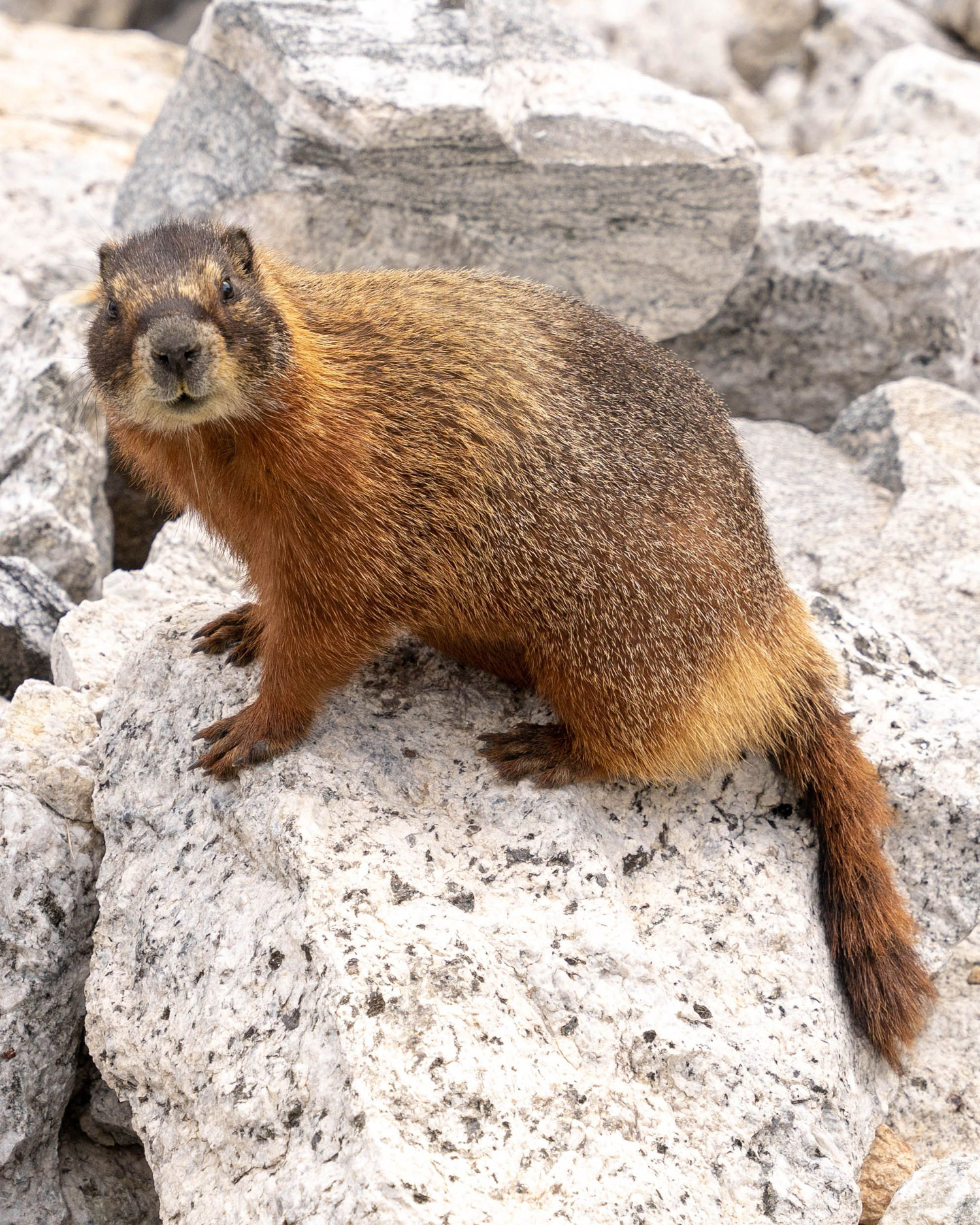
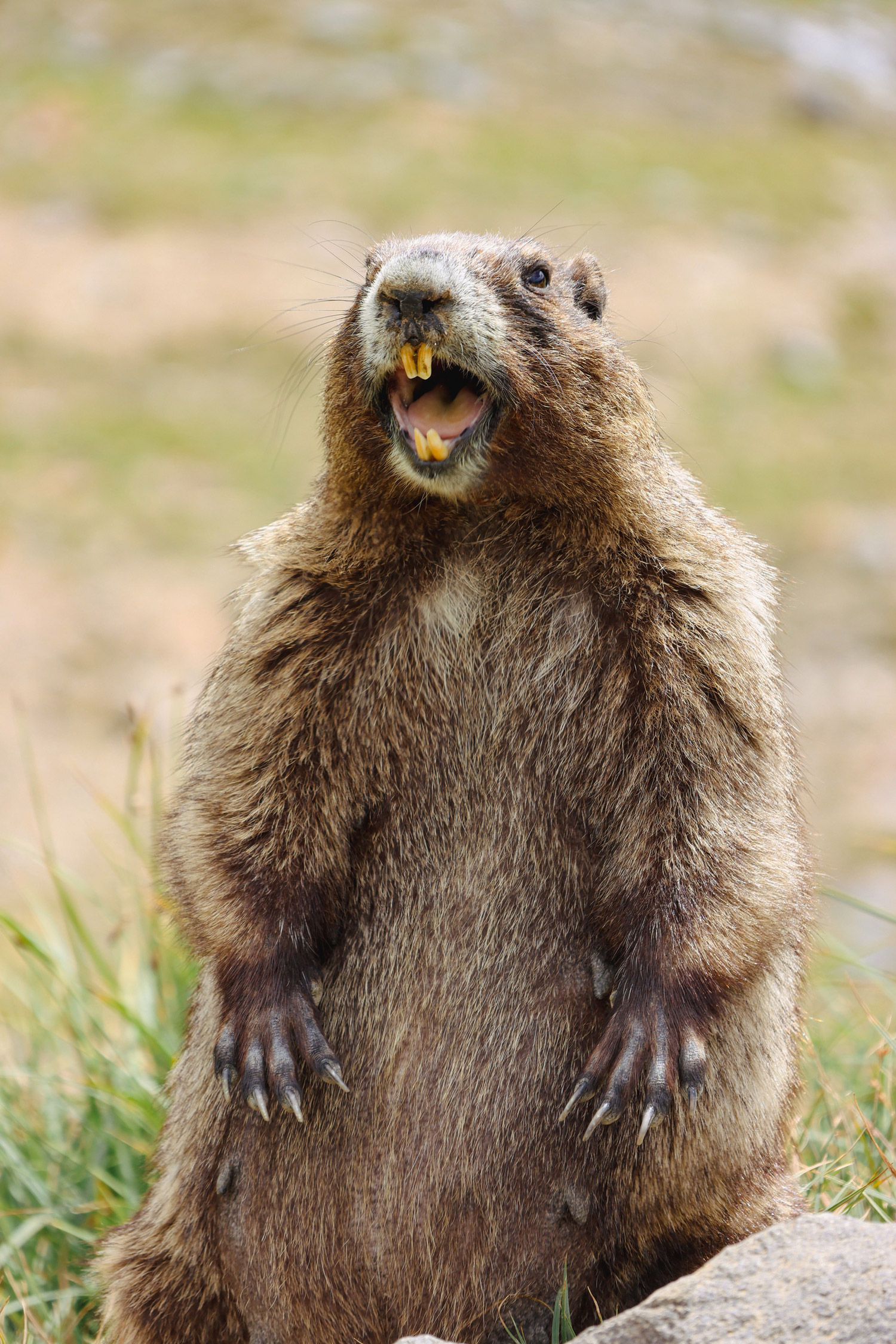
Photos credit: Raphael Loquellano, Bryan Smith, Vasilis Karkalas on Pexels, YS on Unsplash











Count me in on Team Marmot, too.
First it was the pod of orca’s attacking yachts in the Mediterranean, now marmots are rising up in protest. Our fellow inhabitants of earth have had enough with our endless destruction of the planet.
Marmots have always been a problem for backcountry visitors. This is an old story and in parts of Canada and US it’s the porcupine who goes after cars. Outdoor Influencers probably just noticed this.
Marmots, deer, mountain goats, and other critters need salt in their diet. In places where there aren’t enough salt naturally, they’ve discovered sweaty humans and things humans touch, wear, carry have salt on them. Pee is particularly valued.
Whether you are experienced or a newbie in the backcountry, you’ll quickly learn that the most desirable thing these creatures want is the salt in your urine. Ahhh, the experience of trying to pee in the bush as deer look at you as if you are an aged rib-eye steak, hahaha. Or being followed by mountain goats with their razor sharp horns (that one you really need to be careful around).
Anyway, I am with all of you— bow to the great marmot hoard.
Does one of them want to run for president? Because I’m all in.
Anyone who says “I heard this almost war cry,” to describe a protective marmot whistle does not belong in the backcountry.
Seriously. The alpine areas where marmots live are their habitat not ours. And you have always needed to protect your tires and vehicle undercarriage in marmot country parking lots. None of this is new.
The hiking pole stealing and the face licking I’ve never heard of that before. It makes me wonder how many of these folks in the backcountry are feeding the marmots – and they’ve become more habituated to humans? Or are they just fighting back, which is awesome.
Noo maybe all these Tenderfooted climbers have alerted the Marmots that humans can be easy pickings.
It especially occurs to me when I read the pole story. One allegedly large marmot made off with a hiking pole against 2 adults. I would attempt to grab my pole back to stem future bullying.
This is a **vital** part of the story you have brought in @Tiffi – what did these “tenderfooted” (love it) would-be climbers think the marmot was going to do? Like did they think that hiding behind that furry little face is set of wolf teeth and a blood lust for humans that knows no bounds?
I am reminded of the pre-COVID times when one kind and very trusting reporter covering the Australian brush fires was suckered into believing that the koala she was going to hold for the interview was actually a deadly species of “drop bear” which required her to put on a motocross armor suit, gloves and eye protection. Maybe I can share the link, we all need a pick-me-up – 3 mins of magic here, where she suits up, holds the koala with visible discomfort while she does the piece, and then was an incredibly good sport about it in the end: https://www.youtube.com/watch?v=6RzrUOCWjtw
PS “allegedly” large 🤣🤣🤣
Lol I needed this story. Thanks!
I agree. This was a seriously funny story.
I’m going to save it for future laughs. It goes with the video of a squirrel who plays dead with a barbell he drags on himself. If he doesn’t get a reaction he pulls the barbell a little higher and plays dead again. It is so funny, I can’t recommend it enough.
I used to live in CA and hiking in the mountains was my favorite thing about living there. I have had many marmot encounters over the years. They can definitely be persistent. But I’d rather deal with a marmot (found in higher elevations) than the critters in lower elevations!! (Snakes, bugs, etc).
As a fellow indoor mouse this story cracked me up!
That little guy needs a dentist – his teeth look almost as bad as Prince Charles’.
I would much rather encounter one of these cuties out in the wild than a mountain lion or bear. I might feel differently if it was my car that got chewed up.
I was thinking “finally a critter whose teeth look yellower than mine.”
I suspect that I perceive my teeth as yellower than they actually are. Doesn’t make me happier about them though.
😁🎯💪🏆 Team marmot!
Team Marmot, all the way! Wonder what they do with the stuff they steal. It’s hilarious that they are out there terrifying city folks. Go marmots!!
@CatGotMyTongue that is an *excellent* point – do they have a gigantic pile of hiking poles somewhere, upon which the Queen of the Mountain Marmots sits?
In the alpine areas where I’ve encountered marmots they live in giant scree/boulder fields, constantly ducking under rocks. I can’t imagine dragging a long hiking pole through the underground corners. So, where is the hikers’ booty going??
Carbon fibre poles might make good construction material for the rodent peoples. There may be an underground metropolis taking shape.
Thank you for this! I needed the laugh and got it.
The article mentions they are seeking salt. Why not put out some salt licks?
I live in Southern California high desert and am under siege from the bastard rock squirrels. They’re ground squirrels that look like regular ol’ squirrels. Our main worry is that they burrow under plants and under + inside of trees that they hollow out by eating the water-carrying bark inside the tree. Eventually they kill the tree.
Not funny and not as cute as marmots!
I’ve spent a fortune trying to get rid of them. If I wasn’t so anti-gun, I’d take my neighbor’s path and shotgun the fuckers.
I’m turning into Bill Murray’s character in Caddyshack!
Yey. Can we have more marmot stories please? To counteract the dystopian feel of these days’ news cycles?