
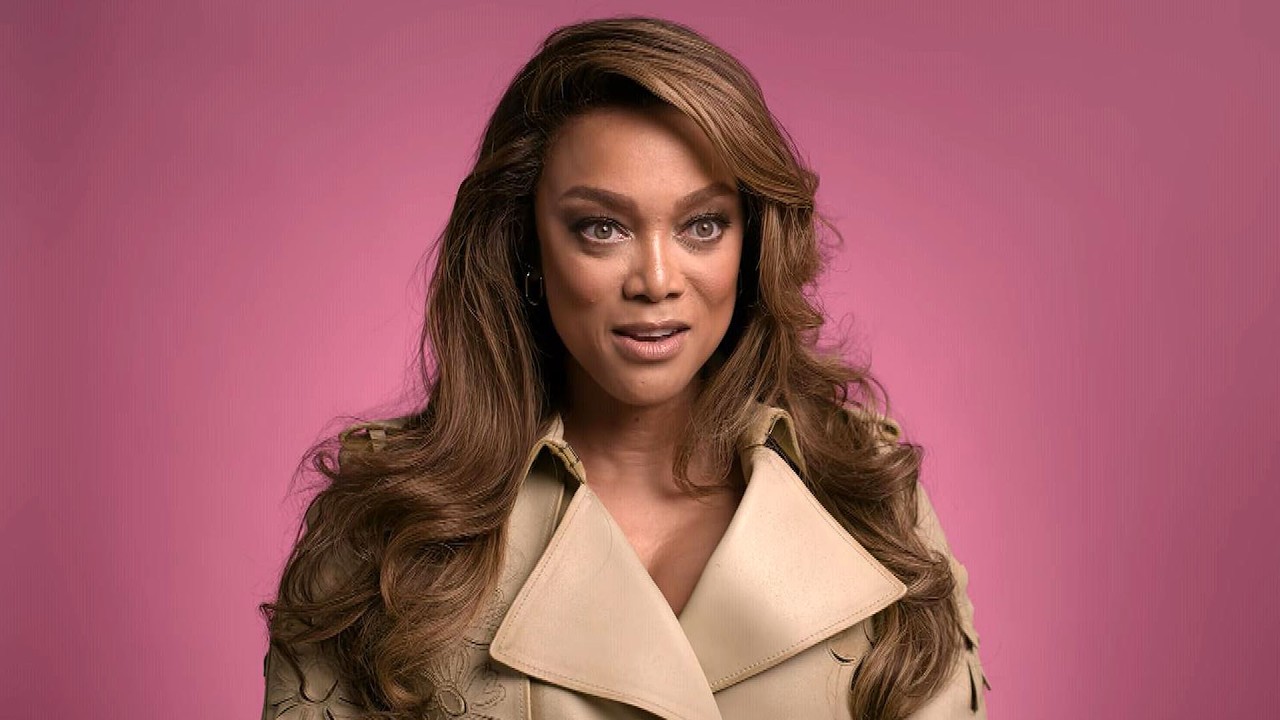
Reality Check: Inside America’s Next Top Model came out on Netflix six months ago. As the title suggests, it was an unvarnished reexamination of the show, which premiered in 2003, through the lens of today. Most of the people interviewed for the three-part documentary (models, judges, producers) understood the assignment. Well, Tyra Banks is not most people. As I said in previous coverage, Tyra came across as wanting all of the praise but none of the blame. (Yes I’m quoting myself now, deal with it!) And in continuing with the pattern of wanting to eschew responsibility, in June Tyra sued Netflix for defamation. You see Tyra, who executive produced a reality series for 15 years, thinks Netflix and the filmmakers edited her to look bad. It took them a minute, but last Friday Netflix finally clapped back with a motion to dismiss:
“Banks understands editorial discretion,” the Friday filing noted. “She created, hosted and executive produced 24 seasons of ‘ANTM,’ making the same kinds of editorial decisions she now attacks — what footage to include, what to omit and how to present competing narratives. The Documentary simply turned that editorial lens back on ‘ANTM’ and Banks. Her disagreement with the resulting portrayal does not make it defamatory.”
On “Reality Check,” Banks was asked if she remembered contestant Shandi Sullivan, prompting the media figure to look up at the ceiling and say, “Um.” The episode then cut to credits. Banks alleged this edit was meant to make it seem as though she did not remember a contestant who later claimed she was assaulted during the show’s second season.
However, Netflix’s lawyers defended that her answer of “I do remember her story” was included at the start of Episode 2, adding, “A documentary expressly showing Banks remembering does not imply that she forgot.”
Netflix’s filing also defended that Banks signed a waiver, which gave up creative control of the series that highlighted problematic parts of “ANTM,” as well as Banks.
…“Tyra Banks was given the opportunity to speak openly about her experience and the creators fairly presented her perspective alongside those of every other participant in this documentary,” the streamer added Friday night. “We stand bechind ‘Reality Check: Inside America’s Next Top Model’ and will continue to vigorously defend it.”
In response to Netflix’s motion, Banks’ legal team, Tom Clare and Clare Locke, told TheWrap, “Tyra’s lawsuit raises a simple question: can viewers trust that a documentary presented as fact fairly represents what happened and what people actually said?”
“Netflix’s response only underscores the issue,” they continued. “It points to the editing of reality television to defend the editing of this documentary. No one disputes that documentaries are edited. The question is whether those edits materially distorted the truth.”
As they went on, they defended that the suit was “not about Tyra being ‘dissatisfied’ with an edit, nor is it about wanting creative control. It is about whether viewers were given an accurate representation of her words and the facts.”
“Netflix has Tyra’s complete, unedited interview. If Netflix stands behind the accuracy of its documentary, it should release that interview in full and let viewers judge for themselves,” they countered. “Let the public compare what Tyra actually said with what Netflix chose to show. The facts are the facts and, here, the facts are recorded and being hidden by Netflix.”
After I spent an undue amount of time contemplating the fact that Tyra has two lawyers named “Clare” working this case, I was able to formulate a few rebuttals to their arguments. To start with, the “Um” cliffhanger. Specifically, Tyra’s assertion that it was meant to insinuate she didn’t remember what happened with Shandi Sullivan. That is a very limiting interpretation of the word “um,” if you ask me. Sure, as a placeholder word, it’s reasonable that someone would use “um” to stall if they didn’t know the answer to the question. But it’s just as reasonable that the “um” is uttered as a stalling tactic because they do know the answer to the question, and they’d rather not get into how they let production watch a contestant be sexually assaulted after being heavily plied with alcohol and then filmed a segment the next day designed to shame that contestant for being “promiscuous.”
Next, I take issue with the language, “a documentary presented as fact.” Was it? Or, like many documentaries, was it a collection of interviews with subjective, imperfect humans recalling their experiences and impressions? The Netflix blurb itself merely says insiders “look back at the reality show’s complicated legacy.” Ultimately though, I think the biggest legal factor that will work in Netflix’s favor is the revelation that Tyra signed a waiver. That should hold a lot of weight, no? Still, I’m finding it absolutely delicious watching Netflix drive home the point that Tyra is essentially objecting to (alleged) editing practices she herself sanctioned when she was the executive producer. And to throw one to Tyra’s camp, I actually support her lawyers’ request that Netflix release the full three-hour, unedited interview she gave. [insert RuPaul “I can’t wait to see how this turns out” GIF here]
-
- Reality Check: Inside America’s Next Top Model. Miss J in Reality Check: Inside America’s Next Top Model. Cr. Courtesy of Netflix © 2026
-
- Reality Check: Inside America’s Next Top Model. (L to R) Nigel Barker, Miss J and Jay Manuel in Reality Check: Inside America’s Next Top Model. Cr. Courtesy of Netflix © 2026

Photos credit: Netflix via Netflix press







I believe her true personality came out and snatched her looks away.
F off Tyra after how they set up poor Shandi. She said she couldn’t remember anything about the sexual assault. It sure sounded like they set that up for better television. Terrible stuff.
I would watch 3 hours of Tyra talking about ANTM.
The AMOUNT OF TIME I too spent thinking about Clare and Clare….man.
Also, during that entire documentary, I was waiting for Tyra to take her trench coat off a stay awhile.
@wordnerd: YES about the trench! It was very Princess Kate “I’m not staying long enough to bother taking this off.” Except Tyra was there for 3 HOURS. Under filming lights. I’m overheating just thinking about it!
Tyra thought the public would celebrate her wonderful self. When the response was not what she expected, she chose to throw a legal tantrum.
That tantrum also has the convenient side effect of keeping her name in the news at a time when she’s a new addition to the scrambling, poorly constructed, sadly annoying, and very poorly received “yet another reboot” of Project Runway.
Tyra is as Tyra always is: serving her own agenda.
The only appearance I ever watched and liked with Tyra was in the Miley Cyrus movie when the two had a physical fight over the last pair of gorgeous shoes in a story. It was very funny, IMO. And that’s all I ever need to see of Tyra in any format.