Sep 14
'11
Roger Ebert’s poetic memoir: ‘memories… of things I hadn’t consciously thought about.’
wenn3157700

Visit msnbc.com for breaking news, world news, and news about the economy

We love Roger Ebert, and I’m not using the royal “we,” I’m talking about Kaiser and me, and probably Bedhead too although I didn’t double check. The guy is awesome. He lost his physical voice along with half of his jaw to thyroid cancer about five years ago, but even though he can’t talk or eat he’s still talking smack and making his opinion known. Ebert was interviewed in a taped segment that aired on The Today Show this morning. He’s promoting his new memoir, Life Itself, and given his story, and how masterfully he writes, I just know that it’s going to be a bestseller. I was thinking of covering what Roger said on the Today show, but instead I’ll just include a brief passage from his book, which was poetic and lovely and pulled me in immediately. Somehow in this flurry of words he takes you there, he reminds you of your own childhood and he makes you yearn for all those sweet fleeting things that make up the whole of your past.

I was born inside the movie of my life. The visuals were before me, the audio surrounded me, the plot unfolded inevitably but not neces­sarily. I don’t remember how I got into the movie, but it continues to entertain me. At first the frames flicker without connection, as they do in Bergman’s Persona after the film breaks and begins again. I am flat on my stomach on the front sidewalk, my eyes an inch from a procession of ants. What these are I do not know. It is the only sidewalk in my life, in front of the only house. I have seen grasshoppers and ladybugs. My uncle Bob extends the business end of a fly swatter toward me, and I grasp it and try to walk toward him. Voices encourage me. Hal Holmes has a red tricycle and I cry because I want it for my own. My parents curiously set tubes afire and blow smoke from their mouths. I don’t want to eat, and my aunt Martha puts me on her lap and says she’ll pinch me if I don’t open my mouth. Gary Wikoff is sitting next to me in the kitchen. He asks me how old I am today, and I hold up three fingers. At Tot’s Play School, I try to ride on the back of Mrs. Meadrow’s dog, and it bites me on the cheek. I am taken to Mercy Hospital to be stitched up.

Everyone there is shouting because the Panama Limited went off the rails north of town. People crowd around. Aunt Martha brings in Doctor Collins, her boss, who is a dentist. He tells my mother, Annabel, it’s the same thing to put a few stitches on the outside of a cheek as on the inside. I start crying. Why is the thought of stitches outside my cheek more terrifying than stitches anywhere else? The movie settles down. I live at 410 East Washington Street in Urbana, Illinois. My telephone number is 72611. I am never to forget those things. I run the length of the hallway from the living room to my bedroom, leaping into the air and landing on my bed. Daddy tells me to stop that or I’ll break the bed boards. The basement smells like green onions. The light beside my bed is like a water pump, and the handle turns it on and off. I wear flannel shirts. My gloves are attached to a string through the sleeves because I am always losing them. My mother says today my father is going to teach me to tie my shoes for myself. “It can’t be explained in words,” he tells me. “Just follow my fingers.” I still do. It cannot be explained in words.

When I returned to 410 East Washington with my wife, Chaz, in 1990, I saw that the hallway was only a few yards long. I got the feeling I sometimes have when reality realigns itself. It’s a tingling sensation mov­ing like a wave through my body. I know the feeling precisely. I doubt I’ve experienced it ten times in my life. I felt it at Smith Drugs when I was seven or eight and opened a nudist magazine and discovered that all women had breasts. I felt it when my father told me he had cancer. I felt it when I proposed marriage. Yes, and I felt it in the old Palais des Festi­vals at Cannes, when the Ride of the Valkyries played during the helicopter attack in Apocalypse Now.

[From MSNBC.com]

I want to be able to write like that, but more than that I want to be able to think and to remember like that. Roger said on The Today Show that when he writes, the memories come to him. He writes a little later in this excerpt “In these years after my illness, when I can no longer speak and am set aside from the daily flow, I live more in my memory and discover that a great many things are safely stored away. It all seems still to be in there somewhere… When I began writing this book, memories came flooding to the surface, not because of any conscious effort but simply in the stream of writing. I started in a direction and the memories were waiting there, sometimes of things I hadn’t consciously thought about since.

This isn’t just a book about how he grew up, it includes so many details of his past that are interesting in their own right. EW has a positive quick review along with some interesting anecdotes from Ebert on the first time he met Oprah and how he once had lunch with Johnny Rotten of the Sex Pistols.

I have to also mention that I was so happy to see him walking with his wife, Chaz, in footage shown on the Today Show. The last time I saw him, on Oprah last year, he was still wheelchair bound.

Oh and MSNBC has a list of the best lines from Ebert reviews. It’s a fun read, especially when he’s scathing.

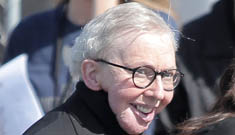
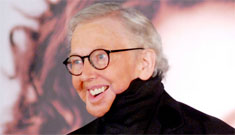
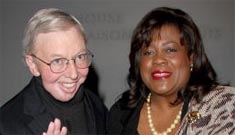
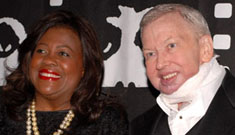
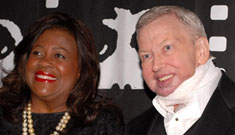
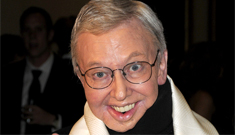
Photos are of Roger and his wife Chaz earlier this year.

wenn5647951

wenn3157676

Credit: WENN.com

Posted in Books, Photos, Roger Ebert

Written by Celebitchy         15 Comments »
Jun 21
'11
Bam Margera blasts Roger Ebert for turning Ryan Dunn’s death into a teachable moment
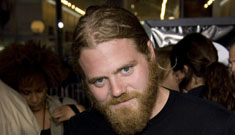
Ryan Dunn
Yesterday we heard that Ryan Dunn of Jackass passed away after he suffered a fatal accident in the Porsche 911 he was driving, killing himself and a 30 year-old Jackass production assistant Zachary Hartwell. He had tweeted a photo of himself drinking that night before the accident and he looked blitzed out of his mind. A source from the bar told TMZ that Ryan had had three beers and three shots in the four hours he was there before leaving at 2:10 am, closing time. That doesn’t sound excessive for a man of his size but we have no way of verifying that. As of yet the cause of the accident is unknown, although police say “speed” was a factor, and given the state of the wreckage we may never know. It’s entirely possible that he swerved to avoid something or that his tire blew out, but circumstantial evidence suggests he was drunk.

Movie critic Roger Ebert recently tweeted something that a lot of people have been saying about this guy’s death, that “friends don’t let Jackasses drive drunk.” It’s harsh, but many people have that sentiment about this accident. (TMZ live recently covered a lot of those comments. One person wrote that she was surprised that this is the first time one of the Jackass guys has died. They do incredibly dangerous stunts for a living, after all.) In response, Dunn’s friend Bam Margera went off on Ebert, which is understandable.

tweetsmargera

Is there ever a time to say to someone who is hurt, or to say about someone who died, that they should not have been drinking and driving? Yes, definitely. I don’t want to get too personal, but a friend of recently mine got in an accident while he was drinking and I called him on it. He was injured so I waited a little to bring it up. I was so angry that he made that stupid decision and I had to say something to him about it. I did it because I love him, but some may think I was being insensitive and he bitched that I was the only one who told him I was angry that he was drinking when it happened. Still, I get why Dunn’s friends are upset at Ebert’s comments. There’s a way to be tactful in situations like this where someone has died. Ebert was dismissive and seemed to suggest that someone could have prevented that guy’s death. Surely that’s what his friends are beating themselves up over right now.

Update: Ebert has issued a response to this controversy on his blog, explaining his position. It’s very well written and backed up by examples in the press that support what he was trying to say, simply that the kid should not have driven drunk. Ebert’s Facebook page has been removed by Facebook for a terms of service violation after it was flagged. That’s ridiculous and seems completely arbitrary and unfair.

Ryan Dunn

wenn127296

Photo credit: WENN and Fame

Posted in Bam Margera, Deaths, DUI, Roger Ebert, Ryan Dunn, Twitter

Written by Celebitchy         87 Comments »
Jan 24
'11
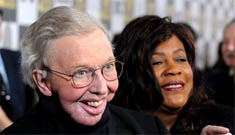
Roger Ebert is back on television with a prosthetic jaw
rogerebertprosethis
Film critic Roger Ebert, 68, lost the ability to speak about four and a half years ago due to complications from surgery to remove thyroid cancer. He was left with part of his jaw removed and was unable to eat or drink. He’s maintained a heavy schedule reviewing films, though, thanks to the help of his devoted wife of 19 years, Chaz. One thing Roger hasn’t done yet is appear as a critic on television. (Sort of, he did make a cameo on Oprah last year, during which he spoke through a text-to-speech program. He successfully predicted all of the Oscar winners last year.)

That all changed when Roger made a narrated guest appearance on the first episode of a new reboot of his famous “At the Movies” review show, which went through several iterations with different hosts. Roger’s original co-host, Gene Siskel, passed away from brain cancer in 1999. The new hosts will be Christy Lemire of The Associated Press, and Ignatiy Vishnevetsky of Mubi.com. Roger wore a new silicone prosthetic chin on the show and explained that it’s not to “fool anyone,” but is just “a pleasant reminder of the person I was for 64 years.”

It was a problem finding the right material. Two original models were too stiff, so that my head held upright reminded me of Erich von Stroheim in “Grand Illusion.” I couldn’t look down easily, which was a problem for walking and typing. Two weeks ago, David was back with a softer silicone that was much more wearable. Since I’d last met him he’d been in Haiti and Guatemala fitting false limbs for children who had lost arms or legs in natural calamities. My problems are small potatoes. David snapped the photo below after the fitting, and before the final coloring had been completed. I’d say he and Julie did a pretty wonderful damn job. I like my new prothesis and know from observation their work was painstaking and done with love and care.

I will wear the prosthesis on the new television show. That’s not to fool anyone, because my appearance is widely known. It will be used in a medium shot of me working in my office, and will be a pleasant reminder of the person I was for 64 years. Symbolically, it’s as if my illness never happened and, hey, here I still am, on the show with these new kids. When people see the “Roger’s Office” segment, they’ll notice my voice more than my appearance.

At the beginning of this process I assumed I would wear the new prosthesis whenever I left the house, so that “nobody would know.” But everybody knows. The photograph of me that appeared in Esquire even found its way onto billboards in China. And something else has happened since that day in the hospital: I accept the way I look. Lord knows I paid the dues.

[From Roger Ebert's blog]

That’s really nice and I love to see Ebert back on television. I used to watch Siskel and Ebert when I was in high school, and they always cracked me up with how they would argue. I read Ebert’s column regularly and you can hear his “voice” through his superb writing and the very unique analytical way he has of reviewing films. He’s one of a kind and I admire him so much.

Visit msnbc.com for breaking news, world news, and news about the economy

Here’s Ebert without his prosthesis:
ebert

Posted in Roger Ebert

Written by Celebitchy         32 Comments »
Apr 21
'10
Roger Ebert’s wife on his illness & how people try to get her down

25th Film Independent Spirit Awards - Arrivals
Famed film critic Roger Ebert, 67, lost his ability to speak four years ago during one of his many surgeries for thyroid cancer. He’s now cancer free and is still reviewing up to four movies a day as part of his long career at the Chicago Sun Times. Ebert cannot eat or drink after losing the bottom of his mouth, but he still manages his daily schedule with the help of his devoted wife of 18 years, Chaz.

Last month, Chaz and Roger were profiled on Oprah as part of her pre-Oscar special and I was so touched by both their relationship and their approach to his disability. They didn’t seem overly optimistic to me, but just grateful for the life they shared together and the fact that Ebert could still communicate so effectively through a keyboard. Chaz said she never gave up hope that Roger would pull through his illness, and explained her deep love for him. “When I married Roger, I knew what an amazing man he was. He is smart, he’s funny, he is very respectful of women, he’s appreciative of other cultures… it’s hard to find someone like him and I didn’t want to lose him. I refused to give up.”

In a recent interview, Chaz revealed that people were surprised she responded so strongly and positively in the face of her husband’s medical problems, and that some even tried to pull her down. She wasn’t having it, though, and says that hope is strategy that works. It seems to have worked very well for her and Roger:

Many people — including Roger himself and Oprah — have credited you with saving his life and giving him the will to keep fighting. How much of that is conscious decision on your part, or is it just instinct?
Part of it is instinct and the way I am, and I try to think about this. For instance, I come from a very large family. I have four brothers and four sisters, so if you can imagine, my mom and dad had many situations that were difficult. But the thing our family always did, my mother would say, “Don’t worry, everything’s going to be OK.” She and my dad would roll up their sleeves, mobilize the troops and no matter how bad the situation, you’d think things are going to turn out OK.

Secondly, and I know Roger doesn’t like me telling people this, I just had a very deeply spiritual — almost psychic feeling — that it was not his time to go; that he was going to be around for other things, and that I had to fight for him to be here.

Why doesn’t he like you saying that?
If you talk about things that are deeply spiritual — almost in a metaphysical sense — he gets a little uncomfortable because he’s more of a Darwinian evolutionist, and sometimes I believe in life that if we don’t have all the answers, it’s still a gut instinct that the universe gives us.

If it’s at all possible to think in this sense, what’s the biggest positive to have come out of Roger’s illness?
Yes, there is a positive. The positive is we learned that we are much stronger than we thought we were. We learned that our relationship is so beautiful and so strong. We learned that people come through with support and encouragement when you need it. We learned that you can’t hide. You have to live your life in a joyful manner, no matter your health or your circumstances.

What advice can you give for to those who may be dealing with an illness in the family in regards to keeping a strong attitude during the toughest times?
I think my first piece of advice would be to pray for guidance, and not just in a religious sense. The second step would be to maintain your hope and faith that things will turn out OK, even if people tell you you are in denial. A few people told me when he was really sick and he didn’t look good, and I said, “I have this feeling things will be OK.” They said, “You’re in denial.” I said, “I may be, but hope is a strategy.” And number three, surround yourself with a support group of family and friends.

Next, go on the Internet and look up everything that you can about the illness. Everything you read on the Internet may not be true or accurate, but at least you get some sort of education that we didn’t have before the Internet. That was really essential to me.

Also, don’t be afraid to question the doctors. Sometimes, we think the doctors are the end-all. We had excellent doctors, and yet the situation Roger was in was a very unusual one. So sometimes they were guessing about things just like I was, and sometimes I had an idea of things where I said, “I won’t even bring this up because I don’t know as much as the doctors do.” In a situation like that, you have to question everything… you can’t say, “Oh, they’re too busy.” Ask as many questions as you think you need to ask.

What do you think the future holds for you and Roger?
We are very optimistic about the future. Each day is still fun, I’ll just say it like that. We’re working on putting together a new movie review show for him. As Roger said, instead of slowing him down, his illness is speeding him up. We’re going to try to take advantage of all the new media for the show, so that makes everything feel fresh and new.

Sometimes, I’m almost ashamed we feel so positive. People think you shouldn’t be so happy, because when you fall, it’s going to be that much more disappointing.. But you know what? We’ll take each day as it comes. That’s one of the reasons we were so attracted to each other, because we saw that the positive attitude in each other. It doesn’t mean we don’t have days when we’re very sad. If we could turn back the clock and have Roger regain his voice and beat cancer, we’d do it, of course. But since we can’t, we give what life has given us, and because it’s given us so much good, we can’t complain about the bad.

[From Popeater]

There’s much more at Popeater, including a funny anecdote about how Chaz convinced Ebert to use Twitter after he initially said it “was for twits.” She also discusses how they’ve been able to stay married for so long, and explains that their mutual interest in the world keeps them interested in each other. “We still feel like we are teenagers in high school, going through life together, having fun, learning about things and still curious about what’s going to happen tomorrow.” I was so impressed by this interview, and by Chaz’s wisdom and outlook. As much as she is lucky to have Roger, he is blessed to have her in his life. They both seem to realize that and to appreciate what they have together. Maybe in their case that’s reality and not just optimism.

25th Annual Film Independent Spirit Awards - Arrivals

Piaget at the 25th Film Independent Spirit Awards

Posted in Roger Ebert

Written by Celebitchy         31 Comments »
Apr 19
'10
Roger Ebert calls “Kick-Ass” morally reprehensible
2010_kick-ass_001
Full disclosure: I love comic book movies. “Iron Man” is my all time favorite, closely followed by “Spiderman 2″ and of course the original “Superman” and “The Dark Knight.” So when I heard that the underground legend “Kick-Ass” was being made into a movie, I nearly peed my pants. Now, “Kick-Ass,” much like “Watchmen,” isn’t for everyone. It’s an unlikely but darkly humorous story about regular people who decide to wear costumes and become superheroes, even though they don’t have any super powers. It’s violent, it’s bloody, it uses foul language. That’s why the movie is rated R. But revered movie critic Roger Ebert has a big problem with the film: he hates the fact that an 11-year-old girl is both killing and nearly killed in the film and has no remorse or emotions about it.

Shall I have feelings, or should I pretend to be cool? Will I seem hopelessly square if I find “Kick-Ass” morally reprehensible and will I appear to have missed the point? Let’s say you’re a big fan of the original comic book, and you think the movie does it justice. You know what? You inhabit a world I am so very not interested in. A movie camera makes a record of whatever is placed in front of it, and in this case, it shows deadly carnage dished out by an 11-year-old girl, after which an adult man brutally hammers her to within an inch of her life. Blood everywhere. Now tell me all about the context.

The movie’s premise is that ordinary people, including a high school kid, the 11-year-old and her father, try to become superheroes in order to punish evil men. The flaw in this premise is that the little girl does become a superhero. In one scene, she faces a hallway jammed with heavily armed gangsters and shoots, stabs and kicks them all to death, while flying through the air with such power, it’s enough to make Jackie Chan take out an AARP membership.

This isn’t comic violence. These men, and many others in the film, are really stone-cold dead. And the 11-year-old apparently experiences no emotions about this. Many children that age would be, I dunno, affected somehow, don’t you think, after killing eight or 12 men who were trying to kill her?

I know, I know. This is a satire. But a satire of what? The movie’s rated R, which means in this case that it’s doubly attractive to anyone under 17. I’m not too worried about 16-year-olds here. I’m thinking of 6-year-olds. There are characters here with walls covered in carefully mounted firearms, ranging from handguns through automatic weapons to bazookas. At the end, when the villain deliciously anticipates blowing a bullet hole in the child’s head, he is prevented only because her friend, in the nick of time, shoots him with bazooka shell at 10-foot range and blows him through a skyscraper window and across several city blocks of sky in a projectile of blood, flame and smoke. As I often read on the Internet: Hahahahaha.

[From The Chicago Sun Times]

I definitely see where Ebert is coming from. I have a lot of respect for the guy. But I also think that if he is going to single out this movie for its lack of emotion or remorse about gratuitious violence and killing, he’s leaving out an awful lot of other movies that did it first. How about “The Matrix” or “Wanted” or “Sin City” or “300″ or even “Inglorious Basterds?” All of those films were blood baths. I think the only movie in recent memory where a character showed remorse about killing people was one of the “Bourne Identity” sequels. Other than that, I don’t see any characters, superhero or otherwise, have any problems with taking the badguys out. So to single out this one movie because there’s a kid in it doesn’t make much sense to me.

As for his concern about 6 year olds seeing the film, I do agree that this is NOT made for young children. I haven’t even let my kids read the comic book yet, and I certainly won’t be taking my 10 year old to see it and maybe not my 15 year old either. But there are plenty of parents out there who do take their little kids to R-rated movies. I don’t get it, but they do. I remember toddlers in the theater when we saw “Sin City,” and I just wanted to walk up to those parents and say, “What the hell is wrong with you?” Still, I don’t think it’s fair to censor or ban a movie because there are stupid parents out there who don’t care what their kids see. I guess that’s where Roger and I will disagree. Personally, I haven’t seen “Kick-Ass” yet but I can’t wait to go. I’ll probably check it out this weekend.

photos via AllMoviePhoto

Posted in Kids, Movies, Roger Ebert

Written by MSat         87 Comments »
Mar 3
'10
Roger Ebert’s Oscar picks on Oprah, he’s cancer free

ebert1

Roger Ebert was on Oprah’s pre-Oscar special yesterday. The famous movie critic was just profiled in a moving piece in Esquire that detailed his long career and how he’s continued to write influential reviews after losing his ability to speak after a series of operations for thyroid cancer. Oprah asked Ebert a few questions about his life and he responded through a text-to-speech application on his computer, having prepared most of the answers ahead of time. He talked about recurring dream he had after losing the ability to drink or eat food (his wife Chaz explained in a pre-taped segment that Roger can no longer eat after losing the bottom part of his mouth) in which he remembered his father taking him for a root beer at the age of five. Ebert explained that his brother-in-law told him that the memory was God’s gift to him after taking away his ability to drink. It was really touching, as was Ebert’s close relationship with his wife of 18 years, Chaz, who is his caregiver and partner as he continues his schedule of reviewing up to four movies a day.

Oprah also announced to much acclaim that Ebert is cancer free! He hasn’t spoken for four years, and has to rely on a computer voice to speak for him. There’s a Scottish company that’s trying to make a text to speech application using Ebert’s own voice, put together using footage from his years on television. Ebert demonstrated a prototype of the software for Chaz in a taped segment and she held his hand and started crying. He explained in own stilted voice that being able to speak in his own voice would cheer him up. Chaz called it “incredible” and Roger called it “uncanny, a good feeling.”

Back on the show, a teary-eyed Oprah praised Chaz and explained how Chaz refused to let her husband die after his prognosis was grim in the early days. It really made me cry when Oprah said “she stood by him, and has been with him, and taken care of him, and shown what true love is.” Chaz talked about what a great man Roger is and said “When I married Roger, I knew what an amazing man he was. He is smart, he’s funny, he is very respectful of women, he’s appreciative of other cultures… it’s hard to find someone like him and I didn’t want to lose him. I refused to give up.”

In terms of Ebert’s Oscar picks, he said he “can’t remember a year when it seemed easier to pick the Oscars. Of course, those may be famous last words.”

Best Supporting Actress – Monique for Precious
Best Supporting Actor – Christoph Waltz, Inglourious Basterds

Best Actress – Sandra Bullock – The Blind Side
Best Actor – Jeff Bridges – Crazy Heart

Best Picture and Best Director – Ebert calls this “The only dicey category.” He explains that “Up in the Air was the early frontrunner, and Avatar could win after it’s record-breaking profits. But I think it’s a win for Kathryn Bigelow’s The Hurt Locker. I also vote Kathryn Bigelow for best director. If you vote against her, you’re also voting against years of tradition that say the winner of the Directors Guild award will also win the Oscar.”

Roger will be at the Academy Awards, and Oprah said “We shall see you there. We’ll be cheering and celebrating you on.” I just loved seeing Roger on Oprah and will be looking out for him at the Oscars!

ebert2

Screencaps & photos courtesy of Oprah.com

Posted in Oprah, Oscars, Roger Ebert

Written by Celebitchy         16 Comments »
Feb 17
'10
Esquire’s moving profile of critic Roger Ebert

rogerebert
Roger Ebert, 67, is the legendary film critic of the Chicago Sun Times. I remember him from Siskel & Ebert, the long-running movie review show in which the tall skinny guy and the heavy-set man argued the merits of the latest films. Since 2006, Ebert has been unable to speak or eat following several operations to remove thyroid cancer and subsequently his salivary glands. He’s still writing, though, and keeps a blog along with formally reviewing the latest films. All he can do is write, it’s his only way to communicate, but he’s so skilled at it that if you only read his reviews you wouldn’t guess how much his life has changed.

Esquire has a very moving, long profile of Ebert and his rise to prominence along with the difficulties he faces daily. We have some excerpts below, but if you have some time I would highly recommend reading the entire article. No matter how familiar you are with Ebert’s work and personal history, you’ll get something out of this article. It’s hard to explain how it touched me, but I came away with an appreciation for life and for it’s setbacks and complexities that honestly made me feel content, like a better person. Most of that was in the form of Ebert’s own quoted words on how he’s facing his illness and death with a kind of quiet conviction that recognizes the joy in what he’s done and the opportunities he still has.

On his text-to-speech application
Ebert is waiting for a Scottish company called CereProc to give him some of his former voice back. He found it on the Internet, where he spends a lot of his time. CereProc tailors text-to-speech software for voiceless customers so that they don’t all have to sound like Stephen Hawking. They have catalog voices — Heather, Katherine, Sarah, and Sue — with regional Scottish accents, but they will also custom-build software for clients who had the foresight to record their voices at length before they lost them. Ebert spent all those years on TV, and he also recorded four or five DVD commentaries in crystal-clear digital audio. The average English-speaking person will use about two thousand different words over the course of a given day. CereProc is mining Ebert’s TV tapes and DVD commentaries for those words, and the words it cannot find, it will piece together syllable by syllable. When CereProc finishes its work, Roger Ebert won’t sound exactly like Roger Ebert again, but he will sound more like him than Alex does. There might be moments, when he calls for Chaz from another room or tells her that he loves her and says goodnight — he’s a night owl; she prefers mornings — when they both might be able to close their eyes and pretend that everything is as it was.

Regaining his “voice” through blogging
There are places where Ebert exists as the Ebert he remembers. In 2008, when he was in the middle of his worst battles and wouldn’t be able to make the trip to Champaign-Urbana for Ebertfest — really, his annual spring festival of films he just plain likes — he began writing an online journal. Reading it from its beginning is like watching an Aztec pyramid being built. At first, it’s just a vessel for him to apologize to his fans for not being downstate. The original entries are short updates about his life and health and a few of his heart’s wishes. Postcards and pebbles. They’re followed by a smattering of Welcomes to Cyberspace. But slowly the journal picks up steam, as Ebert’s strength and confidence and audience grow. You are the readers I have dreamed of, he writes. He is emboldened. He begins to write about more than movies; in fact, it sometimes seems as though he’d rather write about anything other than movies. The existence of an afterlife, the beauty of a full bookshelf, his liberalism and atheism and alcoholism, the health-care debate, Darwin, memories of departed friends and fights won and lost — more than five hundred thousand words of inner monologue have poured out of him, five hundred thousand words that probably wouldn’t exist had he kept his other voice. Now some of his entries have thousands of comments, each of which he vets personally and to which he will often respond. It has become his life’s work, building and maintaining this massive monument to written debate — argument is encouraged, so long as it’s civil — and he spends several hours each night reclined in his chair, tending to his online oasis by lamplight. Out there, his voice is still his voice — not a reasonable facsimile of it, but his.

“It is saving me,” he says through his speakers.

He calls up a journal entry to elaborate, because it’s more efficient and time is precious:

When I am writing my problems become invisible and I am the same person I always was. All is well. I am as I should be…

Remaining positive and appreciating the abilities he has
Even the simplest expressions take on higher power here. Now his thumbs have become more than a trademark; they’re an essential means for Ebert to communicate. He falls into a coughing fit, but he gives his thumbs-up, meaning he’s okay. Thumbs-down would have meant he needed someone to call his full-time nurse, Millie, a spectral presence in the house.

Millie has premonitions. She sees ghosts. Sometimes she wakes in the night screaming — so vivid are her dreams.

Ebert’s dreams are happier. Never yet a dream where I can’t talk, he writes on another Post-it note, peeling it off the top of the blue stack. Sometimes I discover — oh, I see! I CAN talk! I just forget to do it.

In his dreams, his voice has never left. In his dreams, he can get out everything he didn’t get out during his waking hours: the thoughts that get trapped in paperless corners, the jokes he wanted to tell, the nuanced stories he can’t quite relate. In his dreams, he yells and chatters and whispers and exclaims. In his dreams, he’s never had cancer. In his dreams, he is whole.

These things come to us, they don’t come from us, he writes about his cancer, about sickness, on another Post-it note. Dreams come from us.

We have a habit of turning sentimental about celebrities who are struck down — Muhammad Ali, Christopher Reeve — transforming them into mystics; still, it’s almost impossible to sit beside Roger Ebert, lifting blue Post-it notes from his silk fingertips, and not feel as though he’s become something more than he was. He has those hands. And his wide and expressive eyes, despite everything, are almost always smiling.

There is no need to pity me, he writes on a scrap of paper one afternoon after someone parting looks at him a little sadly. Look how happy I am.

In fact, because he’s missing sections of his jaw, and because he’s lost some of the engineering behind his face, Ebert can’t really do anything but smile. It really does take more muscles to frown, and he doesn’t have those muscles anymore…

On how he plans to face death
His doctors would like to try one more operation, would like one more chance to reclaim what cancer took from him, to restore his voice. Chaz would like him to try once more, too. But Ebert has refused. Even if the cancer comes back, he will probably decline significant intervention. The last surgery was his worst, and it did him more harm than good. Asked about the possibility of more surgery, he shakes his head and types before pressing the button.

“Over and out,” the voice says.

Ebert is dying in increments, and he is aware of it.

I know it is coming, and I do not fear it, because I believe there is nothing on the other side of death to fear, he writes in a journal entry titled “Go Gently into That Good Night.” I hope to be spared as much pain as possible on the approach path. I was perfectly content before I was born, and I think of death as the same state. What I am grateful for is the gift of intelligence, and for life, love, wonder, and laughter. You can’t say it wasn’t interesting. My lifetime’s memories are what I have brought home from the trip. I will require them for eternity no more than that little souvenir of the Eiffel Tower I brought home from Paris.

There has been no death-row conversion. He has not found God. He has been beaten in some ways. But his other senses have picked up since he lost his sense of taste. He has tuned better into life. Some things aren’t as important as they once were; some things are more important than ever. He has built for himself a new kind of universe. Roger Ebert is no mystic, but he knows things we don’t know.

I believe that if, at the end of it all, according to our abilities, we have done something to make others a little happier, and something to make ourselves a little happier, that is about the best we can do. To make others less happy is a crime. To make ourselves unhappy is where all crime starts. We must try to contribute joy to the world. That is true no matter what our problems, our health, our circumstances. We must try. I didn’t always know this, and am happy I lived long enough to find it out.

[From Esquire]

Without waxing too philosophical about this wonderful article and this talented man, let me just say that this was without a doubt the most touching article I’ve reported on since starting this blog four years ago. Yet “touching” doesn’t begin to capture the way it moved me. We’ve all faced challenges and setbacks in our lives and some of us have either been disabled or will face disability. I pray that if and when my times comes I can manage my life and outlook with half as much grace, dignity and humor as Mr. Ebert.

"Precious" Pre-Party - 2009 Toronto International Film Festival

Posted in Roger Ebert

Written by Celebitchy         15 Comments »
Dec 21
'08
Directors Guild of America to honor Roger Ebert


Roger Ebert is one of the few film critics I just adore. He’s one of the few major critics that doesn’t get stuck only giving rave reviews to art-house films. He respects family films for what they are – amusement to be enjoyed by young and old. He respects action films for what they are – violent, bloody fun for teenagers. He has an encyclopedic mind for actors, directors, composers, cinematographers, costume designers, and he truly appreciates the details and big picture. When he finds a film pompous, he calls it out. When he loves an actor, actress or director, he loves like a geeky fanboy. There are few left in Hollywood who don’t give Ebert props, and more than a few careers were made because Ebert liked their work.

It comes as a pleasant surprise that one of the major Hollywood guilds would choose to honor Roger Ebert. The Directors Guild of America announced that they would make Roger Ebert an “honorary life member” during January’s annual ceremony.

“From the blockbuster to the tiny independent film, Roger Ebert has devoted his career to sharing his love of film with generations of moviegoers,” DGA president Michael Apted said in a statement. “In doing so, he’s kept directors on their toes for more than 40 years.”

Ebert, 66, is regarded as America’s best-known film critic, thanks in part to the TV show he co-hosted first with Gene Siskel and then with Richard Roeper. He has been battling cancer since 2002 and has lost his voice, but continues to write reviews for the Chicago Sun-Times and other outlets.

The 61st annual DGA Awards dinner will be held January 31 at the Hyatt Regency Century Plaza Hotel in Century City.

[From Reuters/Hollywood Reporter]

It’s a little bittersweet considering Roger Ebert has literally been left speechless by papillary thyroid cancer. Ebert continues to write columns for The Chicago Sun-Times though and retains his sense of humor. I’ve always thought that once a person starts receiving lifetime achievement awards and honorariums, it’s not a good sign. I hope that’s not the case, and I hope that the DGA lets Ebert (through his wife) give a speech.

Roger Ebert is shown below signing his book Scorsese at Borders book store in Chicago on 11/6/08. He is shown above with his wife Chaz on 7/14/07. Credit: WENN

Posted in Roger Ebert

Written by Kaiser         2 Comments »
Sep 12
'08
Roger Ebert explains scuffle with another film critic at Toronto Film Festival


Yesterday, the NY Daily News posted a story on how film critic Lou Lumenick of the NY Post whacked esteemed fellow critic Roger Ebert with a magazine after Ebert tapped him several times during a film screening at the Toronto Film Festival to try and get him to move so he could see the film.

Today, Roger Ebert, who is unable to speak after extensive surgeries from thyroid and salivary gland cancer that included the removal of his lower jaw, took to his blog to explain the situation.

If it were up to me, you would never have heard about the incident at the Toronto Film Festival on the morning of Sept. 6 when a fellow critic whacked me with a rolled-up program or a festival binder or something. It has been blown out of proportion. It is of little interest.

The incident remained private until today (Sept. 11), when a basically accurate account appeared in the New York Daily News. I suppose since it happened at a press screening with 500 journalists in the room, this was inevitable. Now it’s become a big deal, raced around the web, and been somewhat exaggerated.

There are always two sides to everything. Here is mine. The movie “Slumdog Millionaire” had subtitles on the bottom right side of the screen. I was seated in an outboard aisle seat on the right. The person in front of me was leaning over into the aisle, making the subtitles impossible to read. He is not short. Because of neck and shoulder surgery I could not look around him.

In my medical condition I cannot speak, I tapped him lightly on the shoulder, and gestured him to move over a little. He said, “Don’t touch me!” and remained in position. I tapped him lightly again. “I said–don’t touch me!” He leaned further into the aisle, as if making a point of it. I tapped him a third time, and he jumped up and whacked me on the knee with whatever it was. He sat down, and I defiantly tapped him again, not as lightly, but not too heavily, just to show I wasn’t intimidated.

There was a commotion, some people stood up and asked him what he was doing, and a person from the studio who was seated behind us across the aisle intervened. I gather there was a conversation with security, which I did not witness. He reentered the theater and took the studio person’s seat. His seat was taken by someone who had been standing in the rear of the theater. No more problems.

Rumors spread swiftly. I began getting e-mails asking if someone had “beat me up.” I was eventually contacted by the Daily News, and told them I had no comment, apart from verifing that their account was truthful. This whole matter was embarrassing, because it drew attention to me and invited pity, which makes me cringe. My wife, Chaz, did not witness this. Her reaction when she heard: “I’ll get a no-neck guy from the West Side to break his knees.” Just rhetorical, I trust.

I think the guy was wrong. A film critic of all people should be respectful of the sight-lines of fellow audience members. But in one way I feel sorry for him. He had no idea who was behind him when he smacked me. Now it looked like he was picking on poor me. I have had my problems, but I promise you I am plenty hearty enough to withstand a smack, and quite happy, after the smack, to tap him again. I had to see those subtitles. There was no pain. The incident is over. Peace.

[From Roger Ebert's blog on the Chicago Sun-Times]

I’m glad that Ebert is hearty enough to withstand a smack, but this Lumenick guy sounds like a grade-A jerk. What exactly was his problem? He couldn’t be bothered to move out of the way a little bit so someone behind him could see? This is exactly why I hate to go to the movies anymore. People carry on loud conversations, put their feet on the back of your chair, block your view and have absolutely no respect for anyone else in the theater. I actually got a group of obnoxious teens kicked out of “Spider Man 2″ for carrying on loud cell phone conversations during the movie. I almost threw them out myself. If I had seen this incident – some self-important tool striking a man who clearly wasn’t able to defend himself- I probably would have leaped out of my seat and punched the guy right in the face.

Roger Ebert and his wife Chaz are shown in the header at the “43rd Chicago International Film Festival Summer Gala” in Chicago on 7/14/07. Credit: Sam Wilson / WENN. They are shown below at the festival on 10/4/07. Credit: Adam Bielawski / PR Photos

Posted in Roger Ebert

Written by MSat         15 Comments »


Legal Disclaimer| Privacy Policy | Comment Policy