
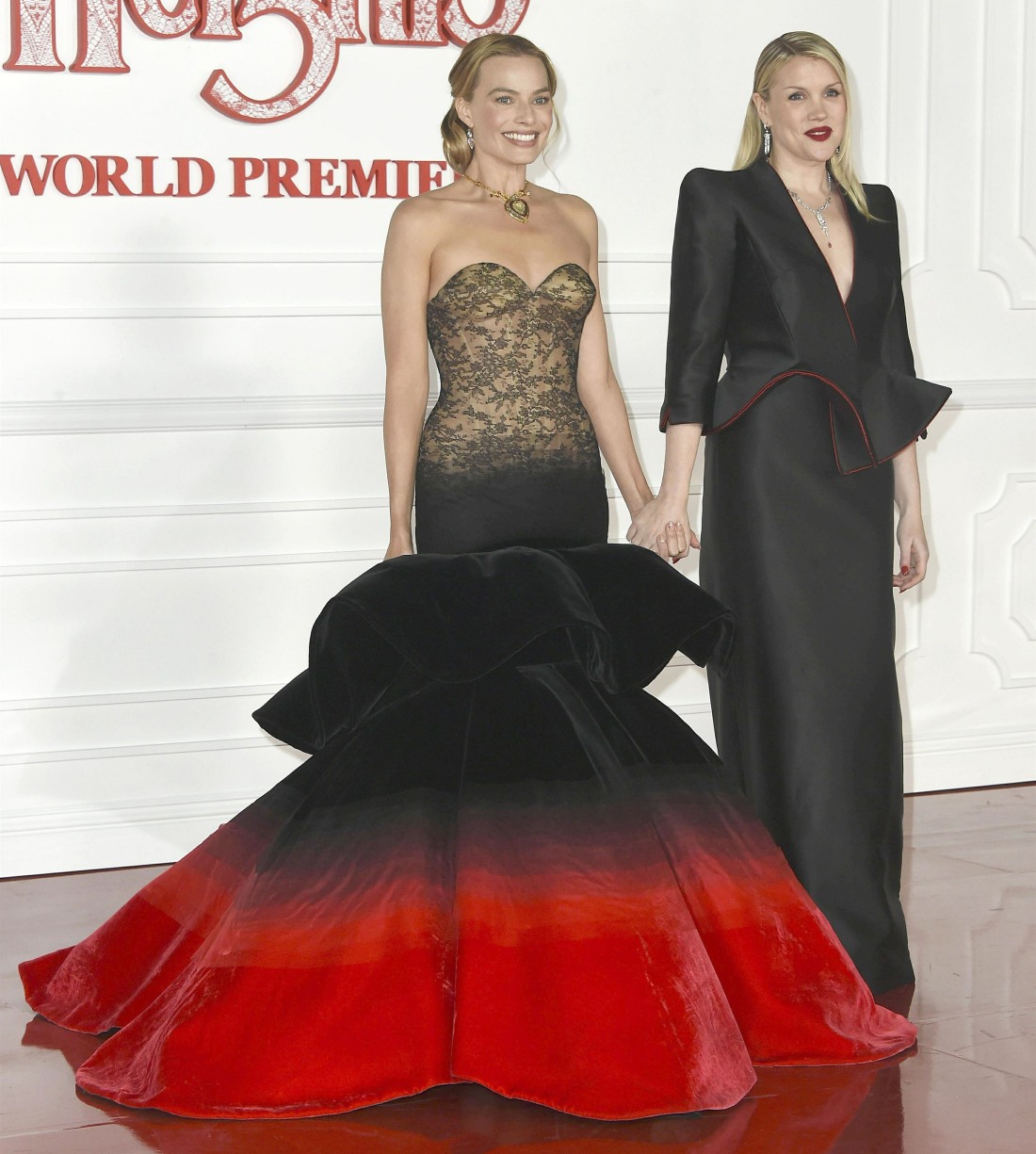
Emerald Fennell’s adaptation of Wuthering Heights has been controversial from the word go. It began with the casting choices for Cathy and Heathcliff: Margot Robbie is simply wrong for Cathy, and critics argued that casting Jacob Elordi as Heathcliff was and is “whitewashing.” There were early screenings for the film last year and reportedly they did not go well. The early “reviews” of WH online this week are mostly positive, but I don’t know if A) those reviews are bought and B) Fennell possibly re-edited the film to make it more of a bodice-ripper. Well, at the LA premiere this week, Fennell spoke to the Hollywood Reporter about casting controversies and adaptation controversies.
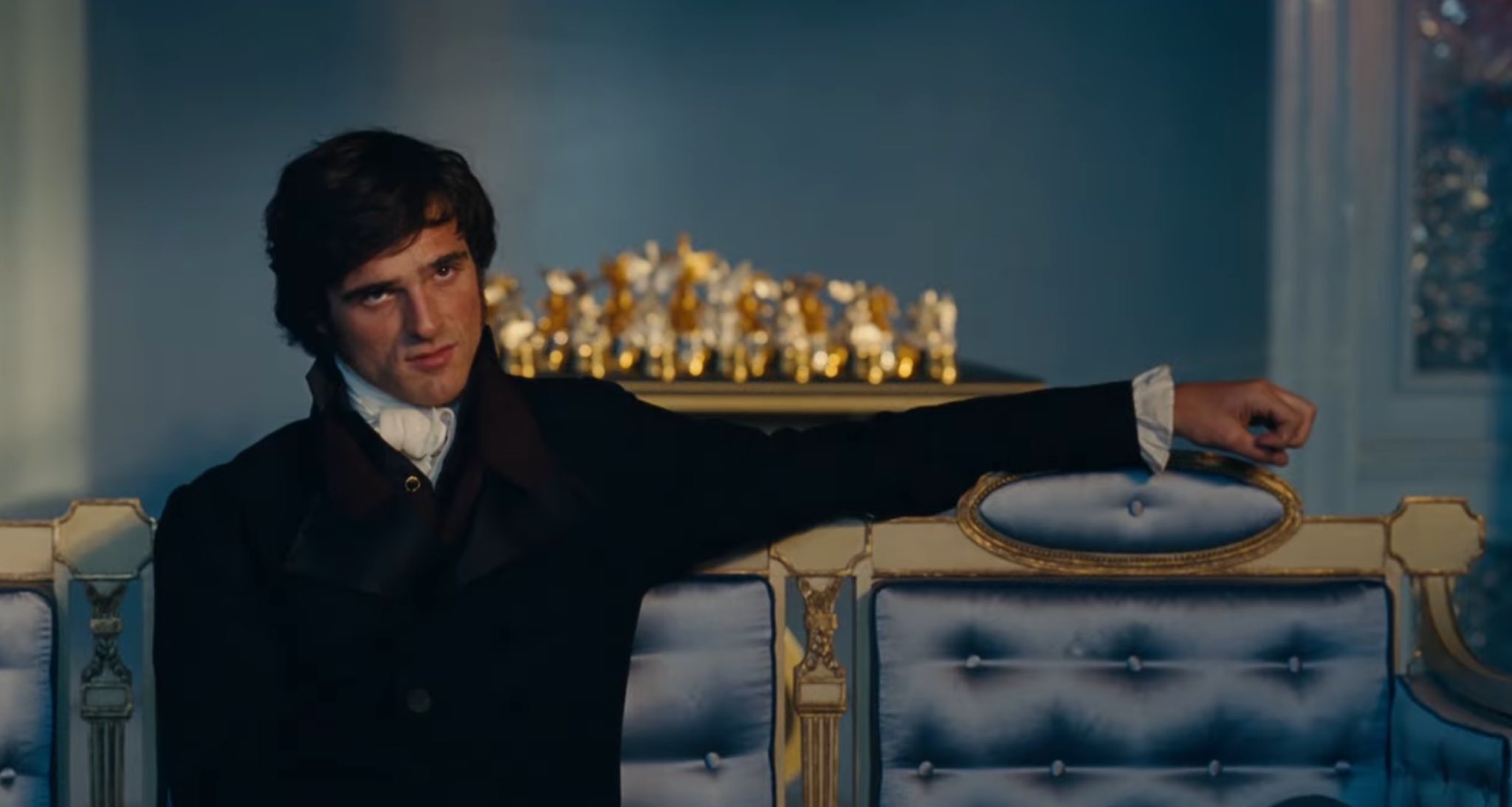
Emerald Fennell‘s highly anticipated adaptation of Wuthering Heights made its debut in Hollywood on Wednesday — and don’t be expecting an exact retelling of Emily Brontë’s classic novel. The 1847 book follows the intense love affair between Heathcliff (played by Jacob Elordi) and Catherine Earnshaw (Margot Robbie) in 18th-century England; Fennell’s version, which is being stylized with quotation marks as “Wuthering Heights,“ features some key casting changes, addition of numerous sex scenes and a soundtrack courtesy of Charli xcx.
“The thing is that it’s my favorite book in the world,” the filmmaker told The Hollywood Reporter on the red carpet. “Like many people who love this book, I’m kind of fanatical about it, so I knew right from the get-go I couldn’t ever hope to make anything that could even encompass the greatness of this book. All I could do was make a movie that made me feel the way the book made me feel, and therefore it just felt right to say it’s Wuthering Heights, and it isn’t.”
One of the most talked-about changes comes with Elordi’s casting as Heathcliff, who is described as dark-skinned in the book. Of the decision to cast a white actor in the role, Fennell explained, “I think the thing is everyone who loves this book has such a personal connection to it, and so you can only ever make the movie that you sort of imagined yourself when you read it. I don’t know, I think I was focusing on the pseudo-masochistic elements of it.”
“The great thing about this movie is that it could be made every year and it would still be so moving and so interesting,” she continued. “There are so many different takes. I think every year we should have a new one.”
Elordi said himself of the changes to the iconic story, “There are inverted commas for a reason. This is Emerald’s vision and these are the images that came to her head at 14 years old; somebody else’s interpretation of a great piece of art is what I’m interested in — new images, fresh images, original thoughts.”
From what Fennell, Robbie and Elordi have said about this adaptation, I’m getting a sense of not only the film, but what those three really think about it. It feels like Elordi was actually trying to balance a faithfulness to the character in the book AND in the script (which has little to do with the book). Margot, on the other hand, just went all-in on Emerald’s vision and didn’t care about the source material. And Emerald just wanted to make her fan-fic version of WH, where Cathy and Heathcliff bone a lot and then (spoiler?) Cathy dies. As for what Emerald says about the whitewashing controversy… it’s very British. Like, I can tell that a posh British woman is making that argument.
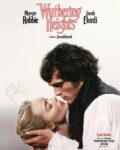
Photos courtesy of Backgrid, Wuthering Heights screencap & poster courtesy of Warner Bros.
-
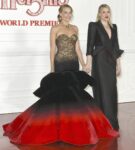
- Hollywood, CA Warner Bros. Pictures and MRC Presents World Premiere of “Wuthering Heights” at TCL Chinese Theatre in Hollywood, California. Pictured: Margot Robbie, Emerald Fennell BACKGRID USA 28 JANUARY 2026 BYLINE MUST READ: Juan Rico / BACKGRID USA: +1 310 798 9111 / usasales@backgrid.com UK: +44 208 344 2007 / uksales@backgrid.com *UK Clients – Pictures Containing Children Please Pixelate Face Prior To Publication*
-

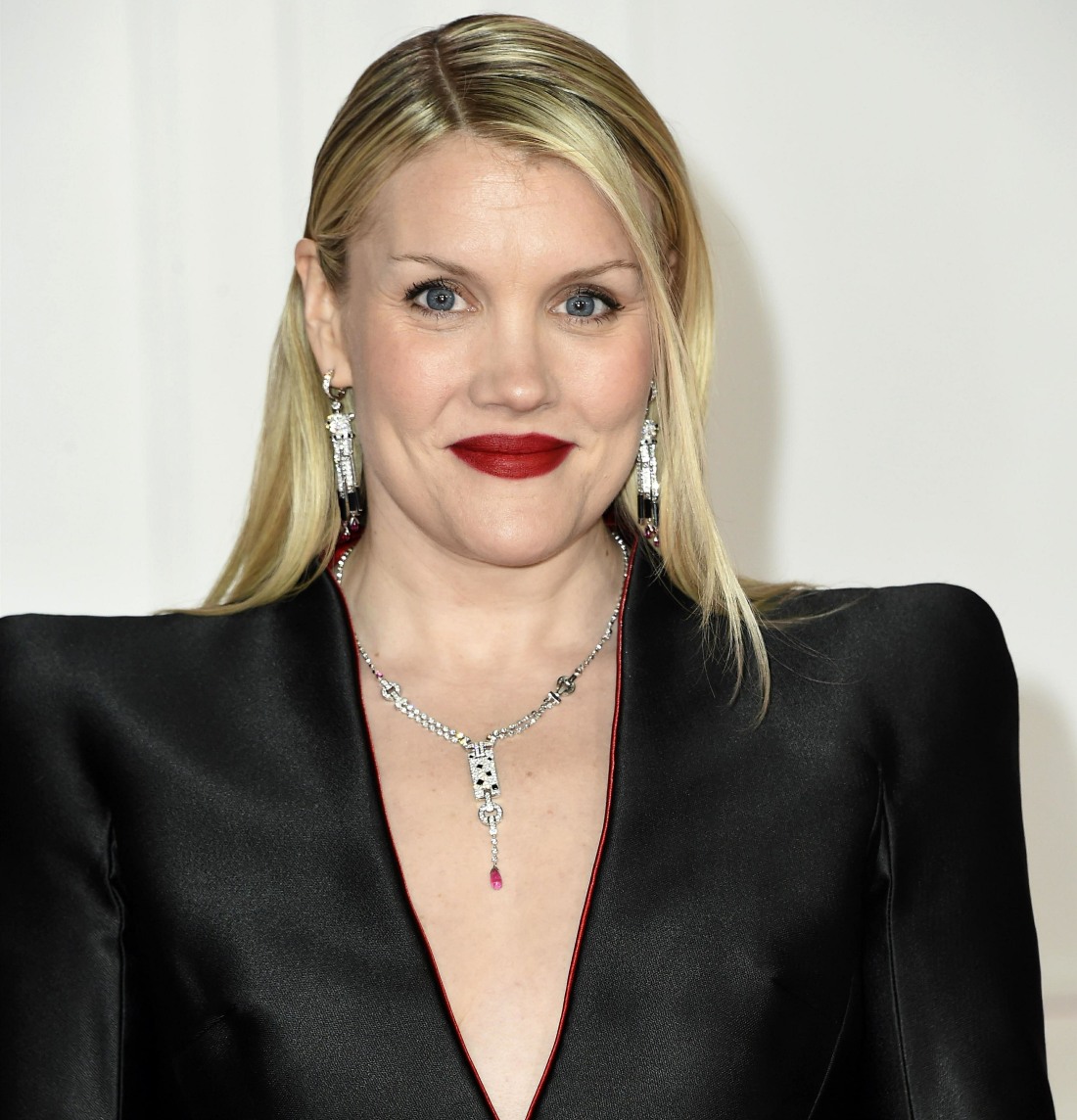
- Hollywood, CA Warner Bros. Pictures and MRC Presents World Premiere of “Wuthering Heights” at TCL Chinese Theatre in Hollywood, California. Pictured: Emerald Fennell BACKGRID USA 28 JANUARY 2026 BYLINE MUST READ: Juan Rico / BACKGRID USA: +1 310 798 9111 / usasales@backgrid.com UK: +44 208 344 2007 / uksales@backgrid.com *UK Clients – Pictures Containing Children Please Pixelate Face Prior To Publication*
-
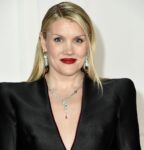
- Hollywood, CA Warner Bros. Pictures and MRC Presents World Premiere of “Wuthering Heights” at TCL Chinese Theatre in Hollywood, California. Pictured: Emerald Fennell BACKGRID USA 28 JANUARY 2026 BYLINE MUST READ: Juan Rico / BACKGRID USA: +1 310 798 9111 / usasales@backgrid.com UK: +44 208 344 2007 / uksales@backgrid.com *UK Clients – Pictures Containing Children Please Pixelate Face Prior To Publication*
-

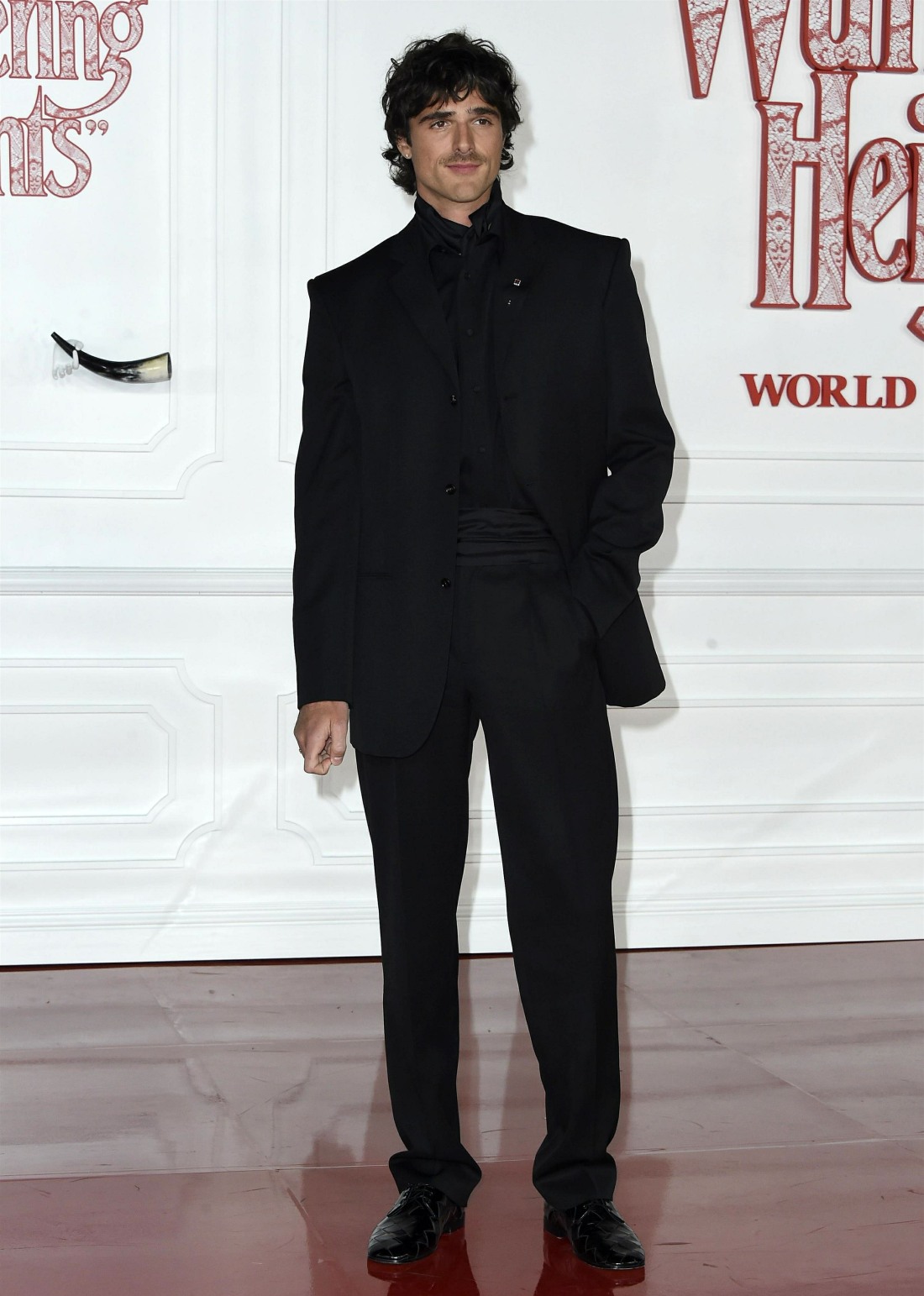
- Hollywood, CA Warner Bros. Pictures and MRC Presents World Premiere of “Wuthering Heights” at TCL Chinese Theatre in Hollywood, California. Pictured: Jacob Elordi BACKGRID USA 28 JANUARY 2026 BYLINE MUST READ: Juan Rico / BACKGRID USA: +1 310 798 9111 / usasales@backgrid.com UK: +44 208 344 2007 / uksales@backgrid.com *UK Clients – Pictures Containing Children Please Pixelate Face Prior To Publication*






This was another lost opportunity for a non-white British actor. No wonder they all move to the US.
Remaking Wuthering Heights for the 25th time was already a lost opportunity. There are loads of books about actual non-white Britons that have yet to be adapted instead of relying on Emily Bronte’s vague ‘dark’ description.
I find Emerald annoying, and I’m not really a fan of her work, but most Wuthering Heights adaptations cast white men as Heathcliff. It’s 2026, and it’s wild we’re still dealing with this – just had someone try to cast a white woman as a Jewish-Mexican character in Deep Cuts.
My ideal Heathcliff would be Dev Patel, but that doesn’t seem to be on anyone’s radar, which is bat shit crazy to me. Instead, we’re getting yet another white washing of the character.
OOh, Dev Patel! What a sexy guy. I would watch that bodice-ripper.
Holy crap, Dev Patel would have been perfect.
Dev Patel would have been amazing! Whoever suggested that is brilliant and should get into casting!
Riz Ahmed would have been amazing, too.
Has there ever been a version where a white actor wasn’t cast as heathcliff? Emerald is technically following all the people before her in that regard. But whew talk about a missed opportunity. I’ve heard people say Jacob’s dad is from Spain? So I guess they could streeetch that, maybe. I doubt fennel knew that when casting though. It just comes across as such a colonial mindset. And yeah, Dev Patel was right there.
The only film in which Heathcliff is portrayed as a person of color is in Andrea Arnold’s 2011 version. I would have cast Alfred Enoch or Dev Patel as Heathcliff.
There is one film version that was made in 2011 where the actor playing Heathcliff is Black.
His dad isn’t just from Spain. He’s Basque. And Jacob’s whole family in using him are adamant that they’re referred to as Basque from Basque Country and not Spanish. The Basque are an ethnic group that has been oppressed from centuries within Spain and parts of Europe. From the 1950s to 2011, they were in arms conflict against the Spanish government due to outlawing their language and cultural festivals, trying to eradicate their culture. His father fled Spain to Australia during Franco’s regime to escape that crack down. There are big Basque communities here in Nevada who did the same.
People from Southern Europe are white. Elordi’s heritage doesn’t stretch anything.
How does being Spanish make a person less white? Same with Basque.
I recently watched Dev Patel in Lion and he was magnificent
Yup, I’ve suggested Dev a couple of times here.
Interesting fact: The 1939 adaptation with Laurence Olivier started Merle Oberon as Cathy who is now considered the first Asian Oscar nominee for best actress. She was born in Mumbai and hid her heritage her entire life
Heh—Michael Korda’s novel Queenie is a good take on Oberon’s life.
The MOST privileged white British-person answer possible.
“As a teen, I imagined the kind of hot guy I would rather bone, not the gross ‘other’ type Brönte actually intended as central to themes of the book, so that’s the movie I made! Like, we all can agree Heathcliff should be actually hot, right?”
Ugh.
🎯
OMG! Somebody needs to make a Dev Patel version
@THATGIRLTHERE
They didn’t “just cast a white woman as a Jewish-Mexican.”
They cast a JEWISH woman as a Jewish-Mexican and she stepped down without doing the “anyone can play anything” comments others make.
There are Jewish-Mexican actors but I guarantee you production likely doesn’t care about that as much as the JEWISH woman who actually backed out when called in.
^^^ yes
Dev or Riz. Or MBJ. Hotttttt.
His comment that its the vision of a 14-year old girl is an inadvertent sick burn, yes? B/c I can totally see a 14-year-old completely missing any of the racial nuances of the novel and focusing on the tortured lover aspect thinking it’s so romantic.
Emerald’s vision from a 14 year old’s POV is giving Stephenie Meyer’s “vivid” vampire dream.
Came her to say the same! That feels like a burn for sure!
I personally don’t think it is. He is still close to Sofia Coppola after appearing in Priscilla and the idea of processing legendary stories and figures through the lens of a teenage girl is one of her trademarks.
But Coppola also brings adult objectivity and observation to her teen girl POV. She doesn’t just wave the latter up there like a flag.
Yeah, that gives the game away bigtime…
Yeah, that’s not a good selling point, for a film intended for adult audiences.
There have been like 15 adaptations of this book. If people don’t like the casting of this one then they will probably prefer the 2011 one. It’s not as if Fennell’s version is the only one with a white Heathcliff either. It would be different if this was the first adaptation or something, but it isn’t.
All these characters are terrible people anyway.
Also the discourse about the costumes. I saw an interesting exchange online where someone mentioned it’s an aesthetic approach similar to the 2006 Marie Antoinette, and a bunch of people were trying to say it’s not like that at all and this is worse. Except that it’s exactly what people were saying back then.
Yeah, I feel this way, too. Like when productions butcher the Ancient Greek tragedies to further some personal vision or they set Shakespeare in Havana. All these plot lines will be used in some way or another – as long as the original isn’t destroyed, I’m ok with it.
As for WH, I disliked it in high school, I disliked it in college, I dislike it now and I’m sure I’ll dislike it 20 years from now – at each age for different reasons, but still…
A good part of the problem is the “Swiss Miss” look of Cathy’s costumes. They look way too cheerful and out of place.
Timothy Dalton and Laurence Olivier also played Heathcliff in movie versions. Elordi is Spanish Basque heritage which is more “ethnic” than either of those two. For me, the reason Jacob Elordi doesn’t work is because he’s too much of a dominant figure, from his height to his manner. I can’t believe someone like him would ever go to ruin over the memory of a woman.
When I first read WH in high school (sixty years ago!), the fact that Heathcliff is not white escaped me completely. And I thought it was a bodice ripper although I doubt I even knew that term. So I can see where this “vision” comes from. All I got from it was that there was something vaguely forbidden about the plot even though I had no idea what that was. It’s really funny how naive and stupid we all were in a Catholic girls’ high school sixty years ago. 🫣 Now they’re doing it with sex scenes! The nuns would die!
This race debate is much ado about nothing.
Men for years have been described as “tall, dark and handsome,” and that doesn’t automatically mean he’s one race or another.
For example, Clark Gable is tall dark and handsome, and was Caucasian.
Simon Basset is also tall dark and handsome and is more African descent.
King Felipe of Spain is tall, dark and handsome, and is Spanish/Greek.
There are lots of in between, too.
It’s up to interpretation by the reader and the person directing the film.
It’s not like they made heathcliff blonde haired and blue eyed.
Exactly — Mr. Darcy is described as being dark.
It’s been a long time since I’ve read WH (don’t care for it, much prefer Jane Eyre), so I’m just agreeing in general, not specifically about Heathcliff.
I’ve taught the book in grad seminars a number of times, and Brontë quite clearly signals Heathcliff to be Other than white throughout the book. Uses the G word to describe him (not going to write the slur), though that epithet was often used to describe more than just Romani heritage people at the time. There’s a lot of history and criticism about exactly what and why Brontë does what she does in that book—all the Brontë children were kinda obsessed with issues of Empire and the impact of rabid colonialism on England from an early age. But yeah, Heathcliff is most decidedly not coded white in the novel.
yes, its the Othering of Heathcliff that to makes it clear that he’s not just dark haired or he’s not just another Clark Gable.
THANK YOU. A lot of folks do not understand the language and the context of what she was writing and WHY. Heathcliff is demonized and looked down on the entire book- it is the catalyst for everything that follows. To think this was because he had dark hair is frankly just absurd. The context clues are there. And yes during that time the Bronte sisters were absolutely obsessed with colonialism and class and how they intersected.
I agree and disagree. Dark and swarthy can absolutely be what we consider “white,” today but still — especially in Britain and especially back then — be considered “other,” and treated as such when it’s a person of lesser/working/servant class and when THAT is the case, that darkness (whether Roma, Mediterranean, Moorish, or Arab…or a light mix of any of the above with pure British whiteness) is absolutely relevant to the story and the casting.
Brönte doesn’t just describe Heathcliff as tall, dark, and handsome…she makes his darkness and physicality COMBINED with his social status/class inherently relevant to the story, relationship, and the generational toxicity of it all. When you remove that entirely, by making him a traditionally attractive sex-symbol, you remove an essential part of the critique and exploration of class, status, and toxic “othering” that has long permeated British society, to its detriment, and which Brönte very explicitly intended as part of this tale of abuse, toxic fixation, and generational trauma.
Each time one of those elements is removed (as one or more usually is) it reduces the book to something less impactful or intended: a love story, a romance novel, a bodice-ripper.
Recall WH was written for and read by adults, British adults, who absolutely understood what Brönte was doing/saying. It’s only in the last 100 years or so that is has become something primarily introduced to teenagers (because school is the only time we can make people read classic literature). That has deeply permeated what, concurrently, has been the film and TV adaptation of the book.
Well said. I mean, if a director wants to do a dopey adaptation based on their juvenile reaction to a great novel when they were 14, ok. She didn’t start the money grab that is the dumbing down of great works of literature on film. That’s a looooong tradition. But I do take exception to the obvious whitewashing and her sophistry in (not) answering the question. (The answer, as always, is money, whether real or imagined.)
I truly don’t understand this controversy. When I read Wuthering Heights in high school, it seemed “dark-skinned” meant in the context of 18th century rural England, he was considered swarthy, like Rhett Butler in Gone With The Wind. Surely people don’t think Ms. Bronte wrote a black, Asian, or otherwise POC character without calling him so? That would have been a huge plot point. That’s not to say that Emerald couldn’t have cast a POC as Heath cliff, but it doesn’t give whitewashing if the source material isn’t clear on race. I’m more offended that Margo is like 20 years older than the character.
My reading of Wuthering Heights (and it’s been 15 years or so since I’ve taught it–the last time I had students act out some of Heathcliff and Cathy’s scenes just to show how utterly psychotic both of these characters are in their behavior)–Heathcliff was “found” on the streets by Mr Earnshaw in a city and his dark complexion suggested he was Romani or Indian or maybe even African. One of the servants called the child an “it” and put him outside expecting the child to be gone in the morning. Cathey even said later it would degrade her to marry heathcliff–all of which suggest he was not white as they expected white to be (while Rhett Butler certainly was white, even if he was called swarthy). Heathcliff’s background WAS a huge plot point. The lack of discussion of it also fit a rural English 18th century sensibility–the Bronte sisters wouldnt have had much of a vocabulary for even discussing something like that, or putting the words to paper
Thank you for your response! I get it now. I may go back and read it again, it would be interesting to read it with 2026 sensibilities!
Wuthering Heights was written in 1846-7 and published in 1847, at the height of the Great Famine. Out of a population of 8.5 million, 1.1 million people starved to death, and another million plus fled the country. All while Ireland was still exporting food to England. To pretend that the level of dehumanization that would require means that calling a child “it” and putting him outside the door means that he must be Romani or South Asian and not Irish is not historical and frankly offensive. Emily Brontë was half Irish and must have felt keenly what was happening in her father’s homeland. Patrick Brontë, who was a minister with a good future and a degree from Cambridge, was rejected for being Irish (and poor) by the family of the farmer’s daughter he wanted to marry.
Yes, Irish Americans today who hold onto any sense of themselves as an aggrieved and discriminated against are ridiculous and inevitably racist. But that doesn’t erase the historic wrongs England perpetrated against Ireland and the Irish. It was the first colony and so much of the evil of British colonialism was first tested there.
So could Heathcliffe be Romani or of South Asian or African descent? Of course. But to pretend that the treatment of Heathcliffe in the book precludes him being Irish or otherwise Celtic is a erasure of the truth of British treatment of the Irish as well as the genocidal Great Famine which was ongoing at the time.
BTW Ireland didn’t recover its pre famine population until the 2020 census, and that was with a lot of immigration from Eastern Europe. When I was a child there in the 1970s, we’d go to visit relatives in the countryside and you’d see the ruins of the stone cottages that had stood empty since the 1840s.
I think she had the language – but I also think she knew by being explicit her book would have never been published and would have been a scandal. I think she circumvented that by leaving context clues. A white male with dark hair would never have been described the way Heathcliff repeatedly is.
“Cathy even said later it would degrade her to marry Heathcliff–all of which suggest he was not white as they expected white to be”
That’s not my take on it. You have to remember Heathcliff was still with the family living in the barn when the brother tossed him out after Mr. Earnshaw died. Heathcliff had no money or home to offer Cathy. Hindley Earnshaw, the brother would have been furious and thrown them on the street. If they married, Cathy was not made for the streets.
Cathy had a choice live and marry Edgar Linton and live in high society comfort. Or marry Heathcliff and live in squalor.
When he overheard this that is when he ran off to make his riches. It was years before he came back a wealthy man of mysterious means. He was still not a respectable man just a man with money. He tricked Hindley out of Wuthering Heights by gambling it away.
Cathy was as selfish as Heathcliff was. They were as awful to themselves as others in their selfish obsessions.
If he was meant to be Irish I think Bronte would have come out and called him as such.
Heathcliff is described as dark as a lascar in the novel. The lascars were sailors or militia men who worked on European vessels from the 16th to the 20th century. The lascars came from India, Southeast Asia and eastern parts of the African continent. They were generally dark-skinned. Heathcliff is most definitely NOT white when he is described in this manner. Lascar has become an obsolete term today, which is probably why so this reference don’t register with so many readers (apart from unconscious bias in the interpretative tradition).
Heathcliff could be biracial because I do think that you can make the argument that he might be Mr. Earnshaw’s illegitimate child.
Heathcliff being black Irish also wouldn’t preclude him from having African roots.
https://en.wikipedia.org/wiki/Black_Irish_(folklore)
There are no specific details to describe Heathcliff’s race and a lot of coded early 19th century colloquial language to describe his appearance which could frankly mean anything. But given hints from the text the implication seems to be either Romani (but there are plenty of Romani people with lighter skin so keep that in mind), “black” Irish (which is similar to the “black” Welsh phenomenon, Tom Jones is a good example of someone with primarily white UK DNA appearing nonwhite), or with South Asian heritage.
But there’s enough ambiguity nobody can say for sure. And the ambiguity is meant to point to the muddled, mysterious, and tortured history he has and also to villainize him so it’s not like this is some excellent example of representation.
I have known people from the west of Ireland whose white heritage goes back generations, but in terms of dark eyes, hair and skin could easily be thought to be North African or Arab. I think Heathcliff being Irish is as plausible a theory as any other.
Emerald Fennell is insufferable. As for the description in the book – folks love to argue that she just meant dark-haired. Which is utterly absurd. If that were the case Heathcliff’s entire story makes zero sense. Bronte in that time would not have been able to be explicit about his race – the book would never have been published. This is why media literacy and understanding subtext is so important and is a skill that is becoming more and more rare.
Heathcliff certainly made zero sense to me in a Catholic girls’ school in 1965. The Dark Ages indeed.
Didn’t Jane Austen’s last and unfinished novel include Miss Lamb, a mixed race English-Antiguan girl? Mansfield Park and Emma both include subtle allusions to the slave trade that were probably more obvious now than they are now. Thackery’s Vanity Fair also included a mixed race West Indian heiress, Miss Swartz. I don’t see why a book alluding to a mixed race Heathcliff would have been unpublishable.
“Fennell explained, “I think the thing is everyone who loves this book has such a personal connection to it, and so you can only ever make the movie that you sort of imagined yourself when you read it. I don’t know, I think I was focusing on the pseudo-masochistic elements of it.””
Insight to her mind? 🤔 Pseudo-Masochistic Elements? Isn’t she the same woman who also developed and produced the movie ’Saltburn’? 🤔
I agree with Kaiser’s takeaway of Emerald’s perspective.
“And Emerald just wanted to make her fan-fic version of WH, where Cathy and Heathcliff bone a lot and then (spoiler?) Cathy dies. As for what Emerald says about the whitewashing controversy… it’s very British. Like, I can tell that a posh British woman is making that argument.”
i have to say i don’t really care about this movie. i was never a huge fan of wuthering heights-i onlly ever thought it was ok. but i haven’t read it since i was a teenager, maybe it’s something i should read again (teenager for me was 30 years ago!)? i am interested in the costuming, from what i can see. i’m sure it’s not accurate, but it kind of looks amazing. i also appreciate the director’s sentiment that she wanted to make a movie that made her feel the way the book made her feel, instead of a direct interpretation of the novel. i do think the quotes in the title are a little too precious. all that being said, i’m not really interested in seeing the movie at all, aside from the costumes.
As someone who was a child in Ireland in the early 70s, dark or brown skinned could simply mean “tans easily.” As someone who had spent the earlier part of her childhood in the American South, I remember being very confused by the term “Black Irish,” as I had not seen any Black people in Ireland. I tell people reading Victorian literature to think of Victoria Beckham when a woman is described as brown. A white woman who tans easily.
One problem I have with a lot of analysis of literature along racial lines is that it ignores the very real social and class divisions and enmities within the white population. Currently reading a biography of the Brontës, much is made of how Patrick Brontë was held back by his Irish “race.” He even anglicized the family name from Brontey to Brontë to try to escape it. If you look at Travellers in the U.K. and Ireland, they are treated as a hated racial other, yet they are visually indistinguishable from the rest of the population.
So seeing Heathcliffe as racially distinct from the rest of the characters is certainly a valid reading, there is enough in the text for it But it’s not true that this new reading is one that overrides the original of Heathcliffe as “other,” but of the Celtic variety Emily Brontë herself was
Well put. The reading of Heathcliff as dark meaning as a person of color is filtered through current viewpoints rather than ot viewpoints of Bronte’s time. White European at the time had a very different meaning than it does now or even mid last century. White now covers almost all of European descent yet previously almost no one outside of the northern European would have been given this designation. Certainly not Romani people, despite variety of skin tones.
This is very true. Southern Italian immigrants were most definitely not considered white in the 19th century and often not even in northern Italy. The history of how they became ‘white’ is actually fascinating and demonstrates how race has always been an arbitrary construct used to discriminate and control by the dominant culture.
Saying that this is her 14 year old version of Heathcliff is really a cop out. The truth is we have evolved a bit in casting matters and choices by directions and producers should reflect it.
Like I mentioned above in this thread it’s ironic that 1939 Cathy Merle Oberon really did have Asian heritage. Parentage that she painstakingly hid her entire life. We have come a ways since then which make choices like these all the more frustrating
Yeah, that’s where I’m at. This was just a missed opportunity to do something interesting. No shade to Jacob or Emerald’s vision, but man, some very cool choices could’ve been made here in terms of casting Heathcliff. And that wasn’t the direction she went in and so now it’s a conversation.
I just think what she said about adapting the novel is such a cop-out, but in a way that is entirely typical of Emerald Fennell. She has said that she read the book in her early teens. Now she claims you can “only make the version you imagined yourself when you read it.”
WHAT?! An experienced, awarded film-maker can only adapt a classic novel the way she would have if she’d gotten her hands on it at 15 and been given free rein and a lot of money? I know that’s not exactly what she’s saying but it’s still uncomfortably close to it.
I read this book as a teenager too. I wasn’t an English Posho but I was a white, WASP Episcopalian girl living in a Victorian era house in a leafy suburb. I’d like to think that by Emerald’s age and with her experience and chances I’d be capable of doing better than whatever was in my head at that time. Yikes.
Just trying to imagine me at fifteen trying to make a movie based on this classic book which I clearly did not understand at all at that age. It would have starred Frankie Avalon and Annette Funicello and taken place on a beach instead of the moors. 🤣
Stahp! I’m laughing at Frankie and Annette. Beach Blanket Heights.
😂😂😂😂 So, instead of a tragic ending. we’d get a huge HEA production number by Cap’n Geech & the Shrimp Shack Shooters? 😉😂😎 https://en.wikipedia.org/wiki/That_Thing_You_Do!
I hate Wuthering Heights but I still remember the character being clearly not white. I’m not sure if he was ever assigned a race but his “darkness” was not like the “black Irish” when it meant black hair and not red.
He was described as almost a non-person, being found and made fun of…not like one of Dickens poor white Toms.
Emerald can have all the daydreams she wants but just admit it…she made a CHOICE to use a white actor who has juice right now.
Black Irish do NOT have red hair. They have black hair and darker skin.
I’m sure it’s not a popular view but this casting issue is low on my list of priorities. Heathcliff is a fictional character and many ethnically white people have dark skins. Have you looked at Carlos Alcaraz recently? There is nothing in the book that proves at all conclusively that he was intended to be a person of colour. The BBC had an actor of Asian background playing Sir Issac Newton, non-fictional white person. Is that different?
Emerald is a director and she presumably hired the person she thought was the right one. Though Margot is a miscast, Elordi seems fine.
She sounds like all the racists that cried about a Black (actually mixed race) actress being cast as Rue in The Hunger Games, even though in the books, Rue is Black. They were so mad bc their racists brains wouldn’t let them fall in love with a little Black kid.
Emerald did the same thing. Her racist brain couldn’t imagine a dark skinned man as a love interest.
I’ve never read WH and have no intentions to do so, but I’m going to guess a critical part of their relationship will be lost by recasting him as white, no? Correct me if I’m wrong.
Bronte danced around his actual ethnicity. Also he was found on the street. It’s not like he came with a race card in his pocket declaring what he is. That was the point (to me).
Heathcliff is first described as a “dark-skinned gipsy” in appearance with “black eyes”, as well as later being said to be “as white as the wall behind him” “pale…with an expression of mortal hate.” My personal take he was bi-racial white and maybe Romani, black, Asian. You decide.
This novel was written in 1847. It’s not like Emily could lay it out to the society he was black or bi-racial You have to read between the lines. Victorian Society was already shocked by the novel. Over moral complexity and cruelty.
Bronte first used a pseudonim Elis Bell. To not be more judged as a female author. Honestly, I wish she had lived longer to sell more books.
Catherine said in the novel it would degrade her to marry him. Did she mean his race, did she mean he had no money or home. Before he ran off to make his riches. What’s critical is she chose Lindon over Heathcliff. Because she was enchanted with the family had money. And Lindon loved her unconditionally. He was the easy choice. Up to a certain part of the book it is just about. Being selfish, limerence and obsession.
Also, what is the most important part and 99.9% get cut from series and movies was about how the chain of abuse ends for their children. It does end on a happy note. But nobody ever wants to talk about that. For the person (me) that actually read the novel.
Hope that helps.
This will always be debated. I think he was biracial and its up to you to decide what that is.
@flamingo thanks for your insight!
People are finding something to complain about to show off that they have read the novel. It definitely suggests he is dark and *seems* to be another ethnicity. But what that ethnicity is totally ambiguous. Casting Dev Patel would have gone too far in the opposite direction. He’s *clearly* an unambiguous, specific other ethnicity.
I agree. I always got the impression Heathcliffe was Romani or mixed descent. Remember this was 1800’s England. But I never got the impression he was from India or Black. I don’t know if this is the movie I would pick to argue about whitewashing when there are many movies that clearly whitewashed the character. I’m not going to watch this movie for other reasons, one being I never saw Wuthering Heights as a romance and from the previews, that’s the impression I’m getting from this movie.
I, too, agree. I read the book in my early teens for school and got the impression Heathcliff was Romani; it didn’t enter my mind he might be from India or Black. I am pretty sure the teacher didn’t suggest that might be the case because I feel I would remember that… but maybe I’m expecting too much of my memory and there is also the fact that at 13 I did not pay much attention to the opinions of adults if they were at odds with my own. I do admit that at the time I thought of the story as a romance and it was only some years later that I came to realise it was not a romance in the sense that the 13 year old me took it to be. I will probably watch the movie when it comes onto TV, and I definitely now want to re-read the book to see how I respond to it nearly 60 years after first reading.
F you for that spoiler!!?!??!?! WTF
I’m sorry. This is making me laugh. But sure, spoiler alert could have been at the top.
Dev Patel is a great suggestion. I remember watching Lion and going, Whoa, when did Dev turn into such a hot guy? He said in an interview he went from his lanky frame to a bigger, more muscular frame for the role. I thought he was so handsome in Lion. The weight gain filled out his face. I loved his longer hair and facial hair, and he had officially hit his hotness era. I had the biggest crush on him.
This is the stupidest thing I’ve ever read.
HEATHCLIFFE WAS CAUCASIAN. “dark-skinned” in the context of the book meant olive skinned as opposed to a fair skinned English person, like a dark Welsh person, not an African. There is no white washing.
PLEASE STOP APPLYING 21ST CENTURY JUDGMENTS TO AN 1840S ENGLISH NOVEL.
For a relatively new poster, it seems pretty gutsy to swoop in with such a declaration when people have provided thoughtful and nuanced takes in all the comments above.
You know there is no shame in admitting that you haven’t read the book, Betsy.
I think you need to understand what Black Welsh is first. Black Welsh are the inhabitants of Wales who have an African or an Afro-Caribbean background and are black. They’re not dark haired Caucasians.
Based on her comments, it never even occurred to her to make Heathcliff as he’s described in the novel. Dark skin just isn’t in her world or comprehension. It’s her through the looking glass version and her very elitist perspective.
I think in an interview she said she fell in love with the image of Heathcliff on the book jacket? That was prob whitewashed too.
I don’t get it. Isn’t heathcliff white. Just dark and swarthy.
Is your take on it.