
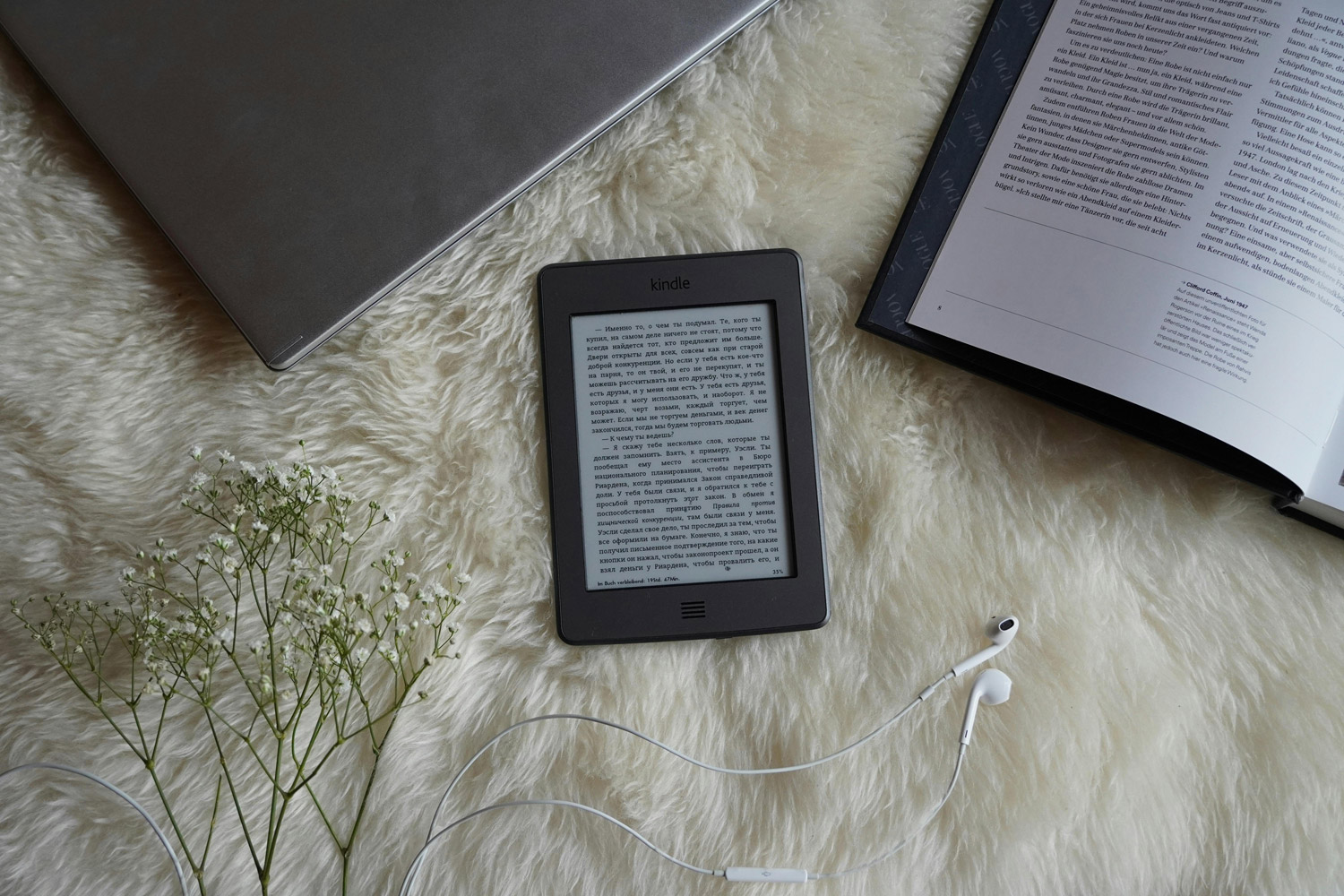
When the Kindle was first introduced in 2007, many readers assumed it would store their e-books forever. Sadly this is no longer the case. Like Apple, Sony, Nintendo and so many other companies, Amazon is putting consumers’ digital content at risk. Beginning today, May 20, Amazon is ending support for Kindles made in 2012 or earlier. This means that all of these devices will no longer get software updates and won’t be able to download already purchased Amazon books. Reuters has more details, including reactions from Kindle owners.
For Claudia Buonocore, the thought of parting ways with her 15-year-old Kindle Touch e-reader is painful.
“I’ve never felt the desire to have another device,” said the 39-year-old Pittsburgh area resident. “It’s a part of me, a lifesaver, I fall asleep with it almost every night.”
But Buonocore and other Kindle users face an unwelcome change. Amazon last month said it would end support for e-readers released in 2012 and earlier, preventing users from downloading new books or receiving software updates after May 20.
“It’s just a complete betrayal of customers,” said Buonocore.
Amazon will continue to support newer devices and has offered a 20% discount on recent models, priced from $110 to $680m, and $20 in e-book credits. But many Kindle loyalists are not ready to turn the page on their beloved gadgets.
Brian Oelberg has been loading up his 2010-era Kindle Keyboard with e-books since learning of Amazon’s plans, and estimates he now has about 250 titles. He plans to switch off the device’s WiFi starting Wednesday to keep it safe from any software updates that wipe it clean.
Oelberg, 64, said he recently tried newer models at a Best Buy store but was unimpressed, noting they lack physical page-turn buttons. “There’s no reason for Amazon to be doing this,” said the Chicago resident, adding the buttons allow him to read outdoors in cold weather without removing gloves.
Fans of older Kindles say the devices’ durability and physical buttons are unmatched by newer versions such as the $180 Kindle Paperwhite, which they say drains battery life more quickly with its backlit screen.
Many technology firms phase out older devices due to security, cost and other factors, prompting users to upgrade. It was not possible to determine how many devices are affected by Amazon’s move. Amazon said it had supported the devices for 14 years or more and could not continue doing so indefinitely. “Technology has come a long way in that time,” said a spokesperson.
While the company wasn’t the first to produce e-readers, it pushed them into the mainstream with the introduction of the first Kindle in 2007. Today, Amazon commands 72% of the e-reader market, according to research firm Business Research Insights, though
Commentators on social media sites offer plenty of solutions to keeping the devices useful for years to come. That includes so-called jailbreaking, meaning removing software restrictions to allow other software to be installed; and sideloading, a means of adding books to the device from a computer, typically through a USB cord.
Cathy Ryan, who repairs older Kindles for resale on eBay as a hobby, expects the change to hurt her business. The 59-year-old Vermont resident owns five Kindles and still uses a second-generation device bought in 2009.
“I suppose nothing lasts forever, but I am just really annoyed,” said Ryan.
Cathy DeMail, 69, from The Villages, Florida, said she sees an ulterior motive and has been trying to load her device with books. “It’s a shame I am getting railroaded into this,” she said, adding she will likely have to buy a newer touchscreen model.
“I hate it, it’s the principle of the thing that bothers me.”
I feel for everyone who is scrambling to figure out a Kindle storage solution right now. The download and USB transfer option for Kindles was discontinued for Amazon e-Books in February 2025, although you can still transfer other formats like PDF, ePub and DOCX to them.
Despite how evil Amazon is, I love how convenient my Kindle is for traveling and adjusting the font size and page brightness. But, as the saying goes, the pendulum swings both ways. Once companies realize their product’s profitability, it all goes south. When they start taking away media we’ve paid for in order to force us to buy newer products, it’s just going to push people back towards physical media. This is why digital cameras and DVDs are on the rise right now. Corporate greed will always end up ruining a good product.
Amazon should make an affordable “retro edition” Kindle that includes fan-favorite features like the page turning buttons. I also think Apple missed the boat by not releasing a retro iPod in honor of its 25th anniversary. The iPod would be completely wifi-free and use a USB connection to add music. Businesses should embrace the demand for analog products. Give us more products that don’t require us to be so connected.
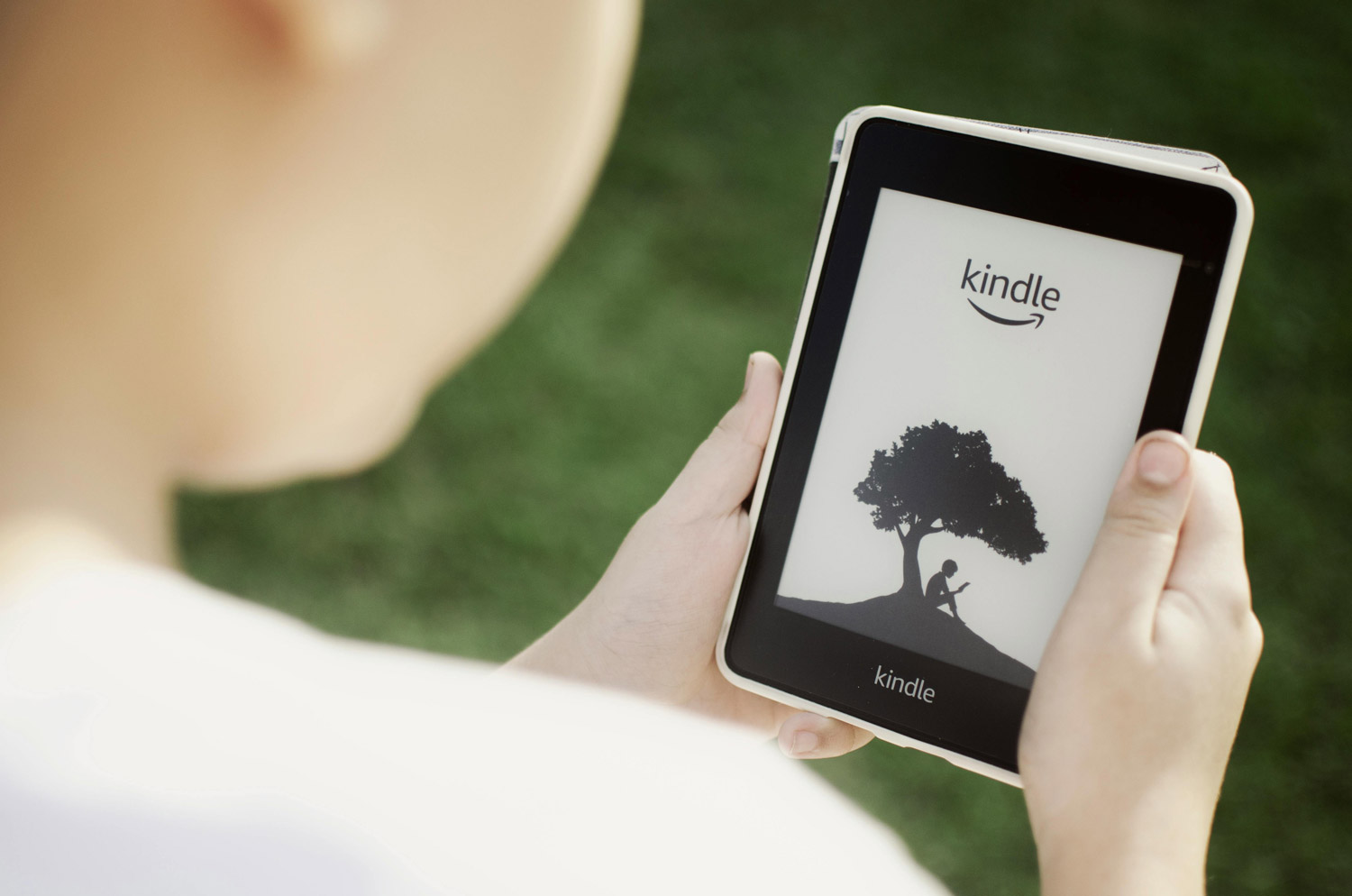
Photos credit: Ivett M, Mayara Klingner and Ekaterina Swiss on Pexels









Phew i had to do a quick brain calc to find out how old my current kindle is , i’m on my third one and as much as i love kindle for all the positives you named it has made me a lazy reader, i can’t read proper literature say a salman rushdie book i find i read a lot of those what i call sourdough books 4 ex soldier move to a town one by one the fall in love with a girl each gets their own book then on the last book they introduce a new character who then introduces 4 more guys maybe in a new town. etc . they are very morish so when you finish and are waiting for the next lot and you know they are copying the work of another author as the voice is similar to another author with her own set of sougdogh books and its a vicious, you cant tade books with friends and you cant strike up conversation with a stranger based on the book they are reading . so i cant wait for my kindle to die then i will retrain myself to read proper books i have loads piled up in a corner waiting for me to dust them off to read lol
I am completely with you on both the evilness and convenience of the kindle.
I hate it but have made my peace that any digital content I ‘buy’ is only a long-term loan until the business changes its mind. I still buy physical dvd’s of films I love!
I also have an old ipod and would LOVE a new version. It has all the albums I burned onto my computer from CD when digital music became a thing but now I daren’t connect it to my laptop that still has my iTunes library on it in case it dies.
I have one of the early Paperwhites, and it’s great, but I also have had a Kobo for years. I never liked supporting Amazon, but the old Kobo never swiped as easily, so I used the Kindle more than I liked. But I’m done with Amazon for real now, so I’m fine with never buying another book from them. My new Kobo works fine.
I have a Kindle (it dates from 2015) and a Kobo (that I won in a contest at work in October) and so I’m gradually switching over. I find the Kobo is a bit of an adjustment, especially the weight of it compared to the Kindle, but so far so good. I just wish that Kobo’s “recommended for you” section wasn’t so annoying, it’s like it never updates. I can’t tell you how many times I’ve marked a book as Already Read or Not Interested only for it to pop right back onto the list the next day.
Honestly though, I’m not surprised that Amazon is doing this. Why let people keep their old devices if they can force them into buying new ones?
Corporate greed is truly a plague of our times. It’s astonishing how thoroughly, how dependably it ruins everything it touches.
One reason I’m so fully invested in e-readers now is that tree books became so low-quality. Crappy paper, flimsy bindings, pale ink, tiny fonts. Publishers ruined their own products in pursuit of shareholder dividends.
I’ve lived in houses stuffed full of physical books my entire life, over 60 years now, and still do, because I love them. To me they are as necessary as chairs and beds and dishes — they’re an essential part of home.
Nonetheless, the only physical books I ever read any more are the occasional old cookbooks, and garden or art books full of photographs. My everyday reading is all e-books. They’re so much easier on my eyes and my hands.
Yet I can’t trust the company I buy them from to reliably support me as a reader. It’s an ugly feeling to know I’m only allowed to live my life in the interstices of the machinery of commerce and profits.
Not shocked. Amazon was making noises before that Kindle owners didn’t really own books we bought via Kindle before. It’s insane.
I stopped with the kindle books when I learned that I don’t actually own the books so now I have stacks of books everywhere instead but they are mine, and most are on banned lists somewhere.
Unsurprised Bezos has cheated people again.
Get a Kobo, either standard or books+audiobooks edition. Use your local public library’s Overdrive account.
ETA @Kaiser, Kobo has an affiliates program.
Yeah. I’m in this boat. I love the look + feel of my 2013 6-inch Paperwhite. HATE the larger new Kindles + their screens.
That’s good advice to turn off its WiFi – Done!
Stupid “upgrades” (on a sidenote, I really dislike the look + feel of the new iPad I was forced to buy to replace my ancient and rarely use it)
I’ll be finding an alternative way to upload books to my Kindle, or just go back to actual books. No way I’m letting Bezos force me into buying a new Kindle. I will miss it for the convenience of carrying it. It’s much more convenient in a handbag than a book.
Back during lockdown I got my old iPod Classic refurbrished with a new battery. I have to jailbreak it, because the old iTunes doesn’t work anymore, and if I connect my iPod to it, it will erase all the music currently stored on it. I’d like to start using it again. I was super irritated today how I don’t actually own music, and can’t just play an album unless I pay a monthly fee, instead of just once.