
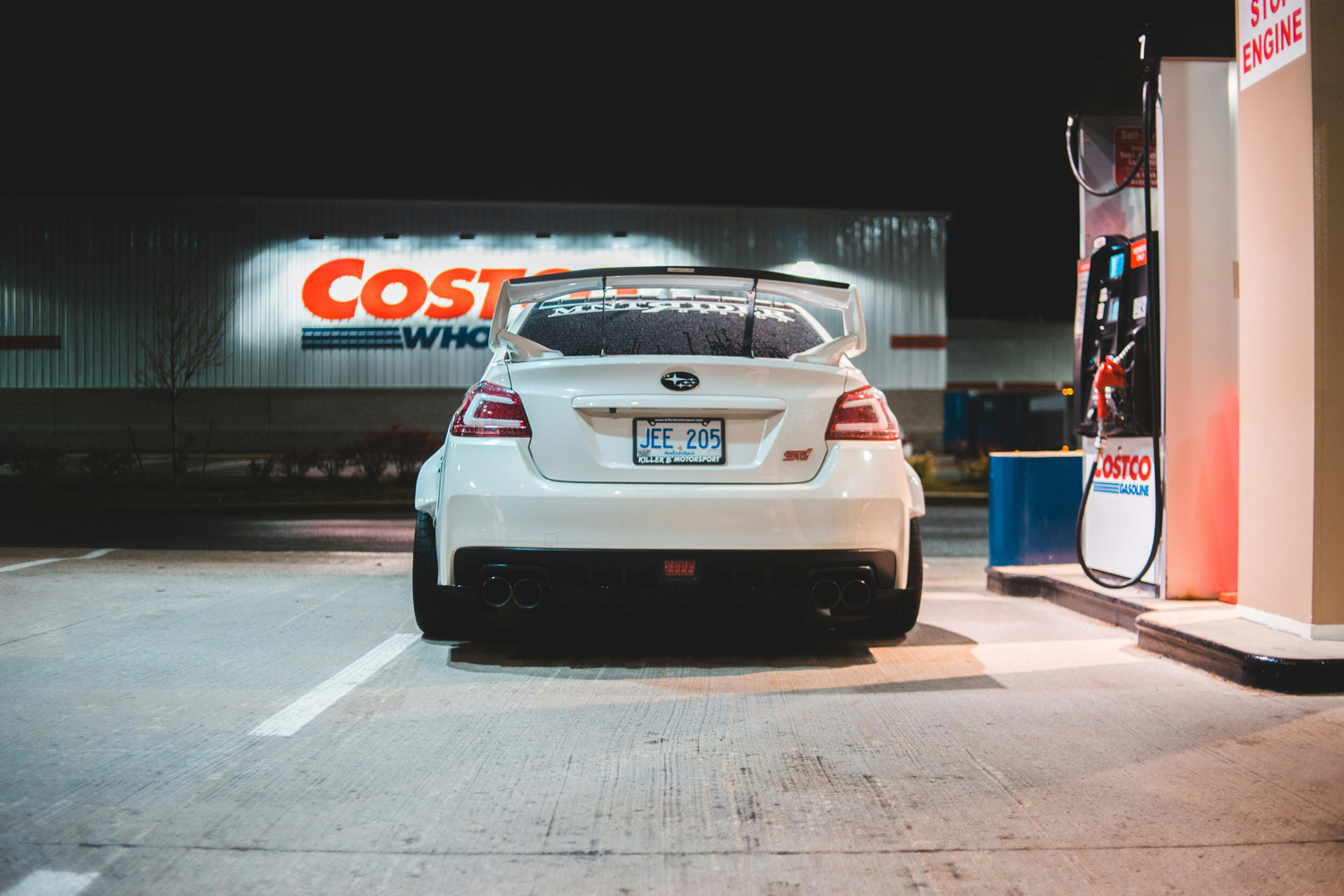
The United States is currently experiencing its highest gas prices since August 2022. As of May 25, the national average is $4.475/gallon, with prices on the West Coast averaging $5.569. Surging gas prices have driven consumers to seek out their cheapest options, and for many – myself included – that’s at Costco. On average, Costco has managed to keep their prices between 10 to 30 cents per gallon cheaper than regular gas stations. As a result, they’ve seen a huge increase in demand at the pump. According to CEO Ron Vachris, some locations are calling in refill tankers several times a day.
So, how does Costco manage to pull off selling significantly cheaper gas? It’s in part thanks to “chicken drivers,” who come for the gasoline but stay for the rotisserie chicken. CNN has a good analysis that breaks down consumer mindset and Costco’s business strategy:
Costco gas is so much cheaper: As prices have surged above $4 nationwide – and above $6 along the West Coast – Costco has become America’s destination for cheap gas. Well, relatively. Costco routinely undercuts local gas stations by around 30 cents a gallon. That’s an enticing bargain at any time, although long lines sometimes dissuade customers, especially when gas is inexpensive. Not now: A significant number of Costco members filled up for the very first time over the past three months, Costco said on that earnings call.
They still profit despite lower prices: Costco actually makes a profit on gas – a few cents per gallon. That’s substantially lower than the 25- to 35-cent markup that most gas stations take. Unlike most gas stations, which are small, independently owned and operated businesses – maybe with an attached convenience store or a repair shop – Costco can rely on its massive scale and membership model to drive profit.
Last year, membership fees accounted for roughly two-thirds of the company’s profit. Costco sells most of its products the same way it sells gasoline: at or just above cost – and sometimes below, like its famous $1.50 hot dog and soda deal.
The Costco model problem: Competing gas stations need the markup to pay for overhead and repairs. When gas prices rise, customers buy less of it, keeping a relative cap on the amount they’re able to charge. That’s why, ironically, when gas prices are high, most gas stations struggle to make money.
Costco has a different problem: When gas prices are high, Costco sells more gas. But, because gas is among its lowest-margin products, the company’s overall profit margin gets squeezed. The opposite is true when prices are low. Last year, when prices spent a considerable amount of time under $3 a gallon on average, gas added about a tenth of a percentage point to the company’s gross margin. Last quarter, gas subtracted two tenths of a point. Nevertheless, it’s a good problem to have. Costco said it brought in $2.3 billion less in gas sales in 2025 than the year before because prices got cheaper. Costco has 747 gas stations, which brought in 10% of its overall sales last year.
A ‘chicken driver’: Costco says about half of its filler-uppers end up walking into a warehouse. As a record number of members visit Costco’s gas stations, foot traffic at stores increased around 5%. And customers are buying more when they shop, too.
“We believe this will drive even greater loyalty with these members in the future as members who use our gas stations typically spend more with us in the warehouse,” said Costco CEO Roland [sic] Vachris on a conference call with analysts Thursday, during which gas was mentioned 72 times. Vachris said customers were stretched this past quarter, because they were allocating a higher percentage of their paychecks to gas.
But that gave Costco an advantage: Its competitive prices. Among its best-selling how-can-they-sell-it-this-cheap products: rotisserie chickens, which Costco sells for $4.99 – way undercutting local supermarkets. And they’re sold at the back of the warehouse, forcing customers to navigate the aisles – and probably pick up some other items along the way. Recognizing the moment, Costco extended discounts on meat and eggs (also sold at the back of the warehouse) to members to drive more customers into the warehouses.
The Costco business model of relying on membership fees in order to drive profit is simple, yet effective. I love that the company always remains incentivized to prioritize their members. It’s different from what we’re used to expecting from big businesses. Costco is one of the few companies that prioritizes member loyalty over profit margin. The fact that it remains profitable even in tough economic times shows that customers recognize that loyalty. I’m not a “chicken driver,” but the pandemic made me into a Costco gas truther because prices were consistently cheaper. For many, that makes the membership worth the cost, even if they never step inside a store.
Costco is taking such a big bet on their cheaper gas prices that they’re about to open their first-ever standalone gas stations. The first one will open in Mission Viejo, California this month while their second will be in Hawaii in 2027. If you don’t have a Costco membership or live close to a store, there are apps that track gas prices. I use Gas Buddy whenever we are traveling. Google Maps always shows gas station prices in their search results, too.
Photos credit: Erik Mclean and Connor Scott McManus on Pexels











I am a BJ’s member and their gas prices are also 30-40 cents cheaper than all the other gas stations around. This alone is paying for the membership fee. Oh and their rotisserie chickens are also pretty darn good and priced the same as Costco.
Here in Savannah prices vary but I have the best luck at Parkers Kitchen.
Thanks for the Google maps gas price trick! I had no idea and I’m all about anything that doesn’t require downloading another app lol
Wondered about this. Thanks for covering!!!!
Apparently we’re getting a FIFTY bay Costco gas station here in WA state right next to their new corp offices. I’m not sure how it’s going to fit but i always say that and it fits anyway.
That new one in Honolulu is supposedly going to be able to handle 80 cars at a time! It’s going to be built in a former shopping center. Gas or food, gas or food, what a choice.
I was wondering about all this. I just filled up at Costco this past week and here in NoVA, I’d say they’re about forty to fifty cents cheaper.
My friend in South Coast Massachusetts just wrote to tell me that she signed up for BJ’s Wholesale just for the cheaper gas.
European here, wow, i wish we had those prices 😆 American wars paying off
It’s illegal to sell at a loss. So they most likely just don’t make profit out of it. They get your money on other items you buy when you go there. Only very big succesfull stores manage that. That’s how Walmart wipes out small buisnesses when then open a new store : sell without profit until the little guy goes bankrupt.
Generally, no, it is not illegal to sell products at a loss.
However, selling at a loss becomes illegal in a few specific situations:
Predatory Pricing, State/Regional Bans and Collusion are the three specific situations in which selling at a loss becomes illegal.
But would Anti-dumping laws be in effect if the product is foreign?
I signed up for Costco strictly for the gas prices. Until I retired last year I had been able to gas up at the Navy’s NEX station; a quick GasBuddy search told me Costco had the next best prices so I bit the bullet (I really, really hate the idea of having to pay for the privilege of walking through a store’s doors). Costco is at least $.80/gal cheaper than everywhere else. I haven’t done the math yet, but I’m thinking that puts me ahead on the membership cost.