
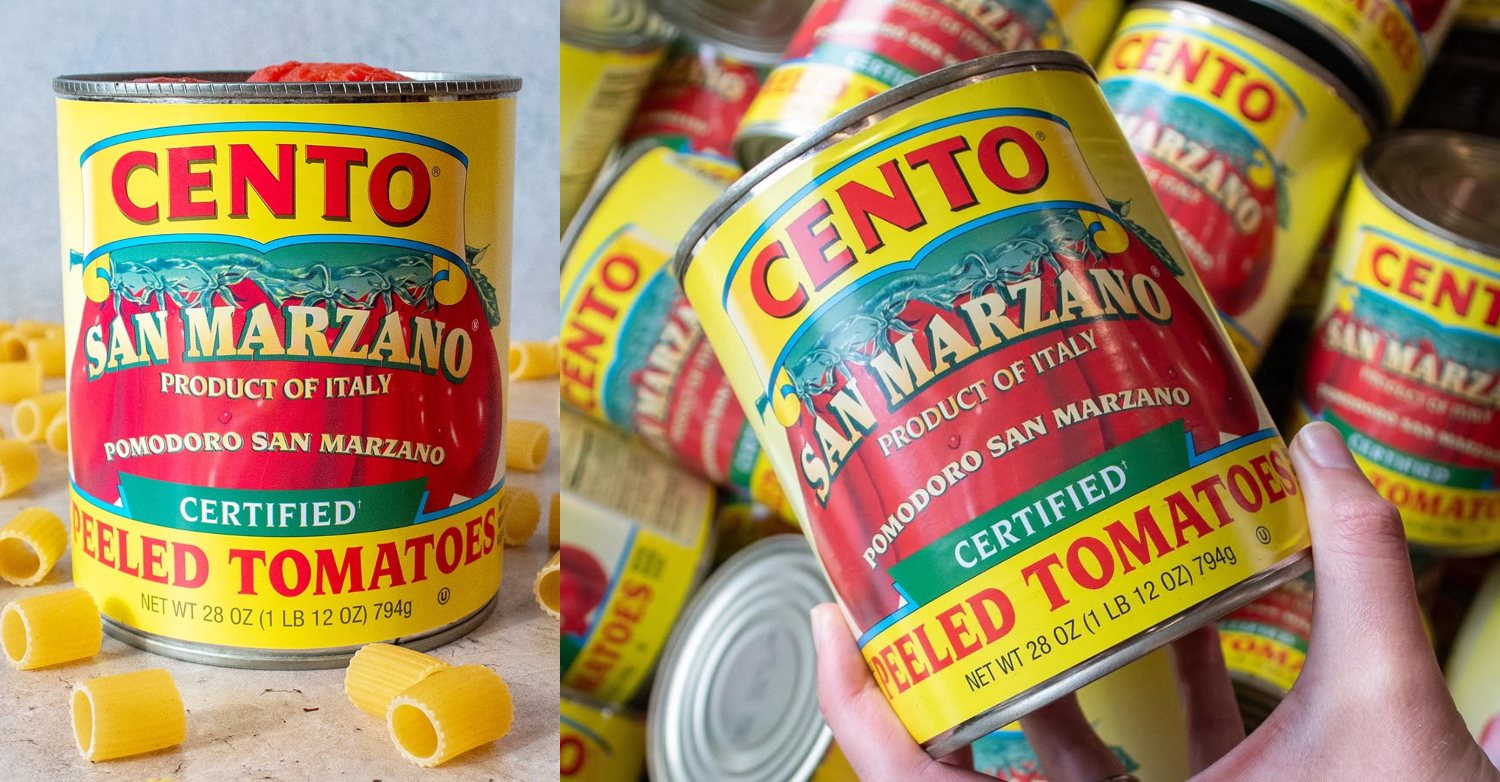
Last month, a group of under-caffeinated Californians filed a class-action lawsuit against Trader Joe’s over bags of coffee (allegedly) containing half the caffeine as advertised. It is to the discerning palates of California citizens that we turn once again for a new case of food mislabeling malpractice. Two Californians just filed a lawsuit against Cento Fine Foods for falsely calling their wares “San Marzano” tomatoes when they are not! To earn the privilege of bearing the name San Marzano, the tomatoes must be harvested by hand between July and September in the Agro Sarnese-Nocerino, Campania region of Italy near Mount Vesuvius. Since 1996, San Marzano tomatoes have had protected status by the European Union; a consortium of the EU — the Consorzio di Tutela del Pomodoro San Marzano dell’Agro Sarnese-Nocerino — is the only sanctioned body with the authority to designate San Marzanos as DOP-certified. Cento’s tomatoes are certified by a “third-party agency,” not the Consorzio. Thus, the California plaintiffs allege TOMATO FRAUD, and humbly ask the court for class-action status and $25 million. That’s a lot of pasta sauce!
The ‘Ferrari or Prada’ of tomatoes: A popular U.S. food distributor has long promised premium, Italian tomatoes in its products. Two Californians claim the company is committing tomato fraud. A lawsuit filed this month alleges that Cento Fine Foods, a U.S.-based Italian food distributor, falsely labels its products as containing San Marzano tomatoes. The tomatoes in question are a premium variety that can be grown only in Italy’s Campania region and are recognized by the food industry as the “Ferrari or Prada” of tomatoes, the lawsuit claims.
No proper certification, no San Marzano tomato: The complaint alleged that the company is falsely branding its tomato products because they lack the proper certification required to use the same. “They lack the taste, consistency, and other physical characteristics associated by consumers with certified San Marzano Tomatoes,” the lawsuit states. The plaintiffs in the California suit claim they were misled by deceptive labeling when purchasing the product more than a dozen times in California stores. The lawsuit seeks class-action certification and asks the judge to award more than $25 million to customers.
To-may-to, to-mah-to: San Marzano tomatoes have protected status in the European Union, meaning that an independent consortium must regulate and certify that the product is grown in the right region and with the proper techniques before it is sold. Cento says it has the right to use the name as its tomatoes are grown in the same region. Its website offers a detailed description of its harvesting and packaging process, which it says are in line with the consortium’s guidelines. Cento’s tomatoes, however, are certified by an independent third-party agency not affiliated with the consortium. … Cento had the consortium’s certificate until the 2010s.
A similar case filed against Cento in NY was dismissed in 2020: The judge ruled in favor of Cento, ruling that a reasonable customer wasn’t likely to seek tomatoes certified by the consortium over a product that matched the same standards but was certified by a different agency.
More on Cento’s process: The third-party certifying body administers random testing throughout the growing process and tests each product that arrives at the company’s New Jersey warehouse before it is released to stores, according to the website. The website also has a traceability feature, which enables customers to use a can’s lot number to find the field in Italy where the tomatoes were grown.
First of all, yes, these tomatoes really are worth all this agita. The San Marzano tomato is prized as the premier tomato for sauce-building, thanks to the variety’s meaty flesh, low seed count, and sweet taste. (San Marzanos are also noted for their “elongated plum shape” and “pointed tip,” which no did not sound to me like descriptions for a dildo, get your mind out of the gutter!) Now that we have that simmering on the backburner, back to the case at hand. I’d question the audacity of that judge in NY to insult the tomato-educated public by suggesting we think all certifications are the same. But honestly, I’m worried about this judge’s safety, because surely the Italian pomodoro mafia consorzio has gotten to them by now. Pomodoro is just one of the four families of DOP-certifiers in Italy, along with Prosciutto di Parma, Aceto Balsamico di Modena, and Parmigiano Reggiano, aka Big Parma — remember how they sponsored an Italian gymnast at the 2024 Olympics? These are big players, mess with them at your own risk!
All that to say, I hope the judge who takes this case in California spends a bit more time stewing on the facts and all the relevant precedents before determinating a decision. You know, landmark cases like Beefsteak v. Consortiums United and Griswold v. Campari (satirical). Fraud is fraud, tomato or otherwise, and not taking it seriously is a recipe for disaster.
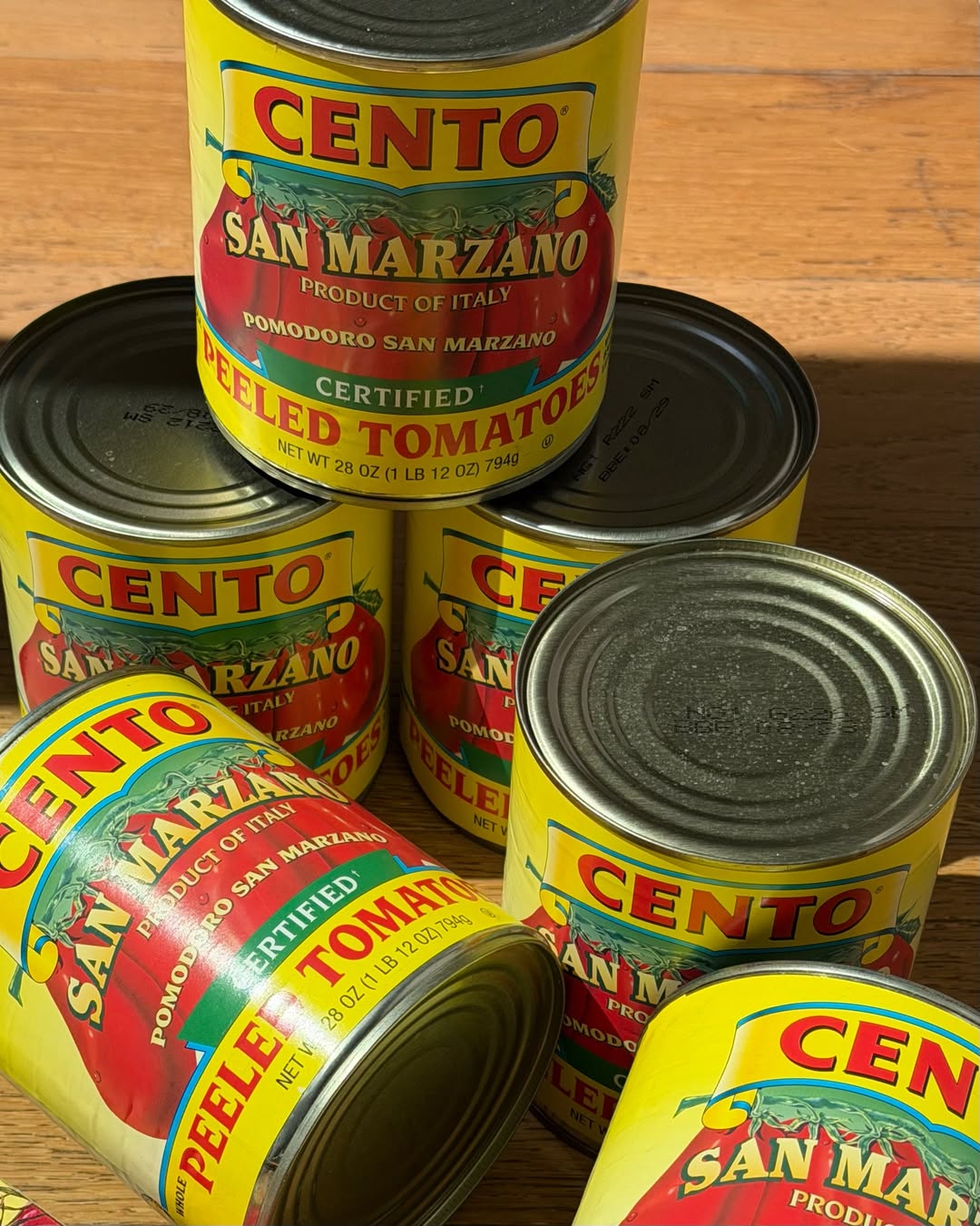
Photos via Instagram











Lying about food is just bad.
One day it’s fancy tomatoes. The next it could be something much worse.
^THIS.
The puns are cracking me up, and it may seem silly to some people but this is a pretty big deal. Firstly, lying about food certifications in this case just about the region that the food came from is a big deal. Because next you can be lying about food safety, what environment the food was grown in, and the safety of its packaging and transportation.
Also, there is the money factor. People pay more money for authentic Champagne rather than sparkling wine because of the name and the understanding of the growing conditions and requirements. If I’m paying $9 for a small can of paste or whole tomatoes because I assume that’s your certification is legit, finding out they’re literal garden variety tomatoes from someone’s backyard would annoy me as well.
Absolutely. Love the puns! And lying about food and deliberately deceiving customers are big problems! I’m surprise there wasn’t pushback from the region before now on the NY case. I honestly thought it was the same thing; that’s irritating. This will teach me to make sure I see the DOP logo specifically from now on.
My local pizzeria uses these, and certified or not – their sauce is unlike any I’ve ever had. I can’t even describe how amazing it is.
Drop the pizzeria name sis! No gatekeeping at Celebitchy LOL
I do like these tomatoes but I always did think the “San Marzano” claim on their label was a little hinky.
I used to buy Cento “certified,” which isn’t cheap. I knew it wasn’t the real deal, but it does come out better in blind taste tests than most of the other brands sold in my local stores.
Then I bought a case of Rega D.O.P. certified. Can I tell the difference? 100% yes. Perhaps my cans are from a particularly good harvest, but so far, the real deal has been worth every penny.
Thank you for giving me my new tomato brand! I’ve bought the Cento tomatoes for years. My sauce is good, but could it be better with the type of tomatoes I thought I was paying for? But I have to admit that I have another reason for buying Cento…their can. I love the way that can looks in my pantry; there’s no boring Heinz here! So I hope that Rega has a great looking can. I’m shallow; I like pretty.
Lol! The Rega label looks very old school Italian. Your pantry will be pleased.
In the recipes I’ve used them in, the result has been deeper and less acidic. The sweetness is more pronounced than Cento, but it is complex and doesn’t taste sugary per se, just incredibly rich.
The first time I used them was in a chili recipe I’ve made many hundreds of times. I wasn’t expecting a noticeable difference but my first bite had me sold.
For sauce, I’ve spent decades and untold hours in the kitchen with fresh roma, cherry, and grape tomatoes. My Rega experience with other recipes has made me reconsider my usual exhausting approach.
I like the spicy El Pato tomato sauce for the beautiful can as well!
I’m all in for holding companies accountable to the public and to their customers.
I know enough about the history of food safety regulations — and the lack of them — to know that the wider implications of these issues can be vital to public health.
That said, somehow something doesn’t sit right with the idea of a snotty European monopoly on a type of fruit that originated in the Americas.
Maybe a Californian company should do some research into volcanic soils and patent a soil amendment sourced from this side of the Pacific, to use in growing a similarly excellent sauce tomato! We certainly have plenty of our own volcanoes over here.
Sounds like a perfect project for an angel foodie investor, someone like oh, say, our favorite Duchess??
Interesting point!
Thanks Kismet! These posts always bring me some (much needed) lightness!
I’m really sorry to hear this. Cento is the only brand of tomatoes I buy, not San Marzano, because I haven’t seen those, but because the only ingredient is tomatoes. I am trying to be more aware of what I ingest and how it is treated, so you had my attention immediately. I had not heard of the San Marzano tomatoes. I will look for them now. I got my pasta tomato sauce from a Kevin Costner movie where he plays a spy and is holding an Italian and his daughter calls and asks him for a pasta sauce recipe and he is at a loss and then remembers who he has with him. So he makes the Italian man give up his mom’s recipe. I tried it and it is good. I have tweeked it a bit, but basically got the recipe from a Kevin Costner movie.
What an interesting article! And some very interesting comments!
So the San Marzano cultivar tomatoes that I’m growing (and use to make gravy) are not San Marzanos because they are not grown in Italy?
Correct. Even if you’re using certified San Marzano seeds. Unless they’re grown in San Marzano, they’re not San Marzano tomatoes. It’s the volcanic soil there that makes them special. Though, honestly, I haven’t seen a huge difference with other quality tomatoes.imo
We grow Amish Paste tomatoes and find them excellent for sauce making.
Kismet, you are in sparkling form today! Brilliantly written and informative. I am going to up my sauce game now.
I hate deception in advertising. Give me the real thing if I am going to pay a premium. Simples.